| Specification | Data |
|---|---|
| Model Years | 2017-2019 |
| Engine Oil | SAE 10W-40 JASO MA/MA2 |
| Oil Capacity (Filter) | 3.3 Liters |
| Tire Size (F/R) | 120/70 ZR 17 / 190/55 ZR 17 |
| Tire Pressure (F/R) | 2.5 bar / 2.9 bar |
| Spark Plug | NGK LMAR9AI-10 |
| Battery | FTZ10S / YTZ10S |
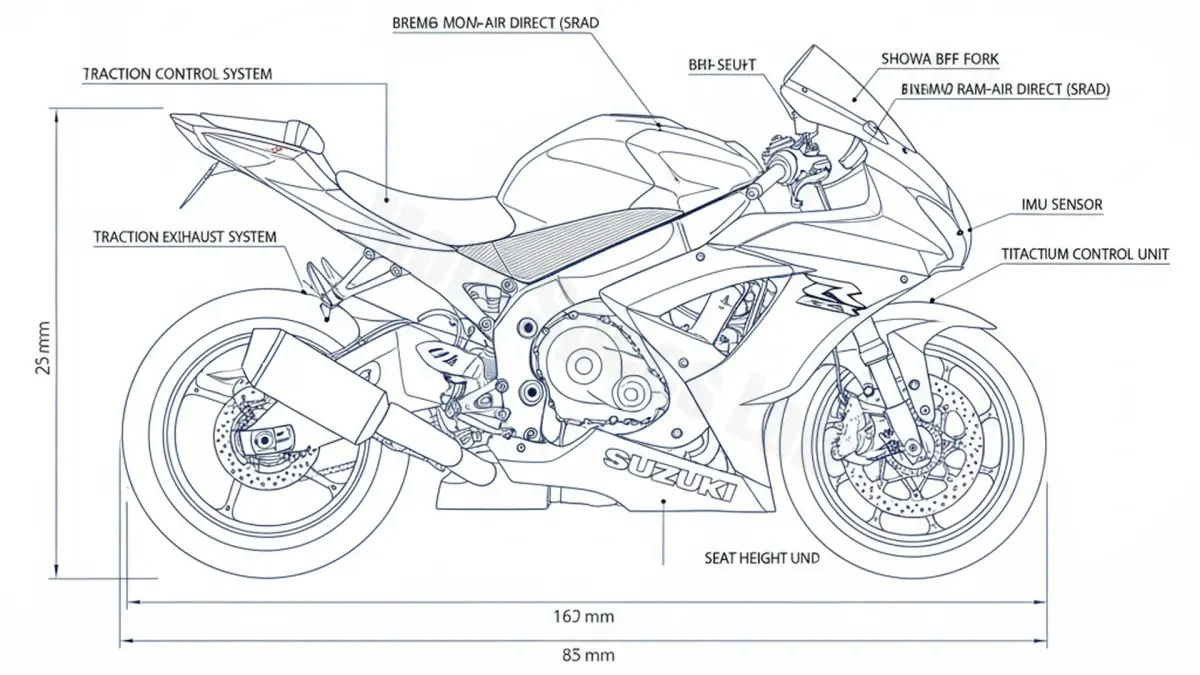
The 2017-2019 Suzuki GSX-R 1000, designated as the WDM0 generation, represents a watershed moment in superbike engineering. It famously introduced the Suzuki Broad Power System, which features a mechanical centrifugal Variable Valve Timing (VVT) system. This specific design was developed for Suzuki’s GSX-RR MotoGP machine to bypass the FIM ban on electronic hydraulic VVT systems, making the L7/L8/L9 the first production motorcycle to utilize such a pure-mechanical racing solution for top-end power without sacrificing low-end torque.
Engineering Excellence & EURO 4 Compliance
Despite the stringent EURO 4 emissions standards, the WDM0 chassis delivered a compact, aerodynamic profile that returned the ‘Gixxer’ to the sharp end of the liter-bike class. The engine features a finger-follower valve train and top-feed injectors (S-TFI), designed to sustain high RPM stability and precise fueling. For technicians, this means maintenance must be performed with high-grade synthetic lubricants to protect the high-revving valvetrain.
Maintenance Guidelines
Lubrication System
To maintain the integrity of the VVT system and the integrated wet clutch, use only JASO MA2 rated 10W-40 oils. The oil capacities are critical: 2.8L for a standard change, 3.3L with a filter replacement, and 4.1L following a complete engine overhaul. Overfilling can lead to aeration at high RPMs, common in track scenarios.
Ignition & Electrical
The L7-L9 uses specialized NGK LMAR9AI-10 laser iridium plugs. These have a specific heat range designed for the high compression ratio of the WDM0 engine. The electrical system is supported by a compact YTZ10S/FTZ10S battery; given the high-compression start requirements, ensuring a healthy CCA (Cold Cranking Amps) is vital for avoiding sprag clutch wear.
Chassis & Contact Patch
Running the standard 120/70 and 190/55 tire combination, the GSX-R 1000 is sensitive to pressure fluctuations. For road use, 2.5 bar (front) and 2.9 bar (rear) provide the necessary carcass stability for the bike’s 202kg curb weight. For track use, technicians should adjust based on tire manufacturer recommendations, typically dropping rear pressures significantly to allow for heat expansion.
Conclusion
The Suzuki GSX-R 1000 L7/L8/L9 remains one of the most mechanically honest superbikes of the modern era. By utilizing mechanical VVT instead of complex electronics, it offers a unique tactile connection between the throttle and the rear wheel, provided the strict maintenance schedule and fluid specifications outlined above are adhered to by the owner or technician.