| Component | Specification |
|---|---|
| Engine Oil | SAE 10W-30 (JASO T 903 MA) / 0.9 Liters |
| Tires (F/R) | 80/100-17 M/C 46P / 100/90-17 M/C 55P |
| Tire Pressure | F: 1.75 bar | R: 2.00 bar (Solo) / 2.25 bar (Pillion) |
| Spark Plug | NGK CPR7EA-9 |
| Battery | YTZ7S (12V Maintenance Free) |
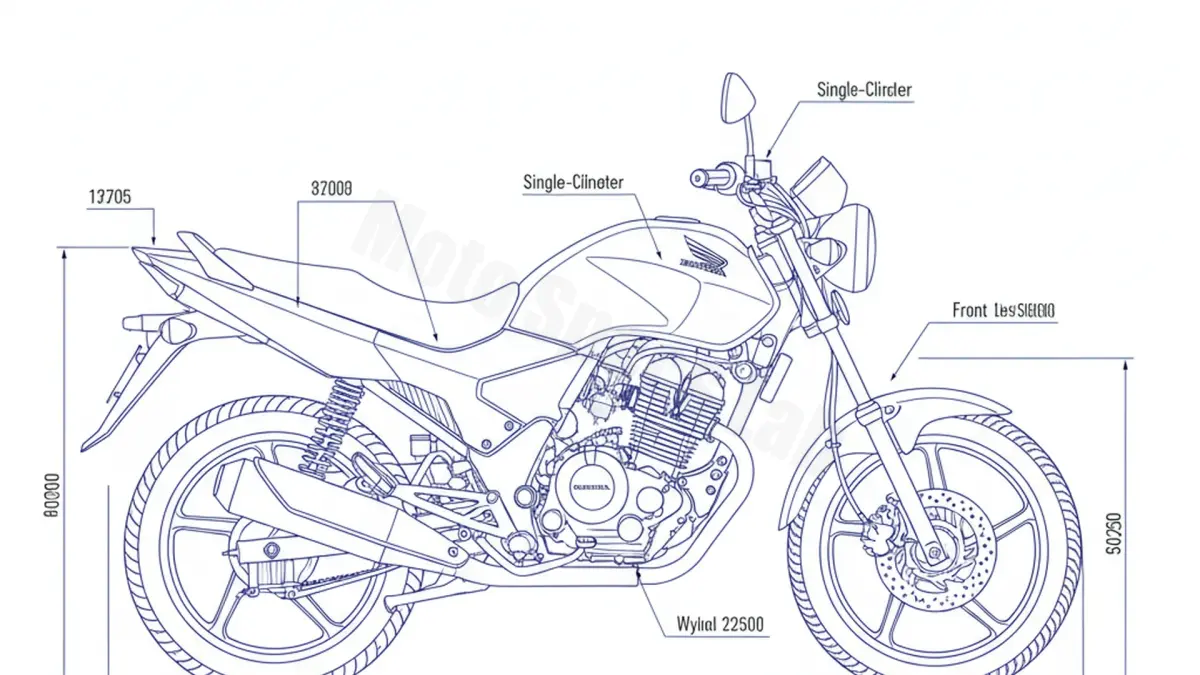
While the 125cc class is often seen as a mere entry point for beginners, the Honda CBF 125 (JC40) represents a significant engineering milestone: it was the first budget-oriented Honda commuter in the European market to successfully transition from the dated carburetor system to the sophisticated PGM-FI (Programmed Fuel Injection). This move not only optimized fuel efficiency to an industry-leading 100+ mpg but also ensured the bike met tightening Euro 3 emission standards without sacrificing the legendary reliability of its predecessors.
Engineering Analysis: The JC40 Powerplant
The heart of the JC40 is an air-cooled, 2-valve, SOHC single-cylinder engine. Unlike the older CG125 which utilized pushrods, the CBF 125’s overhead cam design allows for smoother revving and reduced mechanical noise. The PGM-FI system monitors throttle position, engine temperature, and intake air density to provide precise fueling, making the JC40 remarkably dependable in cold-start scenarios—a common failing point of its carbureted rivals.
Maintenance Protocol for Peak Longevity
To maintain the JC40’s structural and mechanical integrity, adherence to the following service parameters is mandatory:
1. Lubrication System
The JC40 utilizes a centrifugal oil filter rather than a traditional paper element. Because of this, regular oil changes are critical. We recommend SAE 10W-30 (JASO T 903 MA). The total capacity is 0.9 liters. Using high-friction modifiers (typical in automotive oils) can cause clutch slippage, so ensuring the JASO MA rating is non-negotiable.
2. Ignition & Electrical
The specified NGK CPR7EA-9 spark plug should be inspected every 4,000 miles. A healthy plug will show a light tan color. If the gap exceeds 0.9mm, replace it to prevent strain on the ignition coil. The YTZ7S battery is a sealed AGM unit; if the bike is stored over winter, a dedicated smart-charger is required to prevent sulfation.
3. Chassis and Tires
Handling on the JC40 is sensitive to tire pressure. Running the 80/100-17 front and 100/90-17 rear tires below the recommended 1.75 bar (front) and 2.00 bar (rear) will lead to heavy steering and increased fuel consumption. For those carrying a passenger, the rear must be increased to 2.25 bar (33 psi) to maintain stability.
MotoSpecsLab Verdict
The Honda CBF 125 JC40 remains the gold standard for economical urban transport. Its engineering focuses on simplicity and efficiency. While early 2009-2010 models were known for occasional fuel pump recalls, the platform overall is nearly bulletproof if the 0.9L oil capacity is strictly monitored. It is an exemplary piece of industrial design that prioritizes the rider’s wallet and the environment in equal measure.