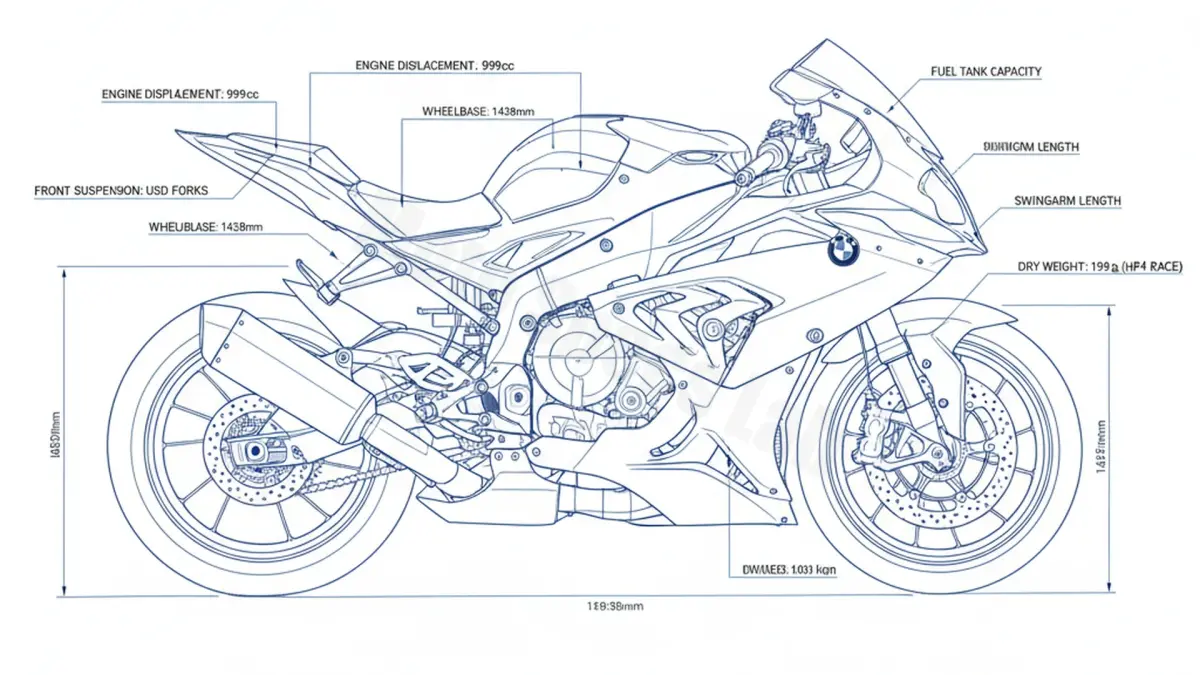
| Attribute | Specification |
|---|---|
| Production Years | 2012 – 2014 |
| Engine Oil | SAE 5W-40 (API SL / JASO MA2) (3.5 L) |
| Tire Size (Front/Rear) | 120/70 ZR 17 / 200/55 ZR 17 |
| Tire Pressure (Front/Rear) | 2.5 bar (36.3 psi) / 2.9 bar (42.1 psi) |
| Battery Type | YTZ7S |
| Spark Plug | NGK LMAR9E-J |
The BMW S 1000 RR HP4 (0D01) stands as a landmark in motorcycling history, being the first production motorcycle ever to feature Dynamic Damping Control (DDC). This semi-active suspension system, which adjusts damping in milliseconds based on sensor data, effectively bridged the gap between professional racing technology and consumer-level superbikes. Launched as a more exclusive, track-oriented evolution of the standard S 1000 RR, the HP4 utilized forged wheels and a full titanium exhaust system to shed weight, making it the lightest 1000cc four-cylinder superbike of its era.
Engineering Excellence & Handling
At the heart of the HP4 lies the 999cc inline-four, but the true brilliance is found in its electronics. Beyond the DDC, the HP4 introduced a more sophisticated Launch Control and a refined Traction Control system that allowed for 15 levels of adjustment. The use of a 200/55 ZR 17 rear tire—wider than the standard RR—provided a larger contact patch for improved drive out of corners, a necessity for managing the bike’s 193 hp output.
Maintenance Guide: Keeping the HP4 at Peak Performance
To maintain the precision of the 0D01, strict adherence to technical specifications is mandatory. The high-revving nature of the engine demands high-quality synthetic oil. We recommend SAE 5W-40 meeting API SL and JASO MA2 standards to ensure clutch longevity and internal protection.
Ignition and Electrical
For consistent combustion, the NGK LMAR9E-J spark plugs must be inspected for fouling. The electrical system relies on the compact YTZ7S battery; given the high draw of the DDC and electronic suites, maintaining a healthy charge with a dedicated tender during off-season storage is critical to prevent ECU errors.
Chassis and Tires
The HP4’s handling is extremely sensitive to tire pressure. For street use, the factory recommends 2.5 bar (36.3 psi) front and 2.9 bar (42.1 psi) rear. However, for track sessions, these pressures should be adjusted according to tire manufacturer recommendations and ambient temperature to maximize the grip of the 200-section rear tire.
Editor’s Verdict
The BMW HP4 (0D01) is not merely a motorcycle; it is a collectible piece of engineering history. It represents the moment electronics became the primary differentiator in the liter-bike class. For the owner, it offers a visceral connection to the track, provided the maintenance schedule is followed with the same precision that went into its design.