| Specification | Data |
|---|---|
| Production Years | 1978–1981 |
| Engine Oil | SAE 10W-40 (API SE/SF or JASO MA2) |
| Oil Capacity | 2.0 L |
| Tire Size (Front/Rear) | F: 3.60 S19 / R: 4.10 S18 |
| Tire Pressure (Front) | 2.0 bar (28 psi) |
| Tire Pressure (Rear) | 2.25 bar (32 psi) – 2.80 bar (40 psi) |
| Battery Type | YB12A-A |
| Spark Plug | NGK DR8ES-L (Gap: 0.6–0.7 mm) |
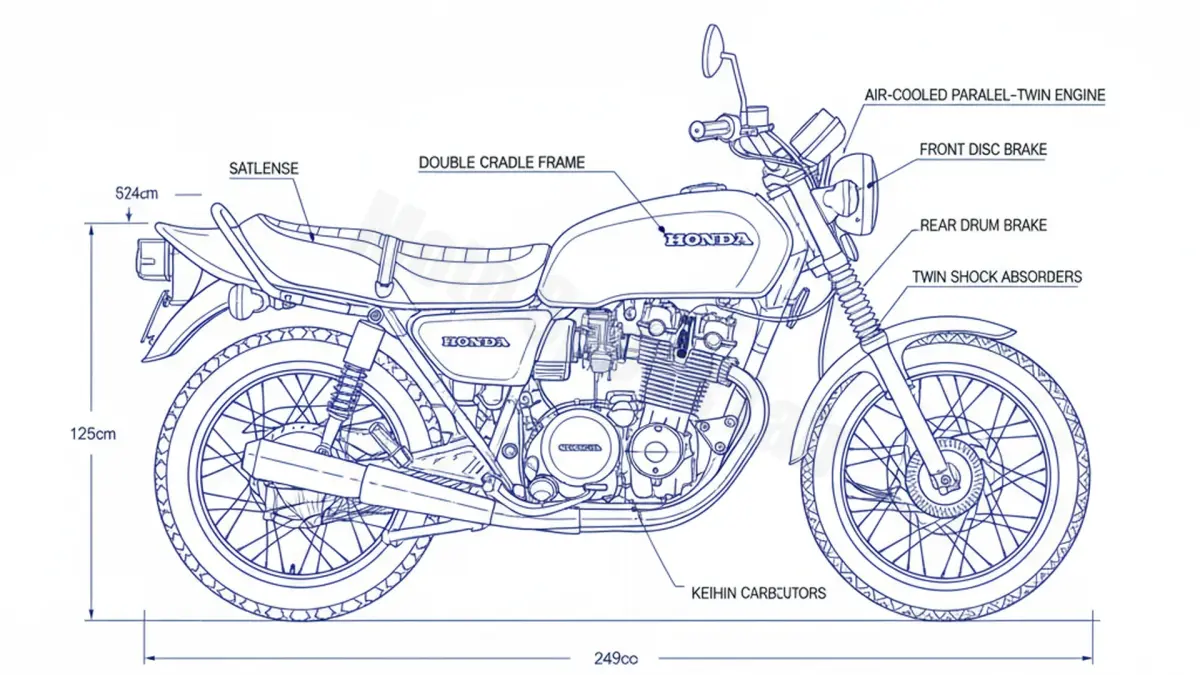
The Honda CB 250 N/ND, affectionately known in many markets as the ‘Super Dream,’ stands as a pivotal moment in Honda’s mid-range evolution. A unique engineering highlight of this model was the introduction of the Pentroof combustion chamber paired with a sophisticated 3-valve-per-cylinder head design (two intake, one exhaust). This configuration allowed the 249cc parallel-twin to breathe more efficiently than standard two-valve competitors, providing a smoother power delivery that became the benchmark for commuter reliability in the late 70s.
Engineering Analysis
The CB 250 N utilized a 180-degree crankshaft and featured a counterbalance shaft to mitigate the inherent vibrations of a parallel-twin setup. This made the CB250N one of the most refined quarter-liter machines of its era. Furthermore, it featured Honda’s iconic ‘Comstar’ composite wheels, which offered the rigidity of alloy wheels with the repairability and slight flex of traditional spoked wheels.
Maintenance Protocol
Lubrication System
For optimal engine longevity, MotoSpecsLab recommends using a high-quality SAE 10W-40 oil. Given the wet clutch system, it is imperative to use oil that meets JASO MA2 specifications to prevent clutch slippage. The total capacity is 2.0 liters. Regular intervals of 3,000 miles are recommended for oil changes due to the air-cooled nature of the engine.
Electrical and Ignition
The ignition system relies on NGK DR8ES-L spark plugs. Maintaining a precise gap of 0.6–0.7 mm is critical for cold-start reliability. The electrical system is supported by a YB12A-A battery; given the age of these units, ensuring clean ground contacts is essential to prevent charging circuit failure.
Chassis and Tires
Handling characteristics on the CB 250 N are highly sensitive to tire pressure. The front 3.60 S19 tire should be maintained at 2.0 bar (28 psi). The rear 4.10 S18 tire requires 2.25 bar (32 psi) for solo riding, but should be increased up to 2.80 bar (40 psi) when carrying a pillion or heavy luggage to maintain stability.
Conclusion
The Honda CB 250 N remains a testament to Honda’s ‘over-engineering’ philosophy of the late 1970s. By following these technical specifications, owners can ensure this classic parallel-twin continues to provide the reliable service for which the ‘Super Dream’ series is legendary.