| Specification | Detail |
|---|---|
| Model | Honda CBR 600 F (EINSPRITZER) – PC35/01 |
| Production Years | 2001 – 2006 |
| Engine Oil | SAE 10W-40 (JASO MA/MA2) | 3.0 L (with filter) |
| Tires (F/R) | 120/70 ZR 17 / 180/55 ZR 17 |
| Tire Pressure | F: 2.5 bar (36 psi) / R: 2.9 bar (42 psi) |
| Battery | YTZ10S |
| Spark Plug | NGK IMR9C-9H |
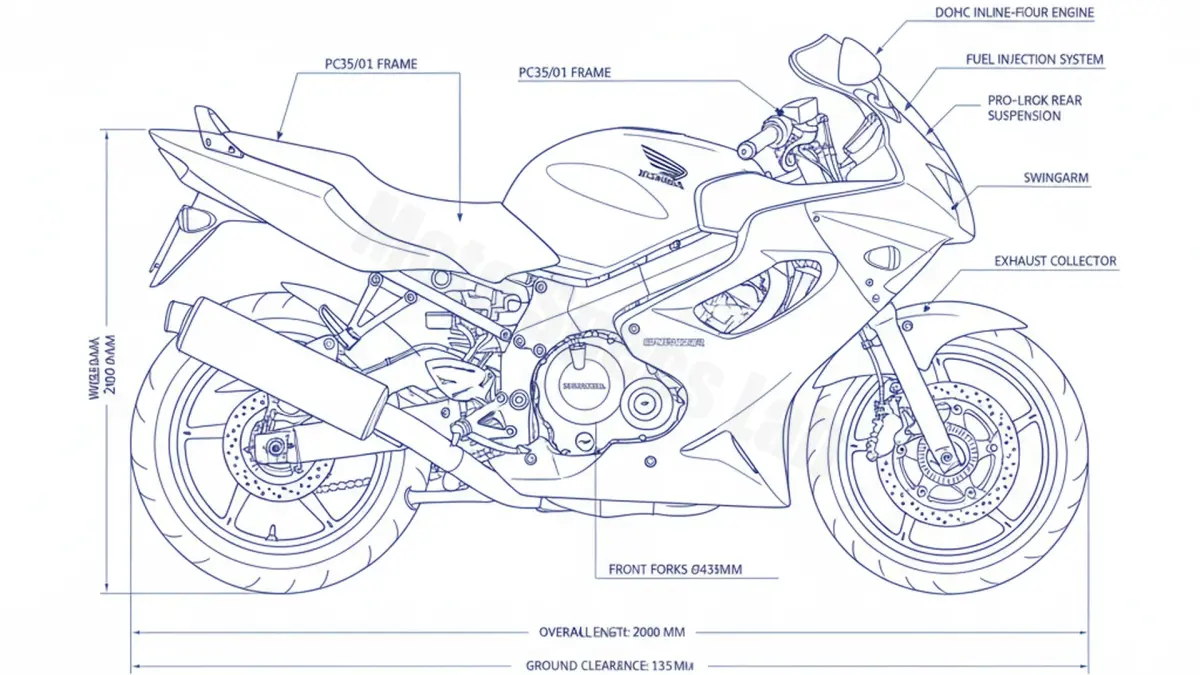
The 2001 introduction of the PC35/01 marked a pivotal moment in Honda’s middleweight history: it was the first CBR 600 F to abandon traditional carburetors in favor of PGM-FI (Programmed Fuel Injection). This engineering milestone didn’t just improve cold-start reliability; it refined the power delivery of the legendary inline-four engine, making it one of the most versatile sportbikes ever manufactured.
Engineering Overview
The PC35/01 utilized a dual-beam aluminum frame that balanced rigidity for track use with the compliance needed for street touring. Unlike its more aggressive sibling, the CBR 600 RR, the ‘F’ model maintained a single-piece seat and slightly higher clip-ons, offering ergonomics that allowed for long-distance riding without sacrificing the 100+ horsepower performance profile.
Maintenance Guide & Lab Recommendations
1. Lubrication System
For the PC35/01, we recommend a high-quality synthetic SAE 10W-40 meeting JASO MA2 standards. The wet clutch is sensitive to friction modifiers found in automotive oils; using a motorcycle-specific lubricant is non-negotiable. Total capacity for an oil and filter change is 3.0 liters.
2. Ignition & Electrical
The fuel-injected model utilizes NGK IMR9C-9H Iridium spark plugs. These are designed for longevity and a precise spark under high compression. The electrical system relies on a YTZ10S battery. Note: Honda models of this era are known for Regulator/Rectifier (Reg-Rec) heat issues; ensure the cooling fins on the unit are clear of debris.
3. Chassis & Tires
The standard 120/70 and 180/55 tire combination provides a neutral steering feel. To maintain the intended profile and prevent cupping, keep pressures strictly at 2.5 bar (front) and 2.9 bar (rear). Lowering pressures for “grip” on the street is often counterproductive on this specific chassis geometry.
Common Technical FAQ
Why is the Cam Chain Tensioner (CCT) noisy?
This is a characteristic trait of the PC35 series. While the fuel injection improved the engine’s fueling, the hydraulic CCT can lose tension over time, causing a ‘rattle’ between 4,000 and 6,000 RPM. Many owners switch to manual tensioners for a permanent fix.
How often should I change the Iridium plugs?
While standard plugs last 12,000 km, the IMR9C-9H Iridium plugs in the PC35/01 are typically rated for 24,000 to 48,000 km depending on riding conditions, though inspection every 12,000 km is recommended.