| Production Years | 1987 – 1990 |
|---|---|
| Engine Type | 748cc V4, 16-valve, DOHC, Gear-driven cams |
| Oil Capacity / Grade | 3.1 L / SAE 10W-40 (API SE, SF, SG) |
| Tires (F/R) | 120/70 V17 / 170/60 V18 |
| Tire Pressure (F/R) | 2.25 bar (33 psi) / 2.50 bar (36 psi) |
| Spark Plug | NGK ER9EH |
| Battery | YTX9-BS |
To understand the Honda VFR 750 R (RC30), one must look beyond the fairings to its connecting rods. Unlike mass-produced motorcycles of the era, the RC30 featured hand-finished titanium connecting rods, a first for a production machine. These components were so labor-intensive that the bike was assembled in a dedicated area of the Hamamatsu plant by a specialist team, ensuring tolerances usually reserved for HRC (Honda Racing Corporation) factory works bikes.
Engineering Overview: A V4 Legend
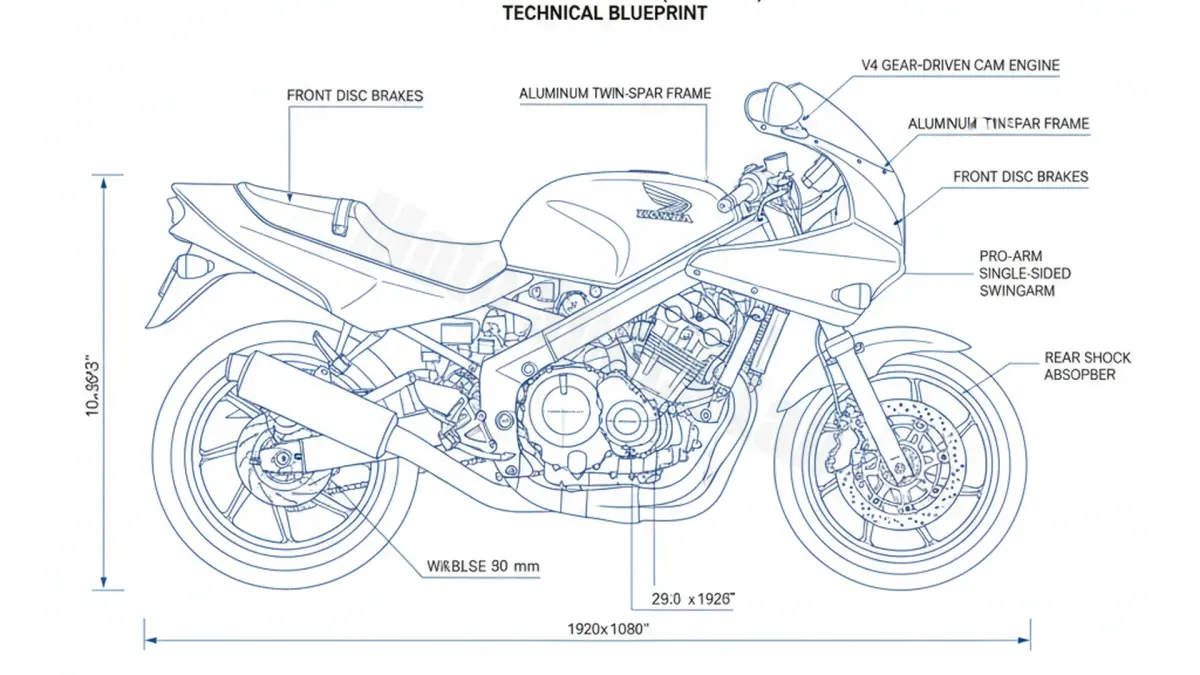
The RC30 was conceived for one purpose: to win the newly formed World Superbike Championship. Its 748cc 90-degree V4 engine utilized gear-driven cams, eliminating the variability of cam chains and providing that iconic mechanical whine. The 360-degree “big bang” firing order provided superior traction out of corners, a trait that helped Fred Merkel secure the inaugural WSBK titles in 1988 and 1989.
The chassis was equally revolutionary. The ELF-designed Pro-Arm single-sided swingarm was not just a stylistic choice; it allowed for rapid rear wheel changes during endurance racing. The aluminum twin-spar frame was exceptionally rigid, and the quick-release front forks emphasized its racing pedigree.
Technical Maintenance Guide
As a high-precision machine, the RC30 demands rigorous adherence to service intervals to maintain its performance and investment value.
1. Lubrication System
The V4 engine requires high-quality mineral or semi-synthetic oil. We recommend SAE 10W-40 meeting API SE, SF, or SG standards. The total capacity is 3.1 Liters. Given the gear-driven cams and high-revving nature, oil should be changed annually regardless of mileage to prevent acid buildup and ensure the integrity of the internal bearings.
2. Ignition & Electrical
The RC30 uses specialized NGK ER9EH spark plugs. These are thinner than standard plugs to allow for larger valves within the compact cylinder heads. Ensure the gap is set correctly. The electrical system is supported by a YTX9-BS battery; given the RC30’s often-sedentary life in collections, a smart tender is mandatory to prevent voltage drops that can stress the aging regulator/rectifier.
3. Wheels and Tires
The RC30 runs a period-specific 17-inch front and 18-inch rear wheel setup. While modern rubber is available, the 18-inch rear (170/60 V18) limits choices. Maintain pressures at 2.25 bar (33 psi) front and 2.50 bar (36 psi) rear for optimal handling. Over-pressuring can lead to a harsh ride given the stiff racing-derived suspension.
The MotoSpecsLab Verdict
The Honda RC30 is not merely a motorcycle; it is a piece of kinetic art that redefined what a production bike could be. It represents the pinnacle of Honda’s engineering ambition. For the collector or the rare rider, maintaining this machine is a matter of preserving history. Its combination of gear-driven cam soundtracks and the exotic glint of titanium makes it the ultimate expression of the V4 era.