| Category | Specification |
|---|---|
| Model Years | 2003 – 2012 |
| Engine Oil | SAE 10W-30 or 10W-40 (API SG+; JASO MA) – 3.6 L |
| Tire Dimensions | F: 110/80 R19 M/C (59V) / R: 150/70 R17 M/C (69V) |
| Tire Pressure | F: 2.50 bar (36 psi) / R: 2.90 bar (42 psi) |
| Battery Type | YTX14-BS |
| Spark Plugs | NGK: IJR8B9; DENSO: VUH24D |
Historical Engineering Highlight: While the original SD01 Varadero was criticized for its high fuel consumption, the introduction of the SD02 in 2003 marked a pivotal engineering shift. Honda replaced the carburetors with the PGM-FI electronic fuel injection system and added a sixth gear. This transformation didn’t just improve efficiency; it turned the Varadero into one of the most stable, high-mileage adventure-touring platforms ever built, often referred to by enthusiasts as the ‘Two-Wheeled SUV’.
Technical Overview: The SD02 and SD04 Evolution
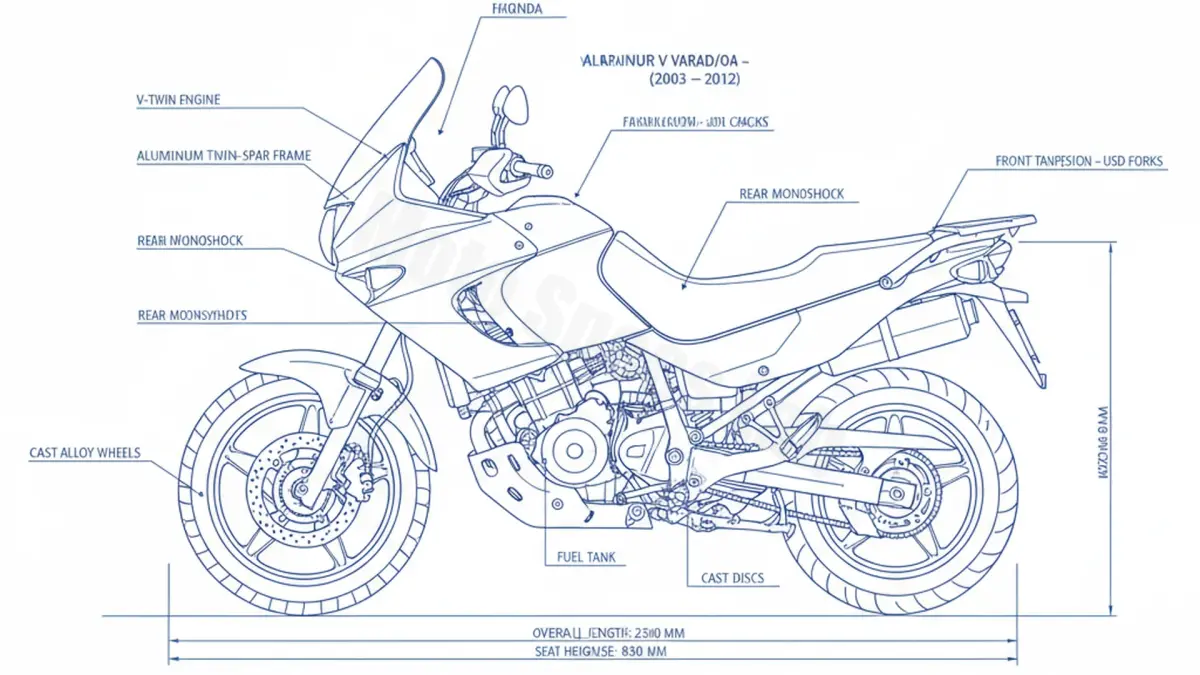
The Honda XL 1000 V Varadero SD02 (2003-2006) and the subsequent SD04 facelift (2007-2012) represent the pinnacle of Honda’s V-twin touring philosophy. At its heart lies the 996cc 90-degree V-twin, a detuned version of the powerplant found in the VTR1000 Firestorm. This engine is renowned for its linear power delivery and exceptional mechanical longevity.
The SD04 update in 2007 introduced further refinements, including a redesigned fairing, improved instrument cluster, and HECS3 oxygen-sensor-regulated catalytic converters to meet Euro 3 emissions standards. The chassis remains a robust steel perimeter frame, paired with 43mm telescopic forks and a Pro-Link rear suspension with adjustable preload.
Maintenance Guide & Reliability Insights
Lubrication and Cooling
The 3.6-liter oil capacity requires high-quality semi-synthetic or synthetic oil meeting JASO MA standards. Given the heat generated by the rear cylinder in slow traffic, MotoSpecsLab recommends 10W-40 for warmer climates to maintain viscosity. Coolant changes are critical every two years to prevent corrosion in the aluminum radiators.
Electrical System
The Varadero utilizes a YTX14-BS battery. While the SD02/04 charging systems are more robust than the earlier SD01, it is still advisable to monitor the regulator/rectifier connections for heat damage, a known Honda quirk of this era. The use of Iridium spark plugs (NGK IJR8B9) is mandatory for optimal combustion and long service intervals.
Braking and Handling
Equipped with Honda’s Dual Combined Braking System (CBS), the Varadero applies a portion of front braking force when the rear pedal is depressed. Maintenance of the delay valve and the secondary master cylinder on the left fork leg is essential for consistent braking feel. Tire pressures must be strictly maintained at 2.50 bar front and 2.90 bar rear to prevent ‘cupping’ of the front tire under the bike’s 270kg+ wet weight.
Expert Verdict
The XL 1000 V Varadero is not a lightweight enduro; it is a long-distance specialist. For the technical owner, it offers a rewardingly accessible maintenance schedule and a level of over-engineering that is rare in modern, plastic-heavy adventure bikes. If you prioritize reliability and wind protection over off-road agility, the SD04 remains a gold standard in the used market.