| Parameter | Specification |
|---|---|
| Production Years | 2010 – 2016 |
| Engine Oil | SAE 10W-40 JASO MA/MA2 (1.1 L) |
| Tires (F/R) | 100/80-14 / 120/80-14 |
| Tire Pressure (F/R) | 2.0 bar / 2.25 bar |
| Spark Plug | NGK CR7HSA |
| Battery | YTX7L-BS |
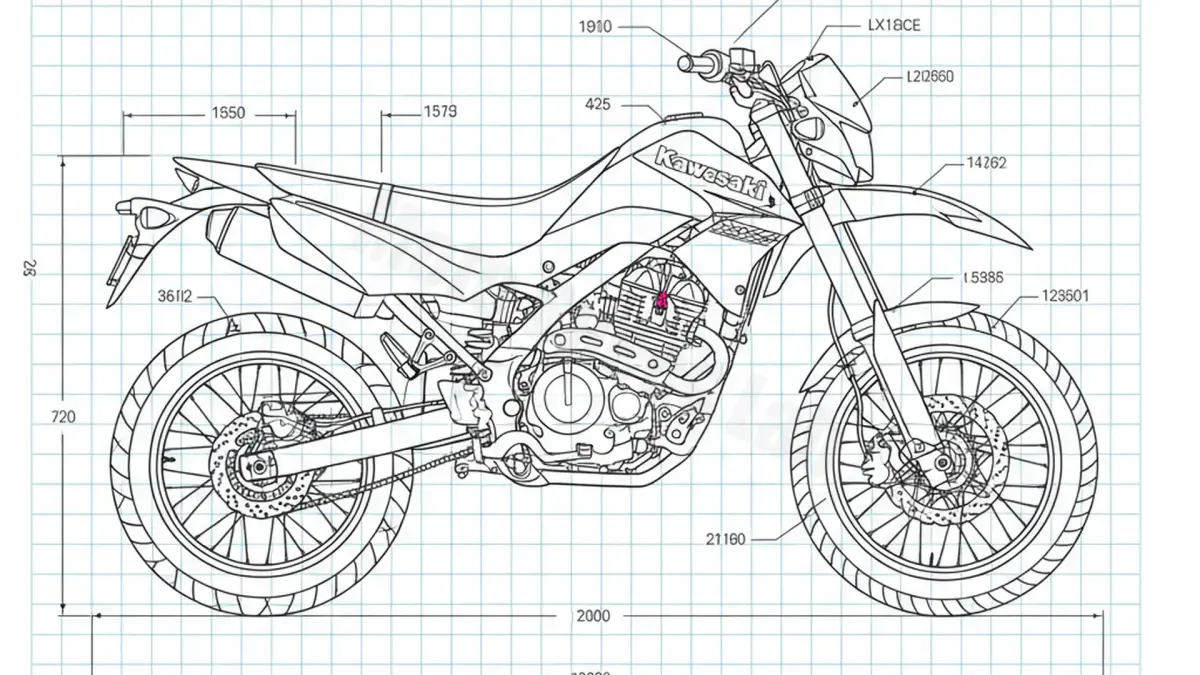
The Kawasaki D-TRACKER 125 (LX125CD) holds a unique place in engineering history as one of the few entry-level motorcycles to feature a high-rigidity steel perimeter frame—a design philosophy directly inherited from Kawasaki’s championship-winning KX motocross series. This structural choice provides the D-Tracker with a level of chassis feedback and stability that far exceeds the standard backbone frames found in many of its 125cc competitors.
Engineering Overview
Launched in 2010, the D-Tracker 125 was designed specifically for the urban environment. Unlike its sibling, the KLX 125, which sports 19/16-inch wheels for off-road use, the D-Tracker utilizes 14-inch wheels. This smaller wheel diameter significantly lowers the center of gravity and reduces gyroscopic forces, resulting in the “flickable” handling characteristics essential for supermoto performance.
Maintenance Essentials
Engine Lubrication
The LX125CD engine is a robust, fuel-injected SOHC single-cylinder unit. To maintain peak performance and protect the wet clutch system, use 1.1 liters of SAE 10W-40 oil meeting JASO MA or MA2 standards. Regular oil changes are critical for this small-capacity engine, as it often operates at high RPMs during highway transit.
Ignition and Electrical
The factory-specified spark plug is the NGK CR7HSA. Given the lean-burn nature of fuel-injected 125cc engines, the electrode should be inspected every 6,000 km for fouling or excessive wear. The electrical system is supported by a YTX7L-BS battery, which provides ample cranking amps for the electric start system.
Wheel and Tire Setup
The 14-inch wheel configuration requires specific tire pressures to balance grip and longevity. For optimal handling, maintain 2.0 bar (29 psi) in the front (100/80-14) and 2.25 bar (33 psi) in the rear (120/80-14). Under-inflation on these smaller tires can lead to sluggish steering and increased rim damage risk on urban curbs.
MotoSpecsLab Verdict
The Kawasaki D-TRACKER 125 remains a benchmark for small-displacement supermotos. Its combination of a sophisticated fuel-injection system and a race-derived chassis makes it both a reliable commuter and a capable technical trainer for aspiring riders. Adhering to the specified maintenance intervals ensures this machine remains a reliable asset in any garage.
Frequently Asked Questions
Q: Can I use synthetic oil in the D-Tracker 125?
A: Yes, provided it meets the JASO MA/MA2 specification to ensure the wet clutch does not slip.
Q: Why does the D-Tracker 125 use 14-inch wheels?
A: The 14-inch wheels are chosen to provide a lower seat height and quicker steering response in tight city traffic compared to full-sized 17-inch supermoto wheels.