| Component | Specification |
|---|---|
| Engine Type | 451cc Parallel-Twin, DOHC, 8-Valve |
| Engine Oil | SAE 10W-40 JASO MA2 (2.0 L) |
| Spark Plug | NGK LMAR9G |
| Battery | YTZ8V (12V 7Ah) |
| Front Tire | 130/70-18M/C 63H (2.25 bar) |
| Rear Tire | 150/80-16M/C 71H (2.50 bar) |
Engineering Highlight: While the ‘Eliminator’ name historically designated high-performance drag-style cruisers like the 1985 ZL900, the 2024 EL450A represents a modern engineering pivot. It utilizes a long-stroke version of the Ninja 400 engine—now 451cc—specifically tuned to meet stringent Euro 5+ emissions while providing a flat torque curve that favors urban tractability over peak RPM performance.
Technical Review: The EL450A/B Platform
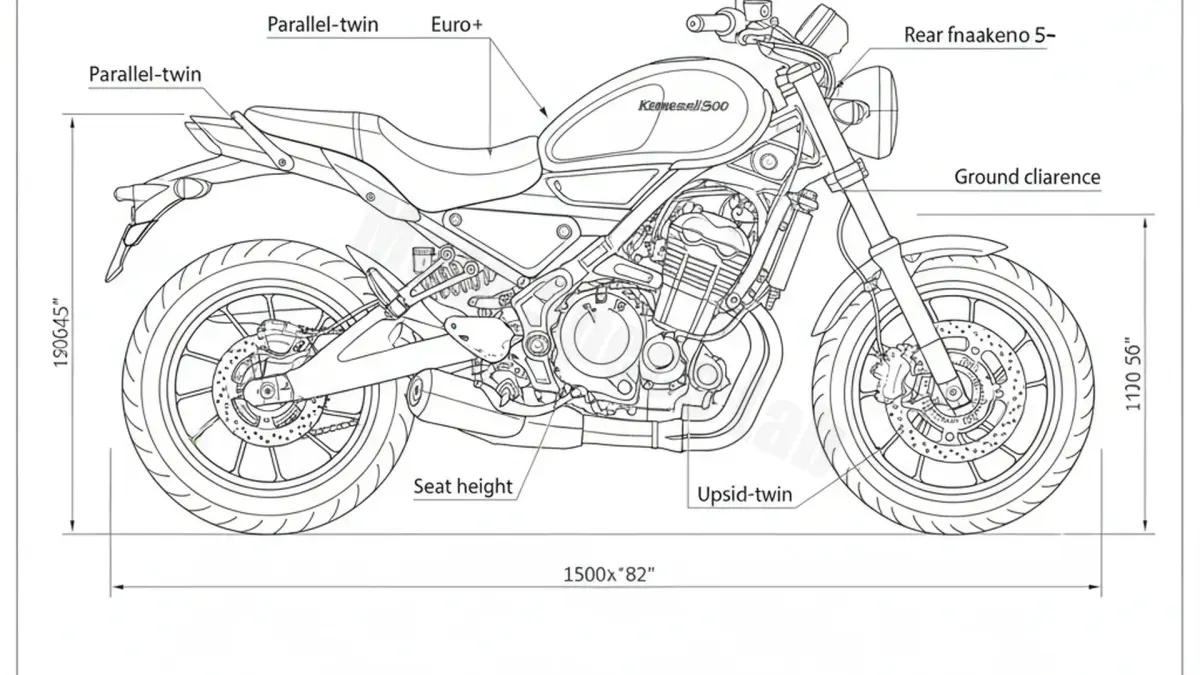
The Kawasaki Eliminator 500 marks the return of the ‘Power Cruiser’ silhouette to the sub-500cc segment. Unlike the Vulcan S, which uses the 649cc platform, the Eliminator 500 (EL450A) is built around a lightweight trellis frame inspired by the Ninja 500. This design choice results in a low curb weight (approx. 176kg), making it one of the most agile cruisers in its class.
The Euro 5+ compliance is achieved through a sophisticated O2 sensor network and a revised catalyst volume within the exhaust collector. The 451cc mill delivers 33.4 kW (45.4 PS), placing it perfectly at the limit of the A2 license regulation without requiring electronic restrictors.
Maintenance Guide & Fluid Specifications
To maintain the longevity of the EL450A/B, strict adherence to the following service parameters is required:
1. Lubrication System
The Eliminator 500 uses a wet sump system. For standard operation, SAE 10W-40 JASO MA2 is the factory-recommended grade. The total oil capacity is 2.0 Liters when changing the filter. MotoSpecsLab recommends oil changes every 12,000 km (7,500 miles) or annually, though a break-in change at 1,000 km is critical for gear meshing.
2. Ignition & Electrical
The high-compression parallel-twin utilizes NGK LMAR9G spark plugs. These are long-reach plugs designed to optimize flame propagation in the compact combustion chamber. The electrical system is powered by a YTZ8V maintenance-free battery. Given the modern electronics and LED lighting, ensuring the battery stays above 12.4V is essential for ECU stability.
3. Chassis & Tires
The 18-inch front and 16-inch rear wheel combination provides the classic ‘long and low’ stance. Correct tire pressure is vital for handling: 2.25 bar (33 psi) at the front and 2.50 bar (36 psi) at the rear. Under-inflation on the 150/80-16 rear tire can lead to sluggish tip-in and increased fuel consumption.
Frequently Asked Questions
Is the Eliminator 500 suitable for tall riders?
While the standard seat height is a low 735mm, Kawasaki offers ‘Ergo-Fit’ options, including a High Seat that increases the height to 765mm for better legroom.
What is the difference between the EL450A and EL450B?
The EL450A is the standard model, while the EL450B (often designated as the ‘SE’) typically includes factory-installed accessories like a headlight cowl, fork gaiters, and a USB-C outlet, though the mechanical drivetrain remains identical.