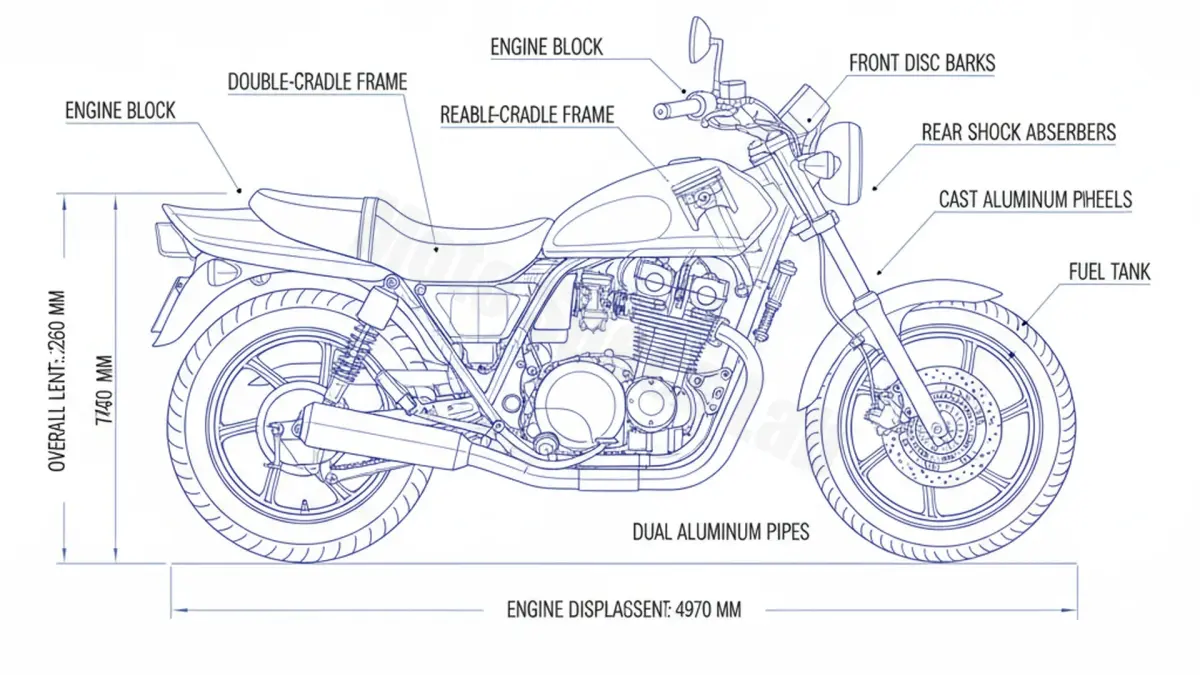
| Quick Specs: Kawasaki EN 500 (1990 – 1996) | |
|---|---|
| Engine Type | Liquid-cooled Parallel Twin (DOHC) |
| Oil Capacity | 2.8 L |
| Oil Grade | 10W-40, 10W-50, 20W-40, 20W-50 (API SE, SF, SG) |
| Tires (F/R) | F: 100/90-19 57H / R: 140/90-15 70H |
| Battery | YB12A-A (12V) |
| Spark Plug | NGK DR8ES / DR8EA (0.6 – 0.7 mm gap) |
A unique engineering highlight of the Kawasaki EN 500 (EN500A) is its high-revving heart: it utilized the liquid-cooled 498cc parallel-twin engine directly inherited from the legendary GPZ 500 S (Ninja 500). Unlike traditional cruisers of the early 90s that relied on slow-thumping V-twins, the EN 500 offered a sportbike-derived powerband and, in its early A-series configuration, a clean and low-maintenance Kevlar belt drive, a rarity for mid-displacement cruisers of that era.
Engineering Overview
The EN500A, often marketed as the Vulcan 500 in North America, stands as a testament to Kawasaki’s ability to repurpose high-performance architecture for the cruiser market. By retuning the Ninja 500 engine for more mid-range torque while retaining its 11,000 RPM ceiling, Kawasaki created a cruiser that could outrun many of its 750cc competitors. The chassis featured a classic rake with a 19-inch front wheel, providing a stable yet surprisingly nimble footprint.
Maintenance Essentials
Lubrication System
The EN 500 engine is sensitive to oil quality due to its high-revving nature. Total oil capacity is 2.8 liters. For temperate climates, a high-quality SAE 10W-40 is standard, though 20W-50 is preferred in hotter regions to maintain viscosity at high operating temperatures. Ensure the oil meets API SE, SF, or SG specifications to protect the integrated gearbox and wet clutch.
Ignition and Electrical
For optimal combustion efficiency, use NGK DR8ES or DR8EA spark plugs. The electrode gap is critical for preventing high-RPM misfires; it must be set strictly between 0.6 and 0.7 mm. The electrical system is powered by a YB12A-A lead-acid battery, which requires regular fluid level checks unless replaced with a modern AGM equivalent.
Tires and Pressure
The staggered wheel setup (19″ front / 15″ rear) defines the EN 500’s silhouette. Proper inflation is vital for handling and tire longevity:
- Front (100/90-19): 2.0 bar (28 psi)
- Rear (140/90-15): 2.3 bar (32 psi) for solo riding; 2.5 bar (36 psi) for pillion or heavy luggage.
Editorial Review: The MotoSpecsLab Verdict
The Kawasaki EN 500 remains a favorite among enthusiasts for its “sleeper” performance. While its aesthetics are quintessentially 90s cruiser, its mechanical DNA is pure sport-tourer. The belt drive on the EN500A models is highly coveted today for its smoothness and lack of chain grime. Prospective owners should pay close attention to the carburetors, as the Keihin CVK32 units can be finicky if left with modern ethanol fuels for extended periods. Overall, it is a mechanically robust machine that offers a unique alternative to the V-twin status quo.
Frequently Asked Questions
Q: Can I use synthetic oil in the EN 500?
A: Yes, provided it is JASO MA rated to ensure it does not cause the wet clutch to slip.
Q: How often should the belt drive be inspected?
A: Inspect for tension and debris every 5,000 km. Unlike chains, these belts can last over 60,000 km if properly aligned and kept free of sharp stones.