| Component | Specification |
|---|---|
| Production Years | 1992 – 1999 |
| Engine Oil | SAE 10W-40 (JASO MA) – 1.7 L |
| Tire Size (Front/Rear) | 90/90-18 51P / 110/90-17 60P |
| Tire Pressure (Front/Rear) | 1.75 bar (25 psi) / 2.00 bar (28 psi) |
| Battery Type | YTX9-BS |
| Spark Plug | NGK DR8EA |
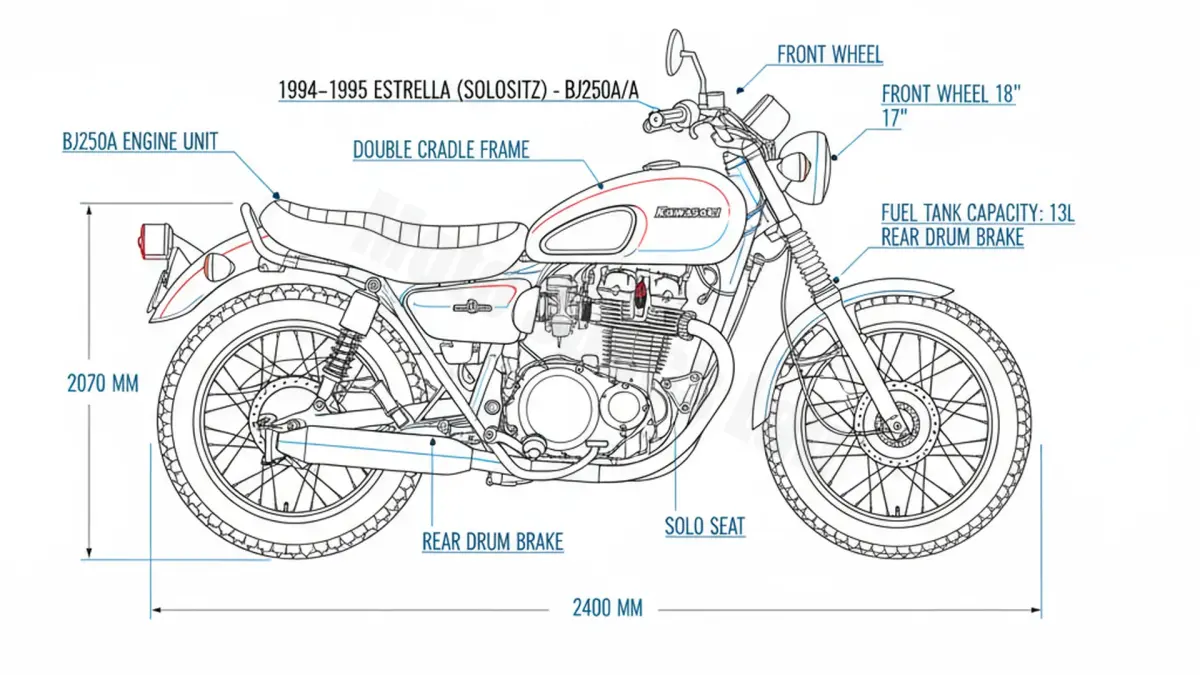
The Kawasaki ESTRELLA (SOLOSITZ) BJ250A/A represents a masterclass in “Neo-Retro” engineering. While many manufacturers in the early 90s were chasing high-RPM performance, Kawasaki looked backward to its own heritage—specifically the Meguro SG 250 single—to create a long-stroke engine that prioritized mechanical character and aesthetic purity over raw horsepower. The “Solositz” variant is particularly notable for its sprung solo saddle, a direct engineering nod to the post-war British and Japanese singles that defined the era.
Engineering Analysis: The BJ250A Powerplant
At the heart of the Estrella is a 249cc, air-cooled, SOHC single-cylinder engine. Unlike the high-revving parallel twins found in the Ninja 250 of the same era, the BJ250A utilizes a vertical cylinder arrangement with a focus on low-to-mid-range torque. The long-stroke design provides a distinct “thumping” exhaust note that is highly sought after by enthusiasts. From a technical standpoint, the engine is remarkably reliable, provided the 1.7-liter oil capacity is maintained with high-quality SAE 10W-40 (JASO MA) lubricant to protect the integrated gearbox and clutch assembly.
Maintenance Protocol
Lubrication System
The 1.7-liter oil capacity is relatively small for a 250cc engine, making oil quality and level monitoring critical. Use only JASO MA certified oils to prevent clutch slippage. MotoSpecsLab recommends an oil change every 3,000 to 5,000 km, depending on urban usage intensity.
Ignition and Electrical
The BJ250A utilizes a maintenance-free YTX9-BS battery. For optimal combustion efficiency and cold-start reliability, the NGK DR8EA spark plug should be inspected for carbon fouling annually. The plug gap should be maintained at 0.6mm to 0.7mm to ensure consistent ignition of the air-fuel mixture provided by the Keihin carburetor.
Chassis and Contact Patch
The handling characteristics of the Solositz are defined by its 18-inch front and 17-inch rear wire-spoke wheels. Maintaining precise tire pressure is vital for the stability of this lightweight machine. We recommend 1.75 bar (25 psi) in the front (90/90-18) and 2.00 bar (28 psi) in the rear (110/90-17). Under-inflation can lead to sluggish steering and increased rim wear on the spoked wheels.
Editorial Review: MotoSpecsLab Verdict
The Kawasaki Estrella BJ250A/A Solositz is more than a motorcycle; it is a functional piece of industrial art. While it lacks the top-end speed for modern highway cruising, its build quality—featuring heavy use of metal chrome and high-quality paint—exceeds most modern 250cc offerings. It remains a top choice for collectors and urban commuters who value mechanical soul and ease of maintenance.
Frequently Asked Questions (FAQ)
What is the fuel capacity of the BJ250A?
The BJ250A typically features a 13-liter fuel tank, providing an excellent range given its fuel-efficient single-cylinder design.
Can I use a different spark plug?
While alternatives exist, the NGK DR8EA is the factory-specified heat range. Deviating from this can cause overheating or fouling issues in the air-cooled cylinder head.
Why is it called ‘Solositz’?
‘Solositz’ is German for ‘Single Seat,’ referring to the classic sprung solo saddle configuration that distinguishes this model from the dual-seat Estrella versions.