| Attribute | Specification |
|---|---|
| Model Series | ZX600C1, ZX600C2, ZX600C3 |
| Production Years | 1988 – 1990 |
| Engine Oil | SAE 10W-40 JASO MA2 (2.5 L) |
| Tire Dimensions | F: 110/80-16 55V | R: 130/70-18 63V |
| Recommended Pressure | F: 2.0 bar (28 psi) | R: 2.25 bar (32 psi) |
| Battery Type | YB12AL-A |
| Spark Plug | NGK DR9EA (Gap: 0.6-0.7 mm) |
Engineering Heritage: The 80hp Milestone
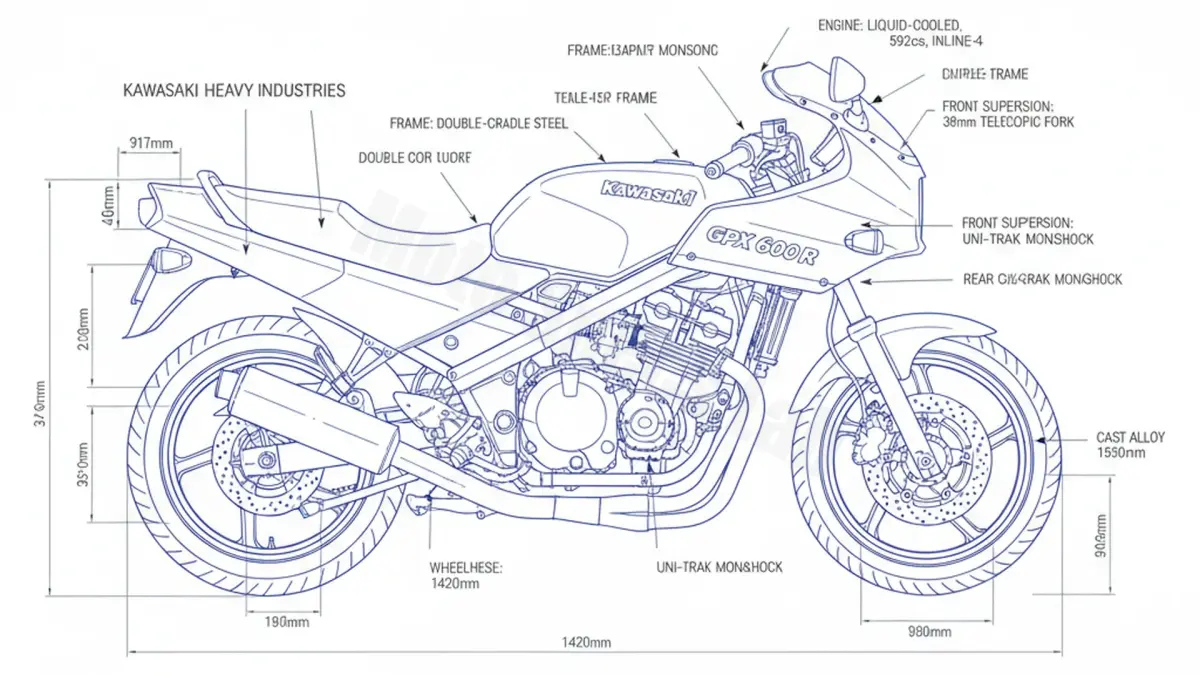
The Kawasaki GPX 600 R, known in North America as the Ninja 600R, represents a pivotal moment in the 600cc supersport timeline. While its predecessor, the GPZ 600 R, established the class, the GPX (ZX600C) was the first to push the boundaries of the 80-horsepower mark. It featured a refined liquid-cooled, DOHC 16-valve inline-four engine with a narrower valve angle and lighter internal components, allowing for a higher redline and a more aggressive power delivery that paved the way for the ZX-6R dynasty.
Technical Performance & Handling
The ZX600C is characterized by its unique wheel configuration: a 16-inch front paired with an 18-inch rear. This setup was designed to provide rapid turn-in response, a hallmark of 1980s racing geometry. The double-cradle steel frame, though heavier than modern aluminum counterparts, provides a stable platform for the high-revving engine. The inclusion of Kawasaki’s ESCS (Electronic Suspension Control System) or mechanical anti-dive units on the front forks (depending on the specific market variant) was a testament to the high-tech aspirations of the era.
Maintenance Roadmap
1. Lubrication System
For the ZX600C1-3, maintaining oil integrity is paramount due to the high operating temperatures of the 16-valve head. Use 2.5 Liters of SAE 10W-40. It is critical to ensure the oil meets JASO MA2 standards to prevent clutch slippage, as the GPX utilizes a wet multi-plate clutch system. Change the oil and filter every 6,000 km (approx. 4,000 miles) or annually.
2. Ignition & Electrical
The ignition system relies on NGK DR9EA spark plugs. Given the high-revving nature of this engine, the electrode gap must be precisely set between 0.6 mm and 0.7 mm. A fouled plug in these engines often manifests as a hesitation at 7,000 RPM. The electrical system is powered by a YB12AL-A lead-acid battery; owners should regularly check the electrolyte levels (if not using a sealed AGM equivalent).
3. Chassis & Tires
The GPX 600 R is sensitive to tire pressure. To maintain the intended handling characteristics of the 16-inch front wheel, keep the front at 2.0 bar (28 psi) and the 18-inch rear at 2.25 bar (32 psi). Using modern compound tires in these legacy sizes (110/80-16 and 130/70-18) can significantly improve the grip levels compared to period-correct rubber.
FAQ
Q: Why does my GPX 600 R feel unstable in high-speed corners?
A: This is often due to incorrect tire pressure or worn steering head bearings. Ensure your pressures are set to 28/32 psi. The 16-inch front wheel is inherently more sensitive to road imperfections.
Q: Can I use synthetic oil?
A: Yes, provided it is a motorcycle-specific synthetic oil with the JASO MA2 rating. Avoid ‘Energy Conserving’ automotive oils which contain friction modifiers that will damage the wet clutch.