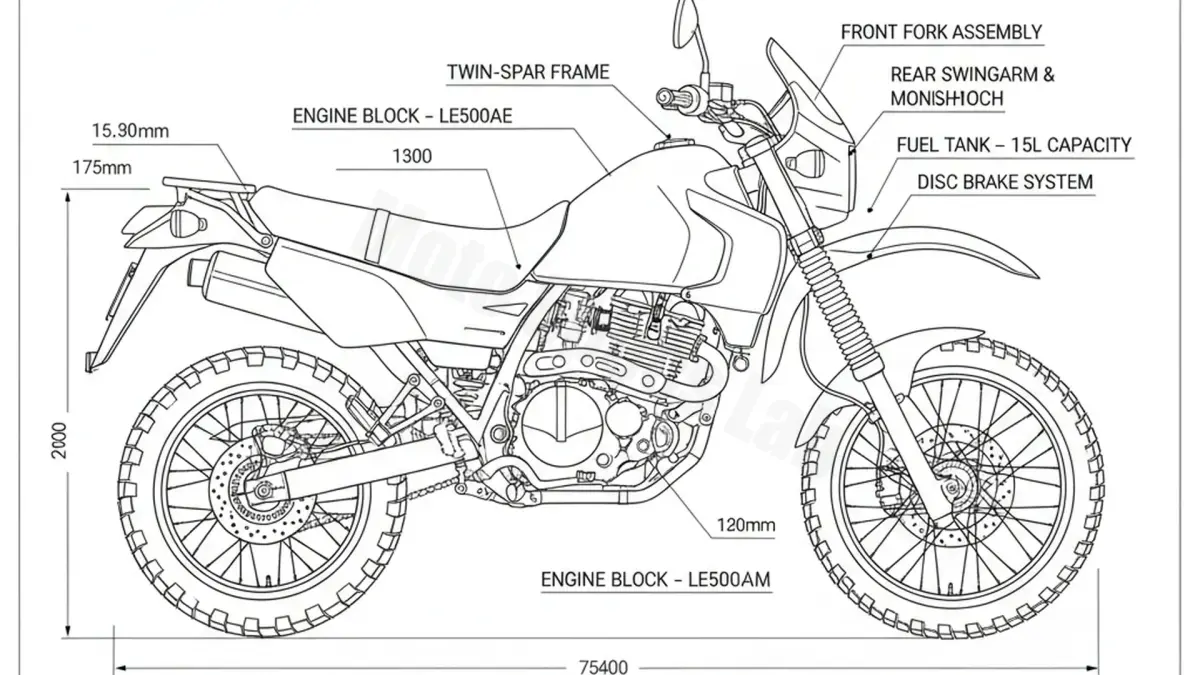
A unique engineering highlight of the Kawasaki KLE 500 is its heart: it was one of the first adventure-style motorcycles to utilize a high-revving 498cc parallel-twin engine derived directly from a sportbike (the GPZ500S/EX500). This gave the KLE a distinctive 180-degree crank character and a top-end rush rarely found in the single-cylinder ‘thumpers’ that dominated the dual-sport market in the early 1990s.
| Attribute | Specification |
|---|---|
| Model Range | LE500A1 – LE500A11 |
| Production Years | 1991–2001 |
| Engine Type | Liquid-cooled, Parallel-Twin, DOHC |
| Oil Type | SAE 10W-40 (API SE, SF, or SG) |
| Oil Capacity | 3.0 Liters |
| Front Tire | 90/90-21 54S |
| Rear Tire | 130/80-17 65S |
| Battery | YTX12-BS |
| Spark Plug | NGK DR9EA |
Engineering Overview
The LE500A series represents the first generation of Kawasaki’s middleweight versatile tourer. By pairing a 21-inch front wheel with a chassis designed for upright ergonomics, Kawasaki created a machine that bridged the gap between a rugged off-roader and a daily commuter. The engine’s dual overhead cams and four valves per cylinder allow it to breathe efficiently at higher RPMs, though it was retuned from its sportbike origins to provide a broader torque curve suitable for light trail use.
Maintenance Essentials
To maintain the longevity of the LE500A, strict adherence to fluid specifications is required. The 3.0-liter oil capacity is relatively large for its class, which helps with thermal management during slow-speed technical riding. Using a 10W-40 grade ensures proper lubrication across a wide temperature range.
Tires and Traction
The KLE 500 uses a classic adventure wheel setup. For optimal handling and carcass longevity, the pressures must be maintained at 1.5 bar (21 psi) in the front and 2.0 bar (28 psi) in the rear. Deviating from these pressures can significantly impact the bike’s stability, particularly when transitioning from asphalt to gravel.
Electrical System
The electrical system relies on a YTX12-BS maintenance-free battery. Given the age of these units, checking the charging system’s output is vital, as the magnets in the early GPZ-derived flywheels were known to occasionally delaminate—a technical detail every KLE owner should monitor during major services.
Performance Analysis
While not a dedicated enduro machine, the KLE 500’s long-travel suspension and generous ground clearance make it a formidable ‘soft-roader.’ Its primary strength lies in its reliability and the smoothness of the twin-cylinder engine compared to its contemporary rivals. The use of NGK DR9EA spark plugs ensures consistent ignition timing, which is critical for the 180-degree firing order of this specific powerplant.