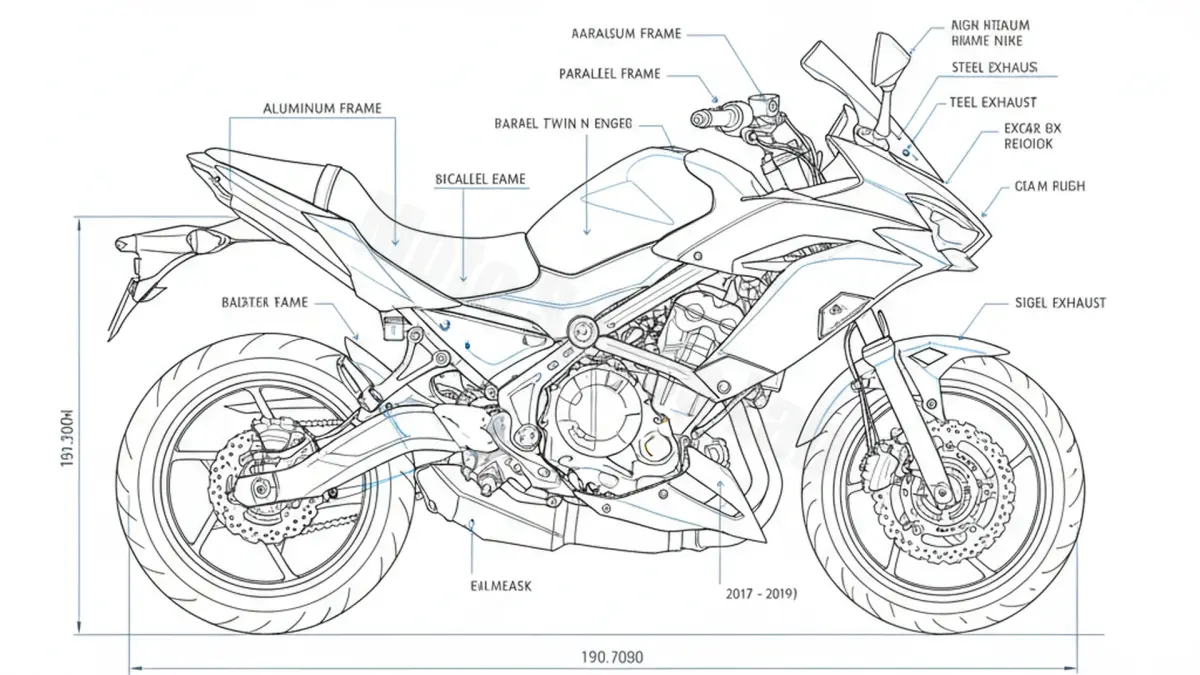
| Quick Specs: Ninja 650 (2017–2019) | |
|---|---|
| Engine Type | 649cc Parallel-Twin (Euro 4) |
| Oil Type | SAE 10W-40 JASO MA2 (1.8 L) |
| Spark Plug | NGK CR9EIA-9 |
| Battery | FTX12-BS |
| Front Tire | 120/70 ZR 17 (32 psi) |
| Rear Tire | 160/60 ZR 17 (36 psi) |
The 2017–2019 iteration of the Kawasaki Ninja 650 (EX650) represents a pivotal moment in the model’s history. Unlike its predecessor, the ER-6f, this generation underwent a radical weight-saving program, shedding a remarkable 15kg (33 lbs) primarily through the implementation of a high-tensile steel trellis frame and a redesigned asymmetrical gull-wing swingarm. This engineering shift transformed the bike from a budget-friendly commuter into a legitimate mid-weight sport-tourer with genuine agility.
Engineering Overview: The Euro 4 Evolution
To meet stringent Euro 4 emissions standards, Kawasaki refined the 649cc parallel-twin engine. While the peak power was slightly adjusted to 68 PS, the torque curve was optimized for mid-range responsiveness between 3,000 and 6,000 RPM. The inclusion of an Assist & Slipper clutch significantly reduced lever pull effort and mitigated rear-wheel hop during aggressive downshifting, a critical feature for both novice and experienced riders.
Maintenance Essentials
As the Editor-in-Chief of MotoSpecsLab, I emphasize that the longevity of the EX650 platform relies on strict adherence to the following technical specifications:
Lubrication System
The Ninja 650 requires 1.8 liters of SAE 10W-40 JASO MA2 oil. Using the MA2 specification is vital to prevent clutch slippage, as the friction modifiers found in standard automotive oils can degrade the wet-clutch performance.
Ignition and Electrical
The engine utilizes NGK CR9EIA-9 Iridium spark plugs. Iridium plugs are specified for this Euro 4 model due to their ability to maintain a consistent spark under leaner fuel mixtures. The electrical system is powered by an FTX12-BS battery; ensure terminals are kept clean and voltage is maintained above 12.6V during storage.
Chassis and Contact Patch
Handling precision is highly sensitive to tire pressure. The factory-recommended settings are 2.25 bar (32 psi) for the front 120/70 ZR 17 and 2.5 bar (36 psi) for the rear 160/60 ZR 17. For riders carrying luggage or a pillion, maintaining the rear pressure at 36 psi is non-negotiable to prevent carcass deformation and overheating.
MotoSpecsLab Verdict
The EX650 Euro 4 generation remains one of the most balanced motorcycles in the used market. Its lightweight chassis combined with a refined, linear power delivery makes it a masterclass in accessible engineering. By following the maintenance parameters outlined above, owners can ensure this machine remains as reliable as the day it left the Akashi plant.