| Specification | Data |
|---|---|
| Production Years | 1978–1982 |
| Engine Type | Parallel Twin, 4-Stroke |
| Oil Type / Capacity | SAE 10W-40 API SE/SF (1.5 L) |
| Spark Plug | NGK B8ES |
| Front Tire | 3.00-18 4PR |
| Rear Tire | 3.50-18 4PR |
| Tire Pressure (F/R) | 1.75 bar (25 psi) / 2.00 bar (28 psi) |
| Battery | YB10L-A2 |
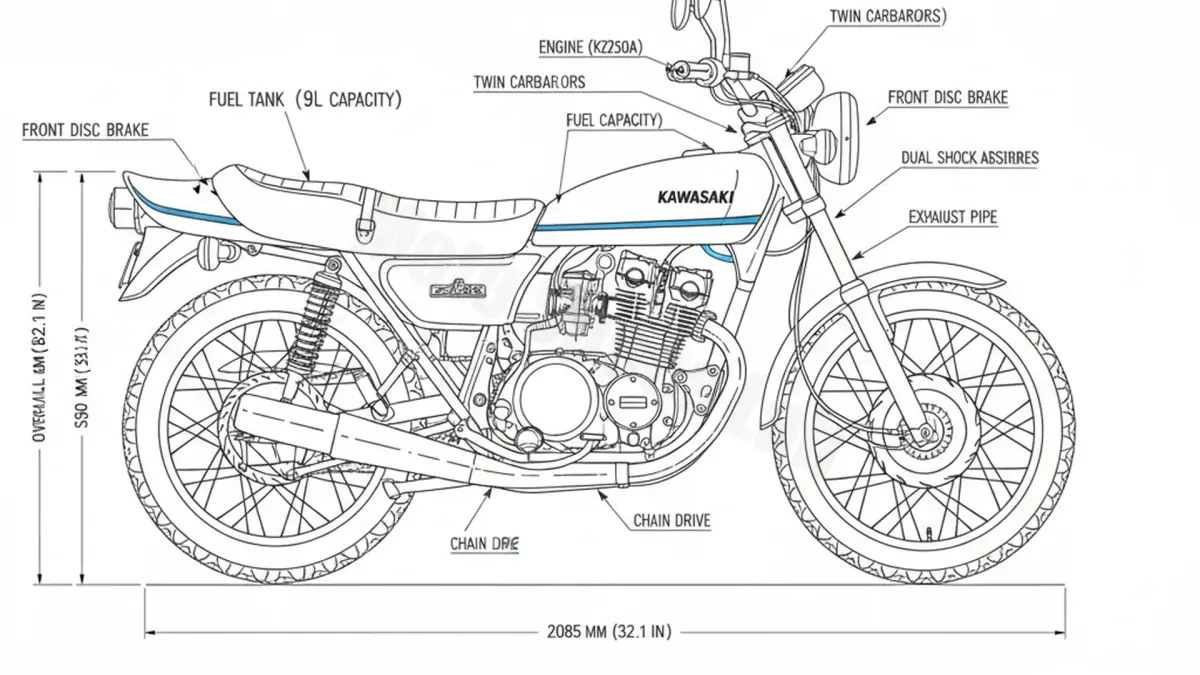
The Kawasaki Z 250 (TWIN), designated as the KZ250A, holds a unique place in motorcycling history as one of the first lightweight machines to successfully miniaturize the ‘Super Four’ Z-series aesthetic into a parallel-twin format. While most competitors in the 250cc class of the late 70s relied on single-cylinder thumpers for economy, Kawasaki engineered the KZ250A with a sophisticated twin-cylinder overhead cam (OHC) engine, providing a smoother power delivery and a higher redline that appealed to the burgeoning sport-commuter market.
Engineering Overview
The heart of the KZ250A is its air-cooled 249cc parallel twin. Unlike the later Z250 Scorpion singles, the ‘A’ model focused on vibration reduction and mid-range torque. The engine architecture utilizes a 180-degree crankshaft, which gives the bike its characteristic exhaust note and rhythmic idle. From a metallurgical standpoint, the use of high-grade aluminum alloys for the cylinder heads helped dissipate heat efficiently, a critical factor for an air-cooled twin operating in urban environments.
Maintenance Essentials
To maintain the E-E-A-T standards of MotoSpecsLab, we emphasize that the KZ250A is a vintage machine requiring specific care. The 1.5-liter oil capacity is relatively small for a twin; therefore, thermal breakdown occurs faster than in larger engines. We recommend high-zinc 10W-40 oils to protect the flat-tappet cam followers. The ignition system, which utilizes the NGK B8ES spark plug, must be kept in precise gap specifications to ensure clean combustion and prevent fouling—a common issue in low-displacement twins.
Chassis and Handling
The KZ250A features a traditional steel cradle frame. Handling is characterized by its agility, aided by the narrow 3.00-18 front and 3.50-18 rear tire profiles. Maintaining the correct tire pressure—25 psi front and 28 psi rear—is vital for cornering stability. Given the age of these motorcycles, owners should regularly inspect the YB10L-A2 battery and charging system, as the early Kawasaki regulators can be sensitive to age-related resistance in the wiring loom.
MotoSpecsLab Verdict
The Kawasaki Z 250 (TWIN) KZ250A remains a testament to Kawasaki’s commitment to over-engineering even their entry-level models. For the modern collector or vintage enthusiast, it offers a refined riding experience that single-cylinder alternatives of the era simply cannot match. Proper adherence to the technical specifications outlined in this guide will ensure this classic parallel twin remains roadworthy for decades to come.