| Component | Specification |
|---|---|
| Engine Model | ZX600J (Liquid-cooled, 4-stroke Inline Four) |
| Production Years | 2000 – 2002 |
| Engine Oil | SAE 10W-40 (API SE-SL, JASO MA) |
| Oil Capacity | 3.5 L (4.0 L Dry) |
| Front Tire | 120/70 ZR 17 |
| Rear Tire | 180/55 ZR 17 |
| Spark Plug | NGK CR9E (Gap: 0.7–0.8 mm) |
| Battery Type | YTX9-BS |
Engineering Legacy: The Aerodynamic Leap
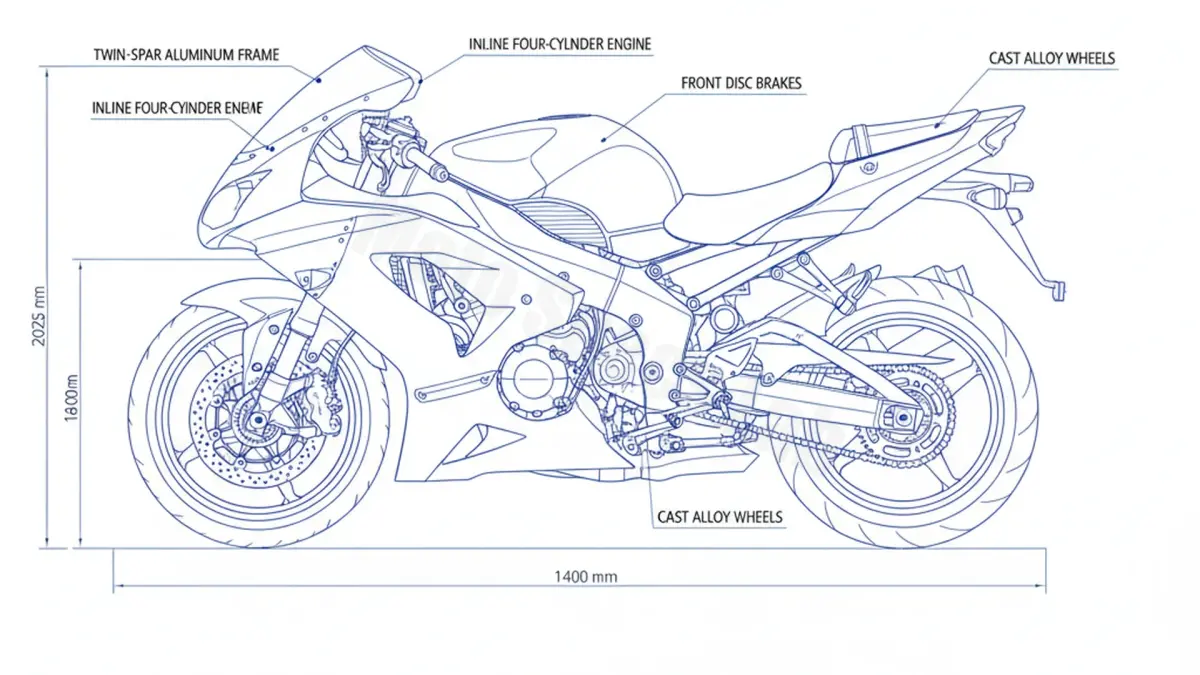
The Kawasaki ZX-6R ZX600J represents a pivotal moment in supersport history. It was the first middleweight Ninja to transition into the modern era of aerodynamics, introducing the iconic “twin-ram air” intake system integrated into a more aggressive, dual-headlight fairing design. This engineering shift wasn’t just aesthetic; it significantly reduced drag and improved high-speed stability compared to its predecessor, the G-series, making it a formidable competitor on both the track and the street.
Powerplant and Performance Analysis
At the heart of the ZX600J is a high-revving 599cc inline-four engine. Known for its robust mid-range punch—a rarity in the 600cc class of the early 2000s—the J-model utilizes Mikuni BDSR 36R carburetors. For the technician, this means ensuring perfect synchronization of the carbs is vital for maintaining the smooth power delivery this model is famous for. The engine’s thermal management is handled by a high-efficiency radiator, requiring consistent coolant inspection to prevent head gasket fatigue.
Maintenance Essentials
Lubrication System
For optimal shear stability in high-RPM scenarios, MotoSpecsLab recommends SAE 10W-40 oil. Ensure the oil meets JASO MA standards to protect the wet clutch system. A standard oil and filter change requires 3.5 liters, while a completely dry engine (after a rebuild) requires 4.0 liters.
Ignition and Electrical
The ZX600J utilizes NGK CR9E spark plugs. Precise combustion depends on a gap of 0.7–0.8 mm. Electrical reliability is anchored by the YTX9-BS battery; given the age of these machines, checking the charging system’s stator output is a recommended annual task to ensure the regulator/rectifier isn’t being overstressed.
Chassis and Contact Patch
The handling characteristics of the J-series are highly sensitive to tire pressure. For the 120/70 ZR 17 front and 180/55 ZR 17 rear setup, we recommend a baseline of 2.5 bar (36 psi) for the front. The rear should be maintained at 2.5 bar (36 psi) for solo riding, increasing to 2.9 bar (42 psi) when carrying a passenger or under sustained high-speed touring conditions.
MotoSpecsLab Verdict
The Kawasaki ZX-6R ZX600J remains a masterclass in analog supersport engineering. While it lacks the electronic rider aids of modern machinery, its mechanical purity offers a direct connection between the rider and the road. Proper adherence to the maintenance intervals specified above ensures that this 20-year-old legend continues to perform at its peak engineering potential.