| Component | Specification |
|---|---|
| Production Years | 1979-1980 |
| Engine Oil | SAE 10W-40 (API SE/SF) – 2.8 Liters |
| Front Tire | 3.50 V19 – 4PR (2.0 bar / 28 psi) |
| Rear Tire | 130/90 – 16 67V (2.2 – 2.5 bar / 32 – 36 psi) |
| Battery | YB14L-A2 |
| Spark Plug | NGK B8ES |
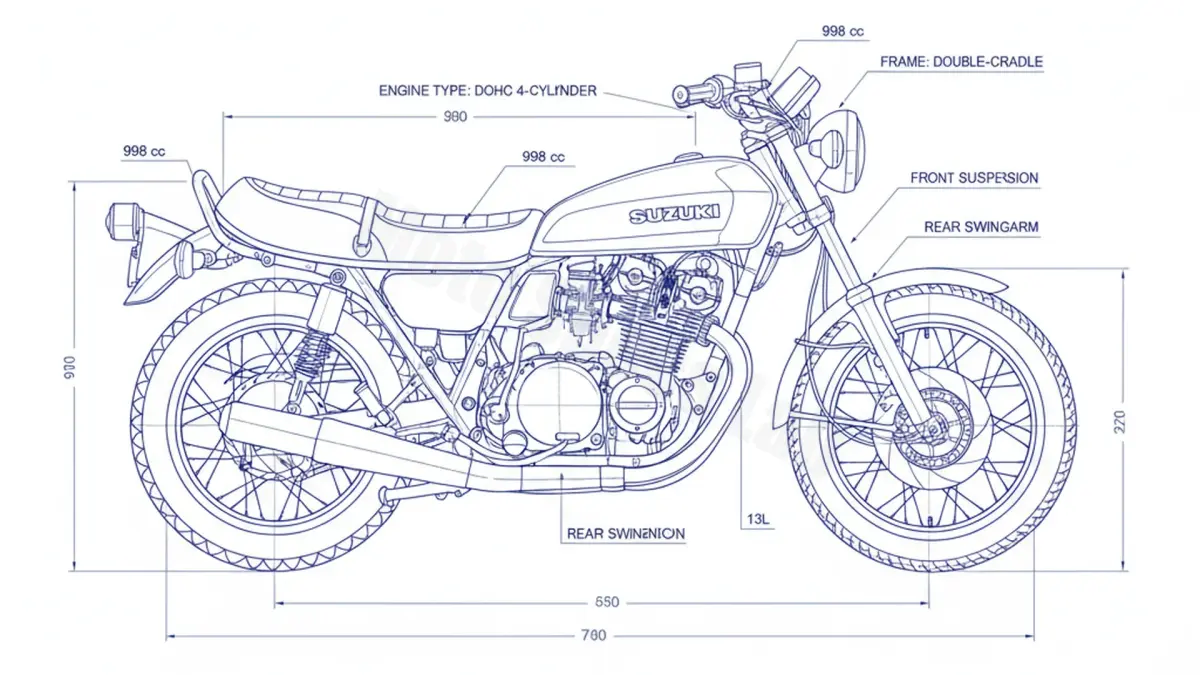
The Suzuki GS 1000 L holds a unique place in motorcycling history as one of the industry’s first true “factory customs.” While the standard GS1000 was designed to dominate the superbike class with its lightweight frame and bulletproof DOHC engine, the ‘L’ (Low-Slinger) variant introduced the cruiser aesthetic to the Japanese inline-four platform. It was specifically engineered with a leading-axle front fork and a smaller 16-inch rear wheel to achieve a lower seat height and a more relaxed, American-inspired geometry without sacrificing the legendary reliability of the GS powerplant.
Engineering Overview
At the heart of the GS1000L is the 997cc air-cooled, DOHC, 8-valve inline-four engine. This engine is widely regarded by engineers as one of the most over-built and robust units of the era. Unlike its predecessors, the GS1000 series utilized a crankshaft supported by roller bearings, which contributed to its exceptional longevity and ability to handle performance tuning. The ‘L’ model specifically adapted this power for the touring and cruising market, featuring a stepped seat and pull-back handlebars.
Maintenance Specifications
Lubrication System
For optimal engine protection and clutch performance, MotoSpecsLab recommends SAE 10W-40 motor oil. The engine requires 2.8 liters for a standard change. It is critical to use oil meeting the API SE or SF standards to ensure the vintage seal materials and wet clutch components remain compatible with the chemical additives.
Tires and Handling
The GS1000L features a staggered wheel setup that defines its cruiser silhouette. The front utilizes a 3.50 V19 – 4PR tire, which should be maintained at 2.0 bar (28 psi). The rear 16-inch wheel uses a 130/90 – 16 67V tire. Pressure for the rear should be adjusted based on load: 2.2 bar (32 psi) for solo riding and up to 2.5 bar (36 psi) when carrying a passenger or heavy luggage.
Electrical and Ignition
The electrical system relies on a YB14L-A2 battery. Given the age of these machines, ensuring clean ground connections is vital for the charging system’s health. For ignition, the NGK B8ES spark plug is the standard fitment, providing the correct heat range for the air-cooled cylinders under varied riding conditions.
Expert Verdict
The Suzuki GS 1000 L is a masterclass in late-70s engineering adaptability. By combining the high-performance chassis of the GS series with custom styling, Suzuki created a motorcycle that offered both speed and comfort. For the modern collector, the GS1000L represents a reliable entry into vintage ownership, provided the mechanical basics—specifically oil quality and tire pressures—are strictly maintained.
Frequently Asked Questions
Q: Can I use modern synthetic oil in my GS1000L?
A: While modern synthetics offer great protection, ensure they are rated for wet clutches (JASO MA) and do not contain friction modifiers that could cause the vintage clutch plates to slip.
Q: What is the benefit of the 16-inch rear wheel?
A: The 16-inch rear wheel allows for a higher-profile tire, which increases ride comfort and contributes to the ‘low-rider’ custom look that defined the ‘L’ series.