| Quick Specs: Suzuki GSX 650 F (WVCJ) | |
|---|---|
| Production Years | 2008 – 2012 |
| Engine Oil | 3.0 L – SAE 10W-40 (JASO MA/MA2) |
| Tire Size (F/R) | 120/70 ZR 17 / 160/60 ZR 17 |
| Tire Pressure (F/R) | 2.5 bar (36 psi) / 2.9 bar (42 psi) |
| Spark Plugs | NGK CR9E / DENSO U27ESR-N |
| Battery | YT12A-BS |
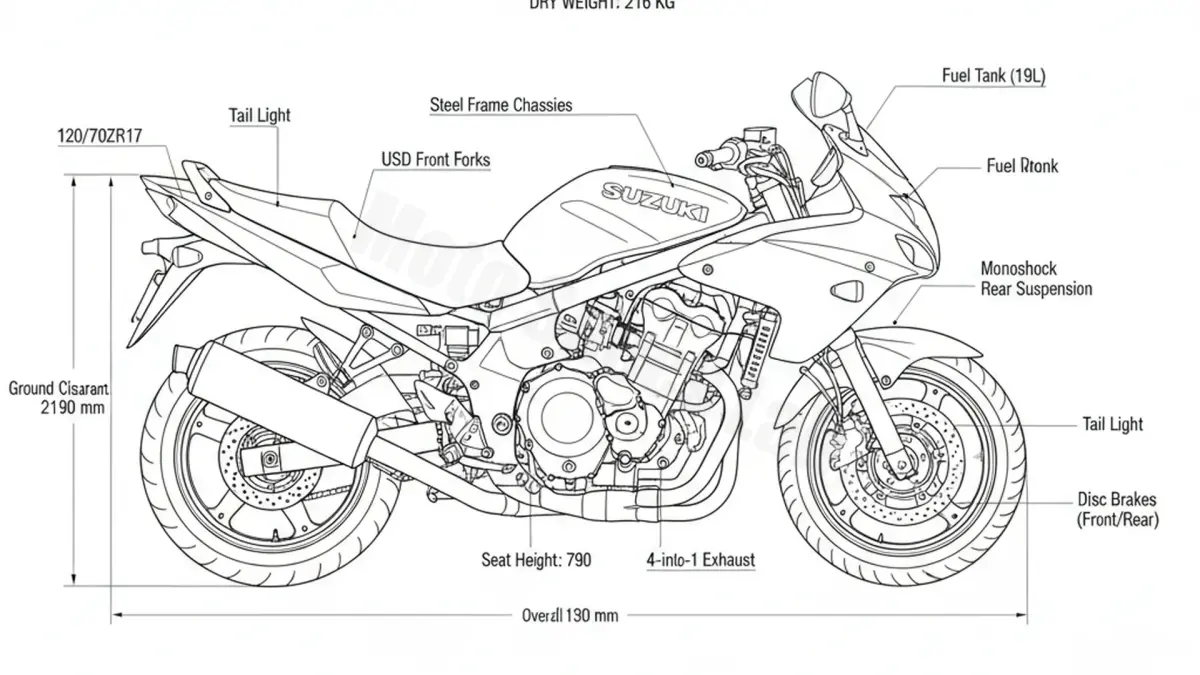
An engineering anomaly of sorts, the Suzuki GSX 650 F (WVCJ) represents a masterclass in platform sharing. While it carries the ‘GSX’ nomenclature typically reserved for Suzuki’s purebred sportbikes, it is historically significant for being the first major global model to successfully re-skin the robust GSF 650 Bandit chassis into a fully-faired sport-tourer. It utilized the Suzuki Dual Throttle Valve (SDTV) fuel injection system—tech directly inherited from the GSX-R supersport line—to provide a linear power delivery that smoothed out the Bandit’s raw torque profile.
Engineering Overview
At the heart of the WVCJ is a 656cc liquid-cooled inline-four engine. Unlike its air-cooled predecessors, this unit was designed with modern emissions and thermal efficiency in mind. The inclusion of a balance shaft makes it one of the smoothest middleweight engines of its era, effectively eliminating the high-frequency vibrations often found in high-RPM four-cylinder layouts. The chassis, a tubular steel cradle, offers high torsional rigidity, though it contributes to a higher wet weight compared to aluminum-framed competitors.
Maintenance Guide & Fluid Specifications
Engine Lubrication
The GSX 650 F is sensitive to oil quality due to its shared sump with the transmission and wet clutch. We recommend a high-quality synthetic or semi-synthetic SAE 10W-40 oil. A full change with filter replacement requires 3.0 liters. Ensure the oil meets JASO MA2 specifications to prevent clutch slippage under load.
Ignition System
For optimal combustion efficiency, the WVCJ uses NGK CR9E or DENSO U27ESR-N plugs. These should be inspected every 12,000 km. Accessing the plugs requires pivoting the fuel tank, a task made easier by the bike’s hinged tank design.
Chassis and Tires
The handling characteristics are heavily dependent on maintaining correct tire pressures. For the 120/70-17 front and 160/60-17 rear setup, Suzuki specifies 2.5 bar (36 psi) and 2.9 bar (42 psi) respectively. Running lower pressures on this specific model often results in heavy steering and premature ‘cupping’ of the front tire tread due to the bike’s forward-leaning weight bias.
Common Technical Issues
- Regulator/Rectifier Failure: Like many Suzukis of this vintage, the R/R unit can overheat. Monitoring battery voltage (YT12A-BS) is critical.
- Fuel Pump Strainer: If the bike stutters at high RPM, the internal fuel pump strainer is likely clogged—a common byproduct of modern ethanol-blended fuels sitting in the tank.
Frequently Asked Questions
Q: Can I use 10W-30 oil?
A: While possible in cold climates, 10W-40 is the factory standard for the GSX 650 F to ensure proper film strength at operating temperatures.
Q: How often should I sync the throttle bodies?
A: Synchronization is recommended every 12,000 to 18,000 km to maintain the smoothness of the SDTV system.