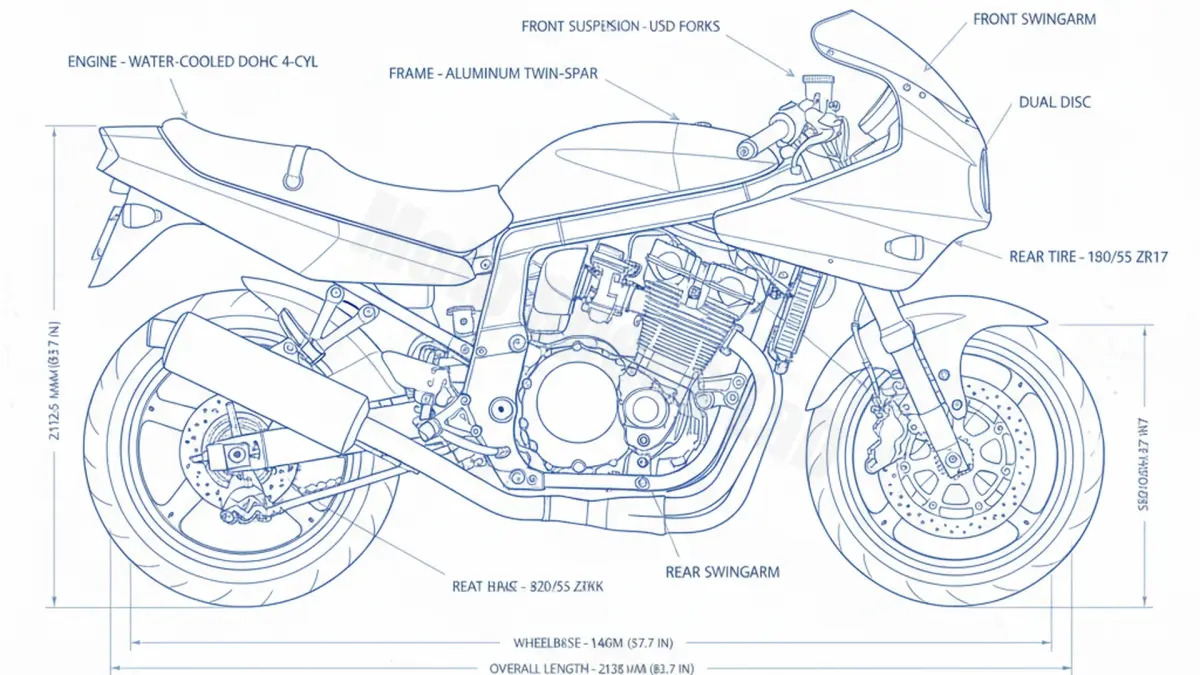
| Component | Specification |
|---|---|
| Engine Type | 1074cc Liquid-Cooled Inline-4 |
| Engine Oil | SAE 10W-40 (API SF/SG) – 3.3 Liters |
| Spark Plugs | NGK CR9E (0.7–0.8 mm gap) |
| Front Tire | 120/70 ZR 17 (2.5 bar / 36 psi) |
| Rear Tire | 180/55 ZR 17 (2.9 bar / 42 psi) |
| Battery | YTX14-BS |
Engineering Highlight: The 1993 introduction of the GSX-R 1100 W (Model P) marked a historic pivot for Suzuki. It was the first time the flagship ‘Gixxer’ abandoned the iconic SACS (Suzuki Advanced Cooling System) air/oil-cooled engine in favor of a high-capacity liquid-cooled architecture. This engineering shift was driven by the thermal limitations of air cooling as the 1100cc engine pushed past the 150hp threshold, requiring more stable temperature management for sustained high-speed performance.
Technical Review: The GU75C Chassis and Powertrain
The GU75C generation, specifically the P (1993) and R (1994) models, represents the pinnacle of Suzuki’s ‘heavyweight’ superbike era. While critics at the time noted the weight increase compared to the air-cooled 1100s, the liquid-cooled engine provided a significantly more robust platform for tuning. The ‘W’ engine featured a revised valve train and more aggressive cam profiles, housed within a massively overbuilt aluminum twin-spar frame.
The suspension was equally advanced for the era, featuring 43mm inverted forks that provided the front-end rigidity necessary to handle the bike’s 230kg+ wet weight. This model remains a favorite for high-speed stability and long-distance sport touring due to its planted feel and substantial torque curve.
Maintenance Guide: Keeping the Legend Alive
Lubrication and Cooling
The GSX-R 1100 W is sensitive to oil quality. We recommend a high-quality SAE 10W-40 meeting API SF or SG standards. The total refill capacity is 3.3 liters. Given the transition to liquid cooling, checking the coolant pH and ensuring the radiator fins are clear of debris is critical for preventing head gasket failure—a known issue if the bike is allowed to overheat in stationary traffic.
Ignition System
Performance consistency relies heavily on the NGK CR9E spark plugs. The gap must be precisely set between 0.7 and 0.8 mm. Fouled plugs are common if the carburetors are not balanced, leading to poor low-end throttle response.
Tires and Handling
To maintain the GU75C’s legendary stability, tire pressures must be monitored strictly. The factory recommends 2.5 bar (36 psi) for the front 120/70 ZR 17 and 2.9 bar (42 psi) for the rear 180/55 ZR 17. Running lower pressures on this specific model can lead to heavy steering and accelerated cupping of the front tire due to the bike’s weight distribution.
Frequently Asked Questions
Q: Is the battery for the P and R models interchangeable?
A: Yes, both models utilize the YTX14-BS battery, which provides the necessary cold-cranking amps to turn over the high-compression 1074cc engine.
Q: How often should I change the spark plugs?
A: For the GSX-R 1100 W, we recommend inspection every 6,000 km and replacement every 12,000 km to ensure optimal combustion efficiency.