| Attribute | Specification |
|---|---|
| Production Years | 1993-1997 |
| Engine Oil | SAE 10W-40 (API SE, SF, or SG) (3.2 L) |
| Tire Size (Front/Rear) | 120/70 ZR 17 / 160/60 ZR 17 |
| Tire Pressure (Front/Rear) | F: 2.5 bar / R: 2.5-2.9 bar |
| Battery Type | YTX9-BS |
| Spark Plug (Gap) | NGK CR9E (0.7-0.8 mm) |
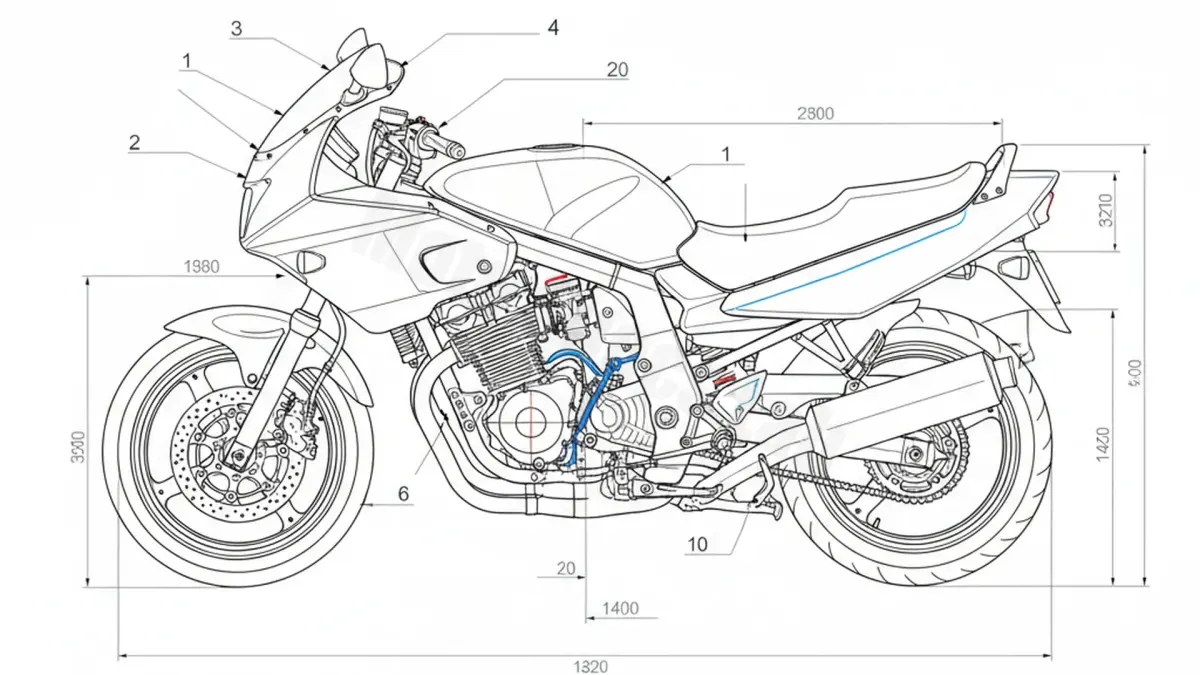
While most 600cc sportbikes of the early 90s were chasing the pure track-focused geometry of the GSX-R line, the Suzuki RF 600 R carved a unique niche by blending high-performance engineering with avant-garde aesthetics. A little-known engineering highlight is that its bodywork was heavily influenced by the Ferrari Testarossa; the side fairing louvers (the “gills”) were not merely decorative but were designed to create a low-pressure zone to pull hot air away from the radiator and engine, a rare example of automotive supercar aerodynamics applied to a mid-sized motorcycle.
Technical Engineering Overview
The RF 600 R (GN76B) is powered by a liquid-cooled, 599cc inline-four engine derived from the GSX-R platform but tuned for a broader powerband. Unlike its aluminum-framed contemporaries, the RF utilized a massive steel perimeter frame (the “Cradle-type”). This choice provided exceptional high-speed stability and vibration damping, making it one of the most comfortable “sport” bikes for long-distance touring, albeit at the cost of a few extra kilograms compared to the CBR600F series.
Maintenance Guide & Essentials
As the Editor-in-Chief of MotoSpecsLab, I emphasize that the RF 600 R is a robust machine, provided the cooling system and carburetors are maintained. The GN76B engine is particularly sensitive to spark plug condition.
1. Lubrication and Fluids
The engine requires 3.2 liters of SAE 10W-40. Given the age of these machines, we recommend a high-quality semi-synthetic oil meeting API SG standards to protect the gearbox and wet clutch assembly. Ensure the oil filter is changed every 6,000 km to prevent sludge buildup in the narrow oil passages.
2. Ignition and Battery
The NGK CR9E is the standard plug. Proper gapping (0.7-0.8 mm) is critical for smooth idling, as the RF 600 can be notoriously cold-blooded. The electrical system relies on a YTX9-BS battery; ensure terminal connections are clean, as the RF’s charging system is adequate but lacks the overhead of modern lithium-ready circuits.
3. Chassis and Tires
The 120/70-17 front and 160/60-17 rear setup provides a neutral handling profile. For optimal tire life and cornering precision, maintain 2.5 bar (36 psi) in the front. For the rear, stick to 2.5 bar for solo rides, but increase to 2.9 bar (42 psi) if carrying a passenger or heavy luggage, as the steel frame places significant load on the rear carcass.
Expert Verdict
The Suzuki RF 600 R remains a testament to a time when Suzuki was willing to experiment with design. It offers a unique visual presence that has aged surprisingly well. Mechanically, it is over-engineered, making it an excellent choice for modern riders looking for a classic sport-tourer that can still hold its own in the twisties.
Frequently Asked Questions
Q: What is the fuel capacity of the RF 600 R?
A: The RF 600 R features a 17-liter fuel tank, including a 3.5-liter reserve.
Q: How often should the valve clearances be checked?
A: We recommend checking the valve clearances every 12,000 km (7,500 miles) to ensure the 16-valve head remains in peak condition.
Q: Is the RU version different from the R?
A: The ‘U’ designation typically refers to a restricted version (often 25kW/34hp) produced for specific European licensing requirements, though the base mechanical components remain largely identical.