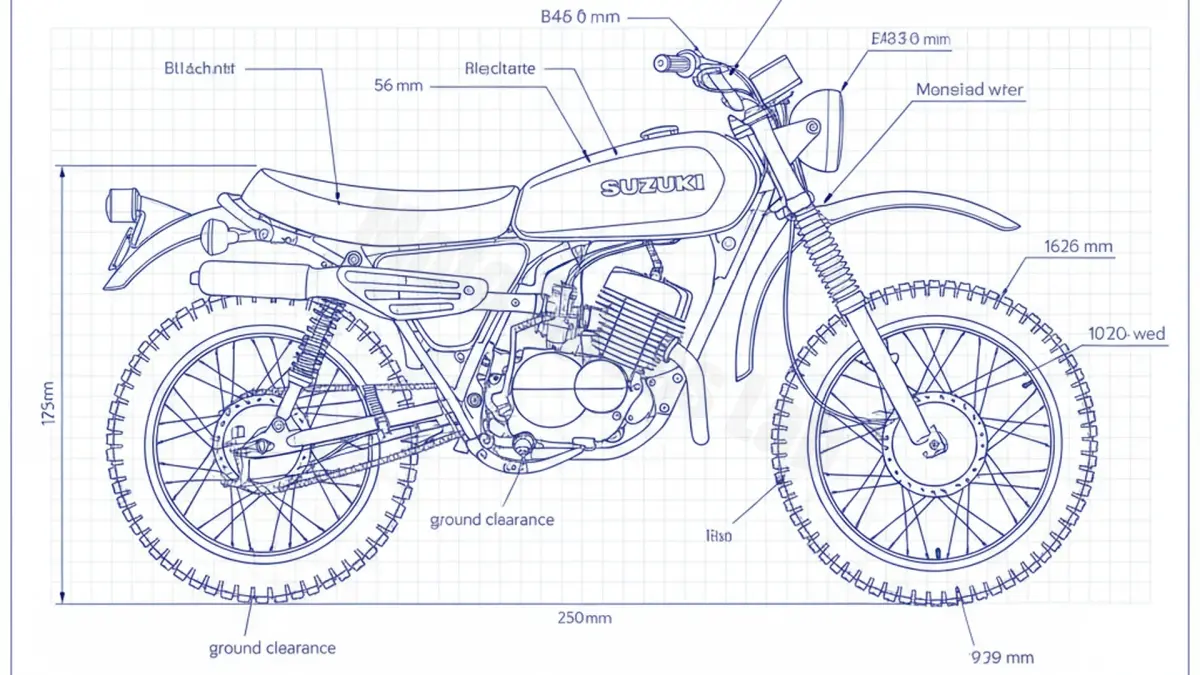
| Quick Specs: Suzuki TS 50 XR | |
|---|---|
| Production Years | 1984 – 2000 |
| Engine Oil | SAE 10W-40 JASO MA/MA2 (0.85 L) |
| Front Tire | 2.50-21 4PR |
| Rear Tire | 3.00-18 4PR |
| Tire Pressure (F/R) | 1.5 bar (22 psi) / 1.75 bar (25 psi) |
| Spark Plug | NGK BR7ES |
| Battery | YB4L-B (12V) |
The Suzuki TS 50 XR stands as a testament to the longevity of Japanese dual-sport engineering. A unique engineering highlight of the TS50XR series was its early adoption of the Suzuki Power Reed (SPR) intake system. Unlike traditional piston-ported two-strokes of the era, the SPR combined reed-valve efficiency with optimized port timing, providing the 49cc engine with a surprisingly linear power band that excelled in both urban commuting and light trail riding.
Engineering and Performance Evolution
Produced between 1984 and 2000, the TS 50 XR (often referred to as the TS50X or XR depending on the region) bridged the gap between toy-like mopeds and full-sized enduro machines. Its air-cooled, single-cylinder two-stroke engine was designed for durability over peak horsepower, making it a favorite for young riders entering the world of motorcycling.
The chassis utilized a semi-double cradle frame, which provided the necessary rigidity for off-road excursions while maintaining a lightweight profile. The 21-inch front wheel is a critical design choice, allowing the bike to roll over obstacles with much more composure than its competitors sporting smaller 17 or 19-inch wheels.
Maintenance Guide & Technical Requirements
For the Editor-in-Chief at MotoSpecsLab, maintenance on these machines is considered straightforward but vital due to the high-revving nature of small-displacement two-strokes.
Lubrication and Fluid Management
The gearbox requires 0.85 liters of SAE 10W-40 oil. It is imperative to use oil meeting JASO MA or MA2 standards to ensure the wet clutch does not slip. While the engine is an autolube system (using a separate two-stroke oil tank), the gearbox oil should be changed every 3,000 to 5,000 km to prevent premature wear on the internal gears.
Ignition and Electrical
The NGK BR7ES is the standard spark plug. Owners should inspect the electrode color regularly; a chocolate-brown insulator indicates a healthy air-fuel mixture. The electrical system is supported by a YB4L-B battery, which powers the lights and indicators, though the ignition system remains independent on many models to ensure the bike can start even with a flat battery.
Tires and Handling
The tire configuration (2.50-21 front and 3.00-18 rear) is classic enduro. To maintain stability and prevent rim damage, keep the front at 1.5 bar (22 psi) and the rear at 1.75 bar (25 psi). Lowering these pressures slightly for pure off-road use can improve traction, but must be returned to spec for asphalt riding to avoid overheating the sidewalls.
Frequently Asked Questions
What is the fuel-to-oil ratio if the pump fails?
If the autolube pump is bypassed, a pre-mix ratio of 50:1 (2%) using high-quality synthetic 2-stroke oil is generally recommended for the TS 50 XR.
Can I use a BR8ES instead of a BR7ES?
The BR8ES is a “colder” plug. It may be used in high-temperature climates or for prolonged high-RPM use to prevent pre-ignition, but for standard commuting, the BR7ES is preferred to prevent carbon fouling.
Why is the 21-inch front wheel important?
The 21-inch front wheel provides a better “attack angle” for obstacles, making the bike significantly safer and more capable on uneven terrain compared to bikes with smaller wheels.