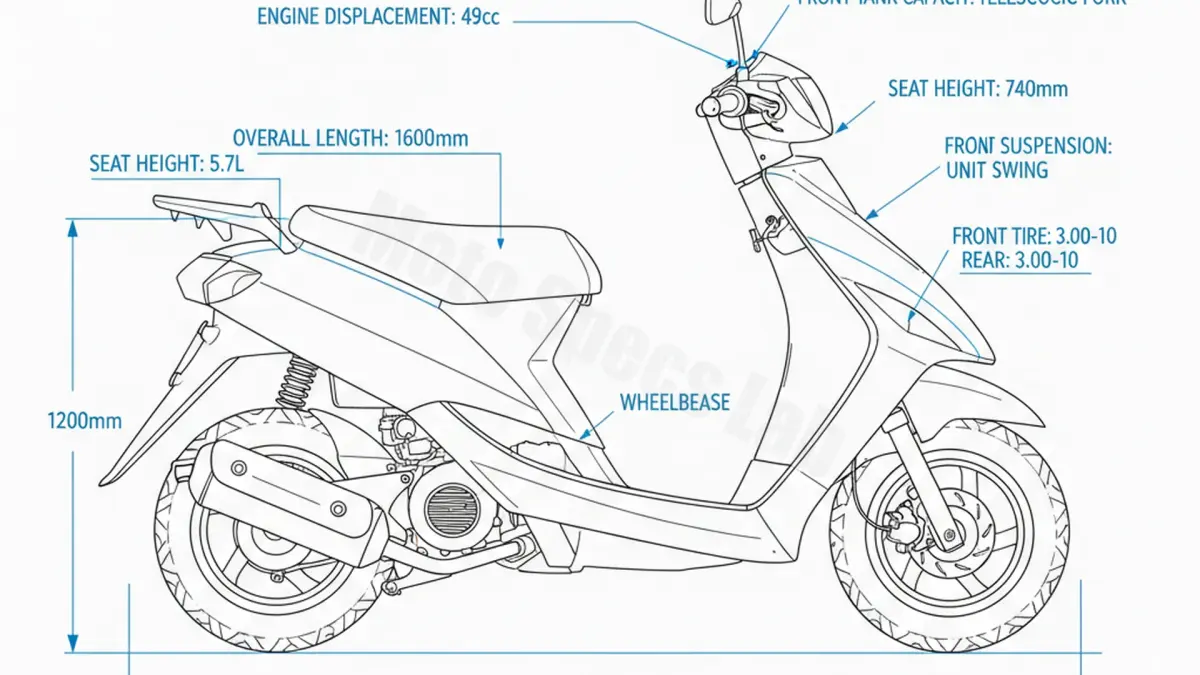
| Specification | Data |
|---|---|
| Production Years | 1995 – 1998 |
| Engine Type | Single-cylinder, 2-stroke, Air-cooled |
| 2-Stroke Oil Type | Semi-synthetic or Synthetic (JASO FC/ISO-L-EGC) |
| Oil Tank Capacity | 1.4 L |
| Tire Size (Front/Rear) | 100/90-10 56J |
| Tire Pressure (F/R) | 1.5 bar / 1.8 bar |
| Spark Plug | NGK BR7HS (Gap: 0.6-0.7mm) |
| Battery Type | YB4L-B |
Engineering Heritage: The 3UG Blueprint
The Yamaha AXIS YA 50 R, specifically the 3UG chassis variant, holds a distinct place in the history of small-displacement urban mobility. While many scooters of the mid-90s utilized vertical engine configurations, the AXIS was a pioneer in refining the horizontal Minarelli-style engine architecture. This engineering choice allowed for a lower center of gravity and a significantly larger under-seat storage compartment compared to its predecessors, effectively setting the standard for the modern ‘commuter’ scooter layout that remains dominant today.
Technical Deep Dive: Powertrain and Performance
The heart of the 3UG is its resilient 2-stroke engine. Known for its ‘over-engineered’ crankcase, this engine provides a smooth power delivery that is uncharacteristic of many high-revving 50cc units of the era. To maintain the thermal efficiency of this air-cooled unit, the choice of lubricant is critical. MotoSpecsLab recommends a high-quality JASO FC or ISO-L-EGC specification oil. Using inferior lubricants can lead to carbon buildup in the exhaust port, a common cause of power loss in high-mileage AXIS units.
Maintenance Protocol
Ignition System
The 3UG utilizes an NGK BR7HS spark plug. For optimal combustion and cold-start reliability, the electrode gap must be precisely set between 0.6mm and 0.7mm. A fouled plug or incorrect gap is the primary culprit for starting issues in this model.
Chassis and Handling
Equipped with 100/90-10 tires on both ends, the AXIS YA 50 R offers a stable footprint. However, because of the small wheel diameter, tire pressure is sensitive. Maintaining 1.5 bar (22 psi) in the front and 1.8 bar (25 psi) in the rear is essential to prevent ‘cupping’ of the tread and to ensure predictable cornering.
Electrical System
The electrical system is supported by a YB4L-B lead-acid battery. Given the age of these vehicles, ensuring the charging system provides a steady voltage to the battery is vital for the longevity of the CDI unit.
Editor’s Verdict
The Yamaha AXIS YA 50 R (3UG) remains a masterclass in functional simplicity. Its mechanical robustness makes it a favorite for collectors and daily commuters alike. By adhering to the specified 1.4L oil reservoir management and precise spark plug gapping, owners can ensure this 90s icon remains roadworthy for decades to come.