| Quick Specs: Yamaha NEO’S 50 (SA341) | |
|---|---|
| Production Years | 2008 – 2012 |
| Engine Type | 2-Stroke Single Cylinder (Air-Cooled) |
| Oil Specification | 2-stroke injector oil (JASO FC/FD) |
| Oil Tank Capacity | 1.4 Liters |
| Tire Size (Front) | 120/70-12 51L |
| Tire Size (Rear) | 130/70-12 56L |
| Spark Plug | NGK BR8HS |
| Battery | YTX5L-BS |
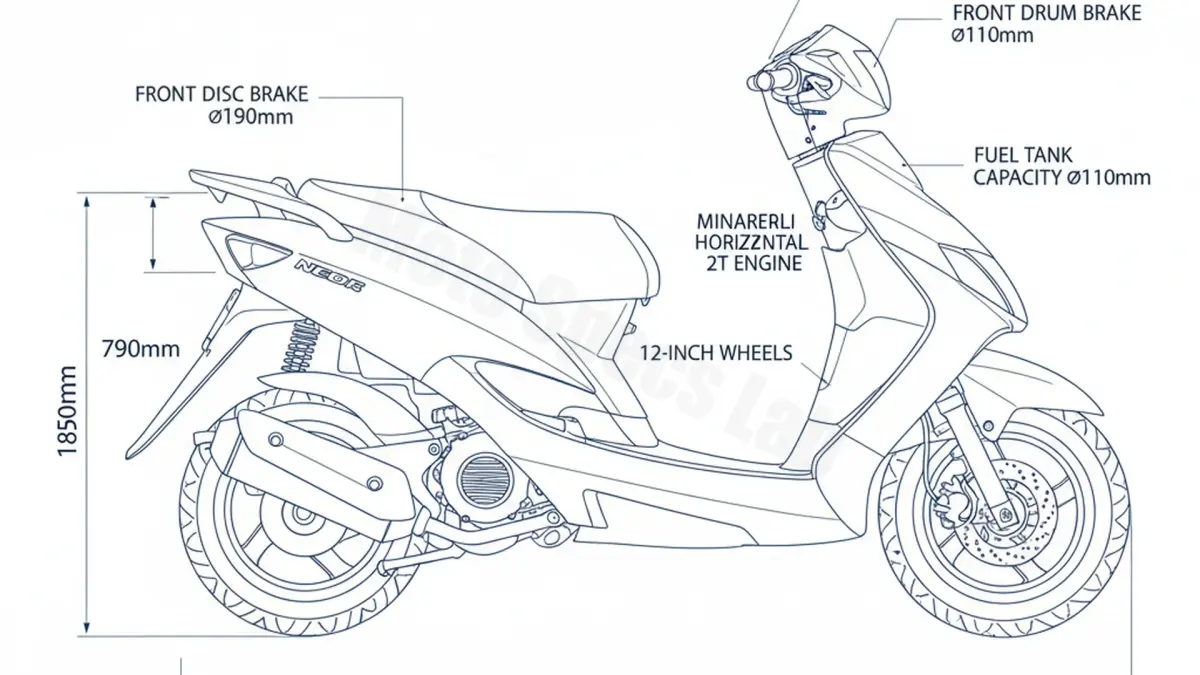
The Yamaha NEO’S 50 (SA341 generation) stands as a significant engineering milestone in the urban mobility sector. While many competitors transitioned prematurely to 4-stroke powerplants, the SA341 refined the legendary horizontal Minarelli-based 2-stroke architecture. This specific iteration is celebrated by engineers for its “Evolution over Revolution” approach, featuring a high-rigidity frame and an optimized CVT calibration that made it one of the most balanced 50cc scooters ever produced for the European market.
Engineering Overview
The SA341 internal designation refers to the refined 2-stroke model produced between 2008 and 2012. At its heart lies a reliable, air-cooled 50cc engine. Unlike modern fuel-injected units, the NEO’S 50 maintains a mechanical simplicity that ensures longevity and ease of maintenance. The 12-inch alloy wheels provide a superior contact patch compared to the 10-inch variants found on budget scooters, offering significantly better mid-corner stability.
Lubrication and Fluids
To maintain the integrity of the piston rings and cylinder walls, the SA341 utilizes an autolube system. It is critical to use 2-stroke injector oil that meets JASO FC or FD specifications. These standards ensure low-smoke operation and prevent the build-up of carbon deposits in the exhaust port—a common failure point in high-mileage 2-stroke engines. The 1.4-liter reservoir is generous for its class, typically requiring a refill every 800-1000km depending on riding style.
Chassis and Contact Patch
The handling characteristics of the NEO’S 50 are defined by its tire configuration. The staggered setup—120/70-12 at the front and a wider 130/70-12 at the rear—provides a plush ride quality. For optimal safety and fuel economy, pressures must be maintained at 1.75 bar (25 psi) for the front and 2.00 bar (29 psi) for the rear. Under-inflation on this model leads to sluggish steering response and increased wear on the belt drive.
Electrical and Ignition
The ignition system relies on an NGK BR8HS spark plug. This “8” heat range is specifically chosen to prevent pre-ignition while ensuring the plug reaches self-cleaning temperatures during short urban trips. The electrical system is supported by a YTX5L-BS AGM battery. Given the draw of the dual-headlight design, ensuring a healthy battery is vital for the reliable operation of the electric starter motor.
Maintenance Checklist
- Spark Plug: Inspect every 3,000 km; replace every 6,000 km.
- Air Filter: Clean with solvent and re-oil every 4,000 km.
- Transmission: Inspect the V-belt and rollers for flat spots every 8,000 km.
- Brakes: Check front disc pads and rear drum shoes seasonally.