| Specification | Data |
|---|---|
| Production Years | 2008 – 2017 |
| Engine Oil | SAE 10W-40 (API SG+, JASO MA) – 1.40 L |
| Tire Size (Front/Rear) | 110/70R17 / 140/70R17 |
| Spark Plug | NGK CR9EK (0.6–0.7 mm gap) |
| Battery | YTZ7S |
| Tire Pressure (Solo) | Front: 2.0 bar / Rear: 2.0 bar |
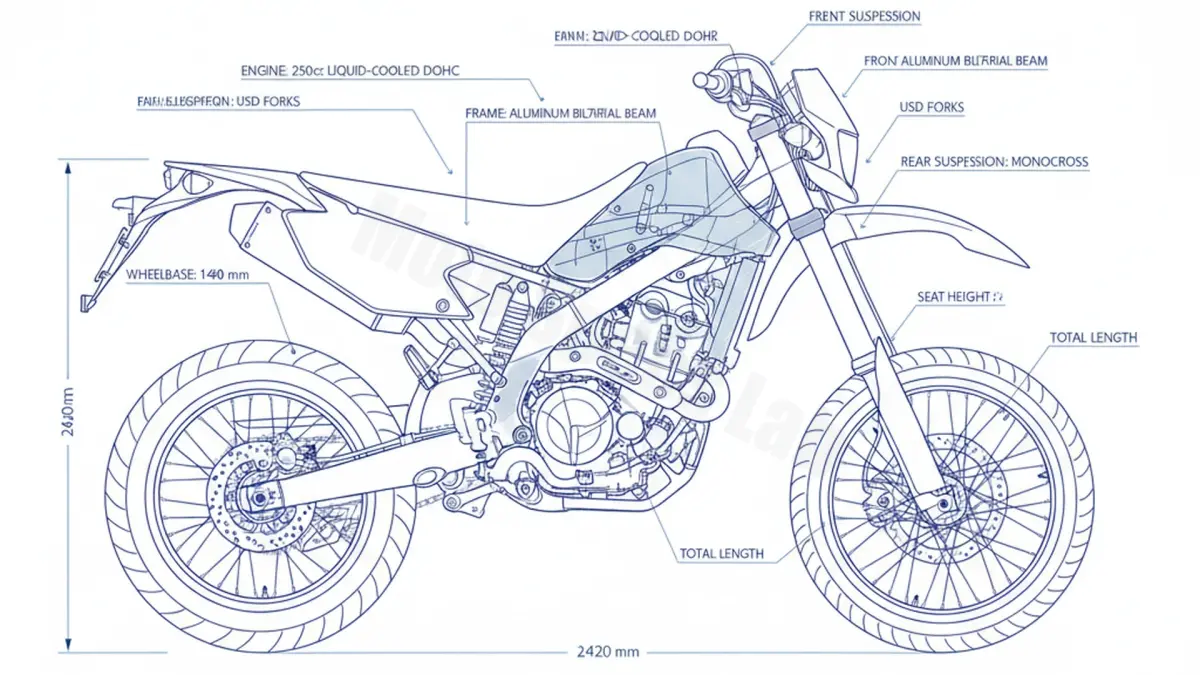
The Yamaha WR 250 X (DG202) occupies a unique space in motorcycling history. Unlike most 250cc dual-sports that prioritize utility over performance, the WR250X was engineered as a “street-legal race bike.” Its most significant engineering highlight is the inclusion of titanium intake valves and a high-pressure fuel injection system derived directly from Yamaha’s YZ-F motocross development program. This allows the single-cylinder engine to rev freely to a 10,000 RPM redline, a feat rarely seen in its class during the 2008-2017 production run.
Technical Engineering Analysis
The DG202 chassis is a sophisticated semi-double-cradle frame, utilizing cast and forged aluminum sections to balance rigidity and weight. In its Supermoto (X) configuration, Yamaha swapped the dirt-focused wheels of the ‘R’ model for 17-inch Excel rims and upgraded the front braking system to a massive 298mm floating disc. The result is a machine that offers surgical precision in urban environments and tight canyon roads.
Maintenance Guide & Service Requirements
To maintain the high-performance nature of the WR 250 X, adherence to technical tolerances is critical.
1. Lubrication System
The engine requires 1.40 liters of SAE 10W-40 oil. For optimal clutch performance and engine longevity, ensure the oil meets JASO MA standards. MotoSpecsLab recommends oil changes every 3,000 miles (5,000 km) for aggressive street riding, despite longer factory intervals.
2. Ignition & Electrical
The NGK CR9EK plug is essential for the high compression ratio. Always verify the gap is between 0.6–0.7 mm using a feeler gauge before installation. The electrical system is supported by the compact YTZ7S battery, which must be kept on a tender during long periods of inactivity due to the parasitic draw of the digital instrument cluster.
3. Chassis & Tires
Radial tires are standard. For solo riding, maintain 2.00 bar (29 psi) both front and rear. If carrying a passenger or heavy luggage, increase the rear pressure to 2.25 bar (33 psi) to prevent sidewall deformation and overheating.
Editor’s Verdict
The Yamaha WR 250 X is a “sleeper” in the used market. While its displacement suggests a beginner bike, its technical pedigree—featuring a ceramic-plated cylinder and high-spec suspension—makes it a tool for the connoisseur. It remains one of the most reliable high-performance small-capacity motorcycles ever built.