| Component | Specification |
|---|---|
| Production Years | 2012 – 2015 |
| Engine Oil | SAE 10W-40 API SG+, JASO MA (1.0 L) |
| Front Tire | 80/100-21M/C 51P |
| Rear Tire | 120/90-18M/C 65P |
| Tire Pressure | F: 1.0 bar (15 psi) / R: 1.0 bar (15 psi) |
| Battery | YTZ7S |
| Spark Plug | NGK CR9E |
The 2012 release of the Yamaha WR 450 F (CJ13W) marked a pivotal moment in enduro history. It was the first iteration to finally replace the long-standing Keihin FCR carburetor with a sophisticated 42mm Keihin Electronic Fuel Injection (EFI) system, effectively bridging the gap between the legendary reliability of the WR line and the razor-sharp performance of the YZ motocross series.
Engineering Deep Dive: The Bilateral Beam Chassis
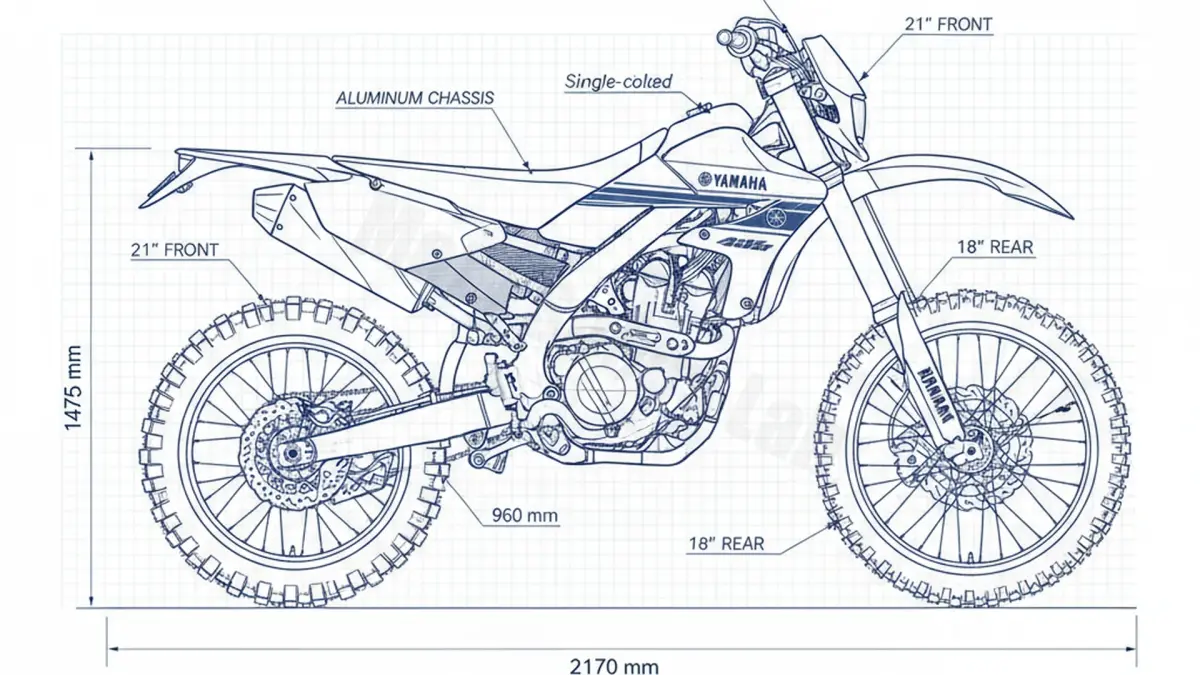
Unlike its predecessors that utilized a wider aluminum frame, the CJ13W/1HB3 generation adopted a modified YZ250F-based bilateral beam frame. This engineering choice significantly narrowed the bike’s profile between the rider’s knees, offering a more aggressive, flickable handling characteristic that redefined the WR’s capability in tight, technical woods sections. The 449cc 5-valve engine remained, but the integration of the EFI system allowed for customizable power delivery via the optional GYTR Power Tuner.
Maintenance Protocol
Lubrication System
The CJ13W features a dry-sump lubrication system. For standard operation, 1.0 Liter of SAE 10W-40 is required. Ensure the oil meets JASO MA standards to prevent clutch slippage. Due to the high-revving nature of the 5-valve head, oil changes should be performed every 500-1,000 km depending on competition intensity.
Ignition and Electrical
The system utilizes an NGK CR9E spark plug. Given the EFI’s sensitivity to voltage stability, the YTZ7S battery must be maintained at a full charge; a weak battery can lead to difficult starting cycles, as the fuel pump requires sufficient initial amperage to prime the system.
Chassis and Traction
The factory tire setup (80/100-21 front and 120/90-18 rear) is optimized for a balance of flotation and bite. For enduro use, a standard pressure of 1.0 bar (15 psi) is recommended. Riders venturing into extreme rocky terrain may drop to 0.8 bar if using heavy-duty tubes or rim locks to prevent valve stem shearing.
Editor’s Verdict
The CJ13W series is often considered the ‘sweet spot’ for Yamaha enduro enthusiasts. It combines the bulletproof 5-valve engine architecture with modern fuel management and a slim chassis. While heavier than some European counterparts of the same era, its reliability and ‘planted’ feel make it a premier choice for long-distance rally and aggressive trail riding.
Frequently Asked Questions
Q: Can I use 10W-50 oil?
A: Yes, in hotter climates, a 10W-50 JASO MA oil is acceptable and can provide better shear stability under high thermal loads.
Q: Does the 2012-2015 model have a cooling fan?
A: It does not come standard with a fan. For slow-speed technical riding, an aftermarket fan kit is highly recommended to prevent overheating of the EFI sensors.