| Specification | Data |
|---|---|
| Model / Generation | Yamaha WR 450 F – CJ13W/5TJL |
| Production Years | 2005-2006 |
| Engine Oil | SAE 10W-40, API SG/JASO MA (1.1L with filter) |
| Spark Plug | NGK CR8E |
| Battery | YTZ7S (12V) |
| Tire Size (F/R) | 80/100-21 / 110/100-18 |
| Tire Pressure | 1.0 bar (15 psi) Front & Rear |
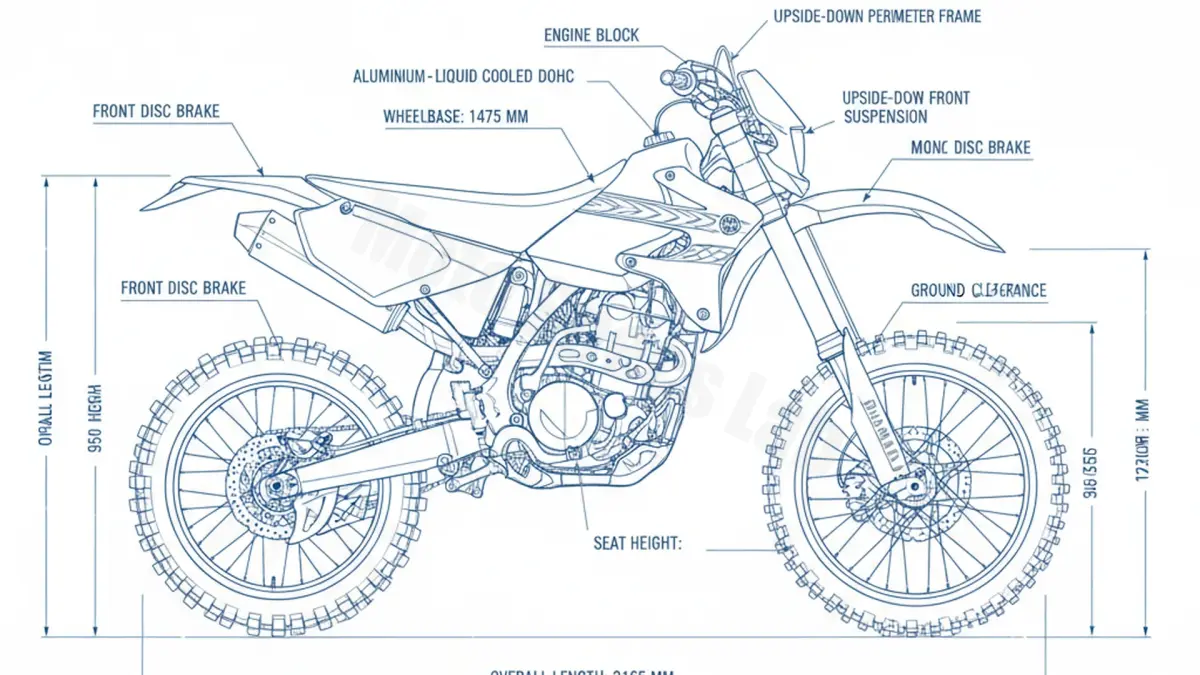
The 2005-2006 Yamaha WR 450 F (CJ13W/5TJL) represents a pivotal moment in enduro engineering history. While modern bikes have transitioned to aluminum frames, this generation is celebrated by purists as the absolute pinnacle of the steel-frame Yamaha chassis. Its unique historical significance lies in the 2005 redesign, which introduced a significantly lower fuel tank and a flatter seat profile, drastically improving the center of gravity and ergonomics compared to its predecessors, all while retaining the legendary durability of the 5-valve DOHC engine architecture.
Engineering Overview: The 5-Valve Powerhouse
At the heart of the CJ13W is the 449cc liquid-cooled, four-stroke engine featuring Yamaha’s signature 5-valve cylinder head. This configuration was designed to maximize intake flow and combustion efficiency, providing a broad powerband that is equally capable of technical single-track climbing and high-speed desert sections. The 2005-2006 models benefited from refined Keihin FCR-MX39 carburetion, offering crisp throttle response that many riders still prefer over early fuel-injection systems for its ease of field repair.
Maintenance Specifications & Laboratory Recommendations
To maintain peak performance, the WR 450 F requires a rigorous maintenance schedule. As the Editor-in-Chief of MotoSpecsLab, I recommend the following technical adherence:
- Lubrication: Use only high-quality 10W-40 oil meeting JASO MA standards to protect the wet clutch. While the total engine capacity is 1.2L, a standard oil and filter change requires exactly 1.1L. Change every 500-1,000 km depending on intensity.
- Ignition: The NGK CR8E is the standard heat range. Ensure the gap is set to 0.7–0.8 mm. A fouled plug is often a sign of rich jetting in the FCR carburetor.
- Electrical: The YTZ7S battery is compact but sensitive. If the bike is stored for more than two weeks, a dedicated lithium-compatible or AGM tender is required to prevent voltage drops that can stress the starter motor.
Performance & Handling Review
On the trail, the CJ13W/5TJL is known for its “planted” feel. The steel frame offers a degree of flex that provides natural damping against high-frequency trail chatter, a characteristic often lost in stiffer aluminum successors. The Kayaba (KYB) suspension components, when properly sprung for rider weight, offer excellent bottoming resistance. However, riders should note that the 110/100-18 rear tire is optimized for traction; upgrading to a wider 120-section tire may improve footprint but can slightly slow down the bike’s flickability in tight woods.
Frequently Asked Questions
What is the oil capacity for a basic change?
For a periodic oil change without replacing the filter, the capacity is 1.0 Liter. With a filter change, it is 1.1 Liters.
What tire pressure should I run for enduro?
Standard factory recommendation is 1.0 bar (15 psi) for both front and rear. For extremely muddy conditions, some riders drop to 12 psi, but this increases the risk of pinch flats if not using heavy-duty tubes.
Which spark plug is compatible?
The specified spark plug is the NGK CR8E. Always check the electrode color to diagnose engine health.