| Specification | Value |
|---|---|
| Production Years | 1978-1981 |
| Engine Oil | SAE 10W-40 / 20W-50 (3.5 L – 4.0 L) |
| Tire Size (F/R) | 100/90-19 / 130/90-17 |
| Tire Pressure (F/R) | 2.0 bar / 2.25 bar |
| Spark Plug | NGK BP6ES |
| Battery | YB20L-A2 |
When the Yamaha XS 1100, affectionately known as the “Eleven,” debuted, it didn’t just enter the market; it shattered expectations by becoming the fastest production motorcycle in the world at the time of its 1978 release. An engineering highlight often overlooked is its sophisticated shaft-drive system, which was specifically engineered to handle the massive 95 horsepower output—a figure that frequently overwhelmed the tire technology of the late 1970s.
Technical Engineering Overview
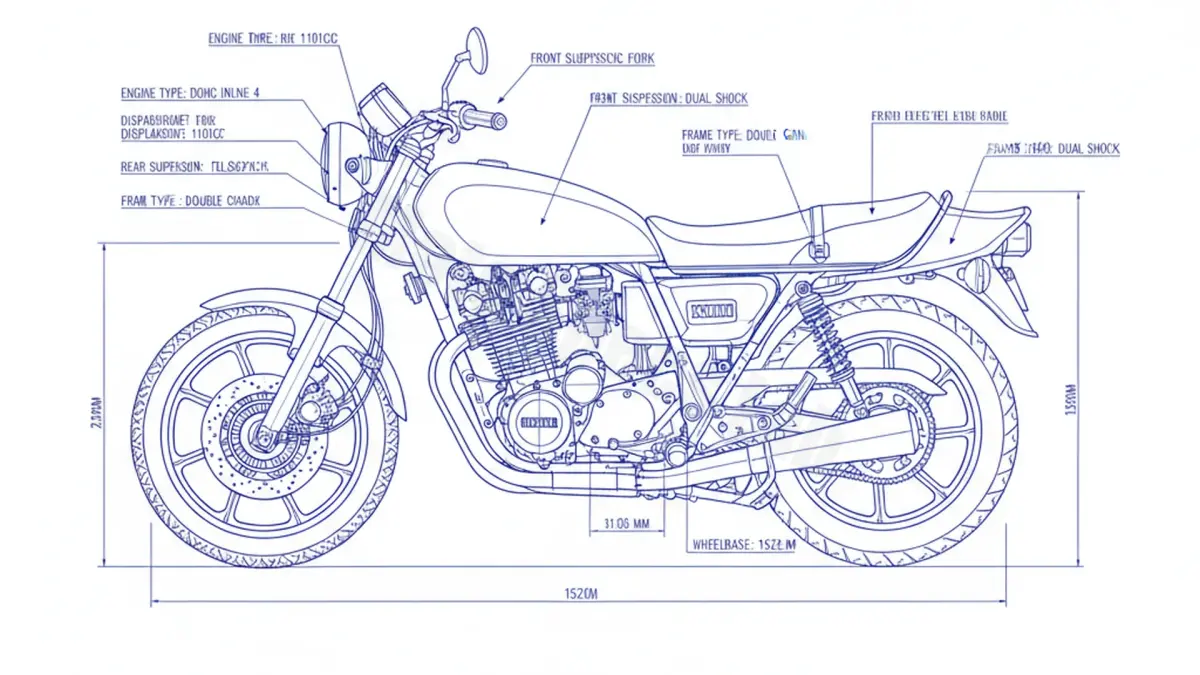
The 2H9/80 designation refers to the refined European-spec model of this air-cooled, DOHC inline-four powerhouse. Unlike its contemporaries, the XS 1100 was designed as a high-speed grand tourer. The engine architecture features a massive crankshaft and a heavy-duty gearbox, making it one of the most over-engineered and durable powerplants in vintage motorcycling history. However, this power required a robust maintenance schedule to ensure the shaft drive and complex carburation remained synchronized.
Maintenance Guide
Lubrication System
For the XS 1100, oil is the lifeblood of both the engine and the wet clutch system. We recommend a high-quality SAE 10W-40 for temperate climates or 20W-50 for warmer regions, ensuring an API SE rating or higher. A standard oil change requires 3.5 liters, while a dry engine or filter change may require up to 4.0 liters total.
Chassis & Tires
Maintaining the correct tire pressure is critical for the XS 1100’s stability, as the bike’s weight (approx. 273kg wet) can lead to wallowing if pressures are low. Stick to 2.0 bar (28 psi) front and 2.25 bar (32 psi) rear. The 19-inch front and 17-inch rear configuration provides a classic touring stance but limits modern tire choices; we recommend high-quality bias-ply touring tires.
Electrical & Ignition
The ignition system relies on NGK BP6ES spark plugs. Ensure the gap is checked regularly to maintain the smooth idle the “Whispering Giant” is known for. The electrical system is powered by a substantial YB20L-A2 battery; given the age of these machines, cleaning the ground terminals is a mandatory annual task to prevent charging issues.
MotoSpecsLab Verdict
The Yamaha XS 1100 2H9/80 remains a masterclass in late-70s muscle. While its handling is “period-correct” (requiring a firm hand in corners), its engine reliability is nearly peerless. For the collector or vintage rider, following these technical specifications will ensure this legendary machine continues to dominate the open road for decades to come.