| Component | Specification |
|---|---|
| Engine Type | 998cc, Liquid-cooled, 4-cylinder, DOHC, 16-valves |
| Engine Oil | SAE 10W-40 (API SG+, JASO MA) – 3.83 L |
| Tire Dimensions | F: 120/70 ZR 17 | R: 190/50 ZR 17 |
| Tire Pressure | F: 2.5 bar (36 psi) | R: 2.9 bar (42 psi) |
| Battery | YTZ10S |
| Spark Plug | NGK LMAR9E-J |
The Yamaha YZF-R1 RN19 represents a pivotal moment in superbike history. While its predecessors were famous for the 5-valve “Genesis” cylinder head design, the RN19 was the first R1 to abandon this layout in favor of a 4-valve per cylinder configuration. This shift allowed for a more compact combustion chamber and higher compression, but the real engineering marvel was the introduction of YCC-I (Yamaha Chip Controlled Intake)—electronically controlled variable-length intake funnels that optimized torque across the entire RPM range.
Engineering Analysis: YCC-I and YCC-T
The RN19 combined the YCC-T (Yamaha Chip Controlled Throttle) fly-by-wire system with the new YCC-I. At lower engine speeds, the intake funnels remain long to maximize air velocity and low-end torque. Once the engine crosses the 9,200 RPM threshold, the upper sections of the funnels lift, shortening the intake path to provide the high-volume airflow required for its 180hp peak output. This mechanical dance ensures the RN19 lacks the “flat spots” often found in high-revving liter bikes.
Maintenance Guide & Technical Specs
Lubrication System
For the RN19, Yamaha specifies 3.83 Liters of SAE 10W-40 engine oil meeting API SG or higher and JASO MA standards. Due to the high-revving nature of this 16-valve head, we recommend a full-synthetic ester-based oil to maintain shear stability at high temperatures.
Ignition and Electrical
The 2007-2008 models utilize the NGK LMAR9E-J spark plug. These are long-reach plugs designed to improve cooling around the plug hole. The electrical system is powered by a YTZ10S battery; given the high compression ratio, maintaining a healthy CCA (Cold Cranking Amps) is vital to avoid strain on the starter clutch.
Chassis and Contact Patch
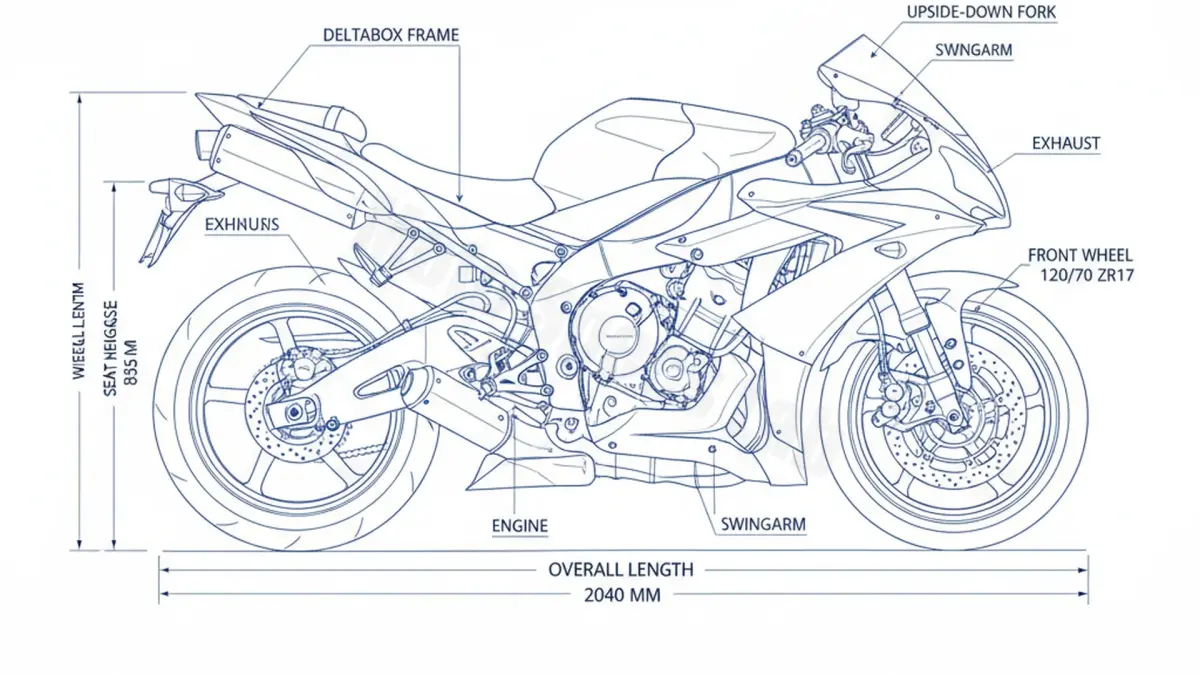
The RN19 features a refined Deltabox frame and a longer swingarm compared to the RN12. To maintain the intended geometry, the tire setup must remain precise: 120/70 ZR 17 at the front and 190/50 ZR 17 at the rear. Recommended pressures for street use are 2.5 bar (36 psi) front and 2.9 bar (42 psi) rear.
Reliability and Common Issues
While the RN19 is robust, owners should monitor the alternator rotor (stator). The magnets in the early production rotors were known to delaminate, potentially causing catastrophic engine damage if debris entered the oil pickup. Many owners opt for the updated “closed” rotor design for peace of mind. Additionally, ensure the EXUP valve in the exhaust is lubricated during major services to prevent seizing.
Verdict
The RN19 remains a favorite among purists for being the last “screamer” R1 before the transition to the Crossplane (CP4) engine in 2009. It offers a surgical front-end feel and a top-end rush that is quintessentially Yamaha. Following the maintenance schedule above is critical to preserving the performance of this high-tech milestone.