| Specification | Data |
|---|---|
| Model Series | RJ031 / RJ032 |
| Production Years | 1999–2002 |
| Engine Oil | SAE 10W-40 / 20W-40 (JASO MA) – 2.7 L |
| Tire Size (Front/Rear) | 120/60 ZR 17 / 180/55 ZR 17 |
| Tire Pressure (Cold) | F: 2.5 bar / R: 2.9 bar |
| Battery Type | GT12B-4 |
| Spark Plug | NGK CR10EK (0.6–0.7 mm gap) |
The release of the Yamaha YZF-R6 (RJ03) in 1999 marked a pivotal moment in motorcycling history: it was the first 600cc production motorcycle to claim over 100 horsepower from the factory while featuring a ultra-high-revving 15,500 rpm redline. This engineering feat effectively ended the era of ‘all-rounder’ 600s and ushered in the age of the uncompromising, track-focused supersport.
Engineering Overview
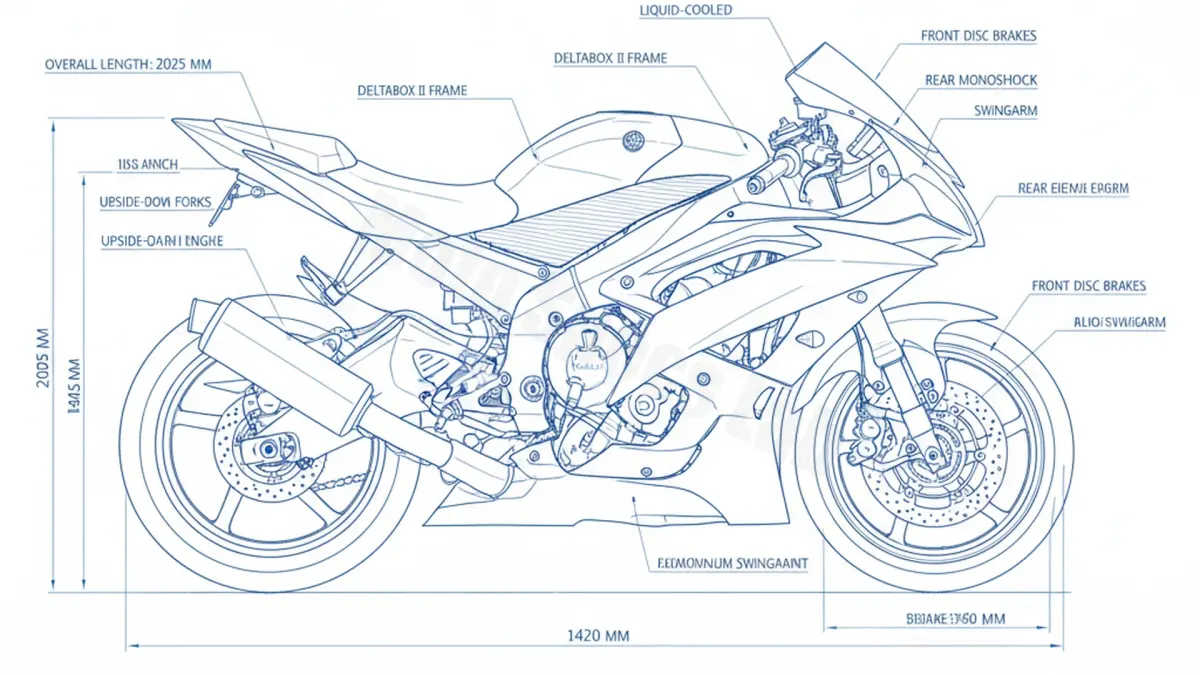
The RJ03 series is powered by a liquid-cooled, 16-valve, DOHC inline-four engine. Unlike its successor (the fuel-injected RJ05), the original R6 utilized 37mm Keihin CVRD carburetors. This setup offers a distinct, mechanical throttle response that many purists still prefer. The chassis, a lightweight aluminum Deltabox II, provides the sharp handling that became the R6’s trademark.
Maintenance Guide: Keeping the Legend Alive
1. Engine Lubrication
For the RJ031/032, Yamaha specifies an oil capacity of 2.7 liters. To maintain the integrity of the wet clutch system, only use JASO MA certified oils. While 10W-40 is standard for temperate climates, 20W-40 is recommended for consistently high-temperature environments.
2. Ignition System
The R6 is sensitive to its ignition setup. The NGK CR10EK is the specific dual-electrode plug required. Ensure the gap is precisely 0.6–0.7 mm. Given the high-revving nature of this engine, inspecting these plugs every 12,000 km is critical for preventing misfires at the top end.
3. Chassis and Tires
The front tire uses a 120/60 ZR 17 profile, which is slightly lower than the modern standard 120/70. This provides quicker turn-in but less ‘bump’ absorption. Maintaining pressures at 2.5 bar (front) and 2.9 bar (rear) is essential for tire longevity and high-speed stability.
4. Electrical System
The GT12B-4 battery is the heart of the electrical system. Early RJ03 models were known for voltage regulator issues; if you experience charging failure, verify the regulator/rectifier connectors for signs of heat damage or corrosion.
MotoSpecsLab Editorial Verdict
The 1999–2002 Yamaha R6 remains a masterpiece of late-90s engineering. While it requires more mechanical attention than modern fuel-injected bikes—specifically regarding carburetor synchronization and the known ‘second gear’ engagement issue on high-mileage units—its power-to-weight ratio and raw feedback make it one of the most rewarding motorcycles to ride on a twisty road or circuit.