| Component | Specification |
|---|---|
| Production Years | 1999–2002 |
| Engine Oil | SAE 10W-40 (JASO MA) – 2.7 Liters |
| Tires (Front) | 120/60 ZR 17 M/C (55W) |
| Tires (Rear) | 180/55 ZR 17 M/C (73W) |
| Spark Plugs | NGK CR10EK (0.6–0.7 mm gap) |
| Battery | GT9B-4 |
The Engineering Breakthrough: When the YZF-R6 (RJ03) debuted in late 1998, it shattered the supersport status quo by becoming the first production 600cc motorcycle to deliver over 100 horsepower in a chassis weighing less than 170kg dry. Its engine featured a revolutionary ultra-short-stroke design and ceramic-composite cylinder plating, allowing it to scream to a then-unprecedented 15,500 RPM redline.
Technical Analysis: The RJ03 Legacy
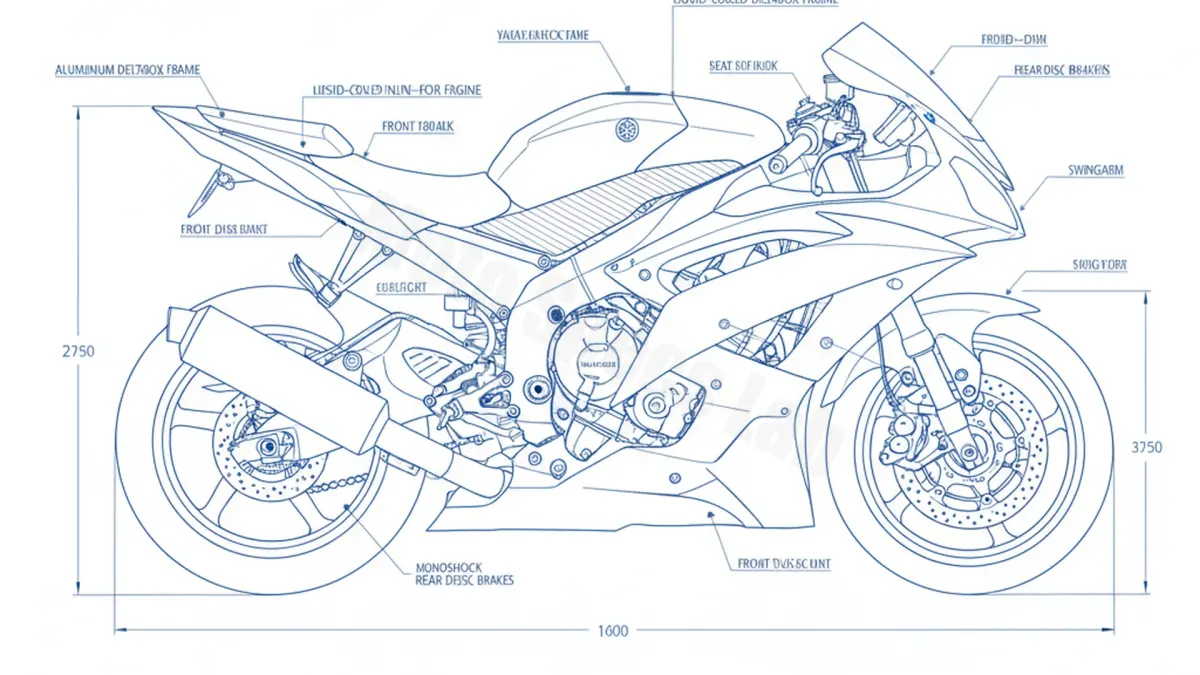
The RJ031 and RJ036 variants represent the genesis of the R6 dynasty. Utilizing the Deltabox II aluminum frame, Yamaha engineers optimized the engine position to achieve a 50/50 weight distribution. Unlike its predecessor, the Thundercat, the R6 was designed with a “track-first” philosophy, featuring fully adjustable 43mm conventional forks and a monoshock with a piggyback reservoir.
Maintenance Specifications & Fluids
To maintain the high-revving integrity of the R6 engine, adherence to technical tolerances is critical. The following data is sourced from factory service manuals for the 1999-2002 production run:
- Lubrication: Use a high-quality SAE 10W-40 semi-synthetic or full synthetic oil meeting JASO MA standards. The total capacity for an oil and filter change is 2.7 liters.
- Ignition System: The RJ03 utilizes high-heat range NGK CR10EK plugs. Ensure the electrode gap is precisely set between 0.6 and 0.7 mm to prevent high-RPM misfires.
- Electrical: The GT9B-4 battery is a specific thin-profile unit designed to fit the compact subframe. Ensure charging system output is between 14.1V and 14.8V at 5,000 RPM.
Chassis & Tire Pressure Management
Handling precision on the RJ03 is highly sensitive to tire pressure. For solo riding, MotoSpecsLab recommends 2.25 bar (33 psi) front and 2.50 bar (36 psi) rear. For high-speed touring or pillion use, increase pressures to 2.50 bar (36 psi) front and 2.90 bar (42 psi) rear to maintain carcass stability.
Common Issues & Expert Solutions
While the RJ03 is mechanically robust, two known areas require attention:
- Second Gear Engagement: Early models can suffer from worn engagement dogs on the second gear. Ensure smooth, positive shifts and check for “popping out” under heavy acceleration.
- Voltage Regulator/Rectifier: The OEM units are prone to overheating. Many owners upgrade to a MOSFET-style regulator for improved thermal management.
Frequently Asked Questions
What is the difference between RJ031 and RJ036?
These codes primarily denote regional market variations (such as California emissions vs. 49-state or European models) and minor mid-cycle updates to the shift linkage and carburetor heating systems.
How often should I check valve clearances?
Yamaha recommends checking valve clearances every 42,000 km (approx. 26,000 miles), though track-ridden machines should be inspected more frequently.