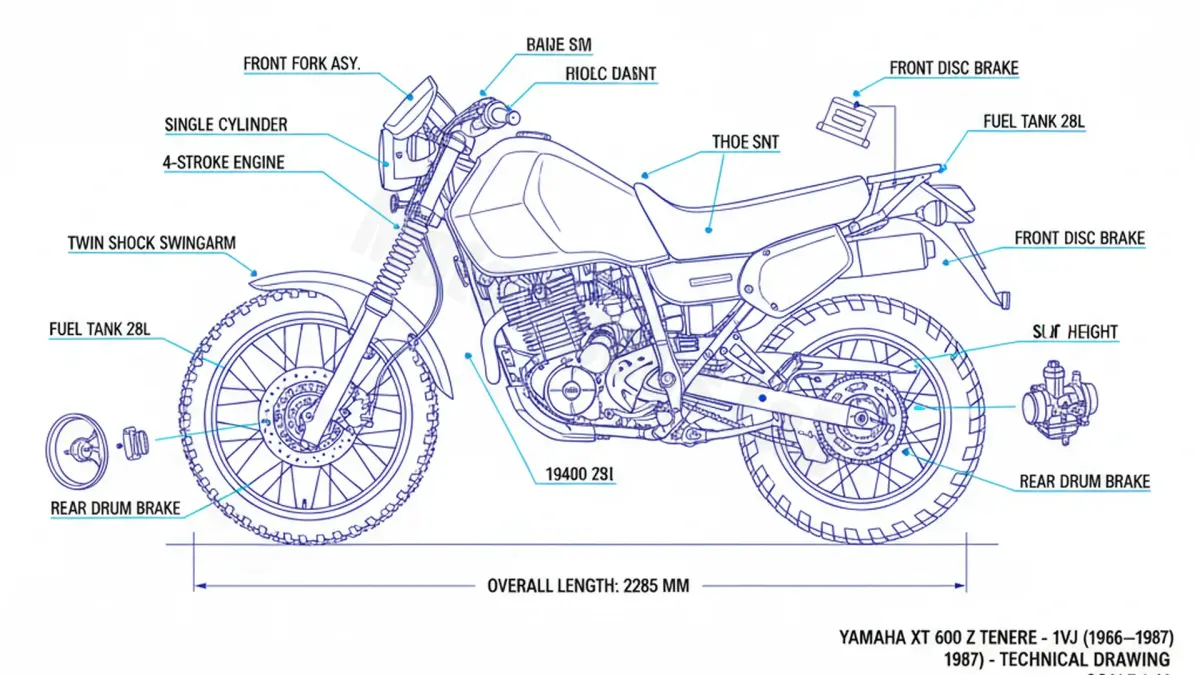
| Specification | Value |
|---|---|
| Production Years | 1986–1987 |
| Engine Oil | SAE 20W-40 API SE/SF (2.0 L) |
| Tire Size (Front) | 90/90-21 |
| Tire Size (Rear) | 120/80-18 |
| Tire Pressure (F/R) | 1.5 bar / 1.5 bar |
| Battery Type | YB12AL-A |
| Spark Plug | NGK DPR8EA-9 |
The Dakar Heritage: Historical Significance
The 1986 Yamaha XT 600 Z Ténéré (1VJ) represents a pivotal moment in dual-sport history. While its predecessor (the 34L/55W) established the Ténéré name, the 1VJ was the first model to introduce the convenience of an electric starter alongside the traditional kickstarter. This engineering shift signaled Yamaha’s commitment to making the rally-raid experience accessible to the global market, though it required a significant redesign of the airbox and fuel delivery systems to accommodate the new starter motor.
Engineering Analysis & Design
The 1VJ is powered by the legendary 595cc single-cylinder SOHC engine. A unique engineering highlight of this specific generation was the integration of the air filter housing directly under the 23-liter fuel tank. This design was intended to provide cleaner air intake during desert crossings but initially faced challenges with thermal management. The 1VJ is often recognized by its high-mounted front fender with integrated cooling vents, a direct response to the heat issues discovered during its early production run.
Maintenance Guide & Service Requirements
To maintain the longevity of the 1VJ’s air-cooled powerplant, strict adherence to fluid specifications is mandatory. As the Editor-in-Chief of MotoSpecsLab, I recommend the following service protocols:
1. Lubrication System
The 1VJ utilizes a dry-sump system. The specified 2.0 liters of SAE 20W-40 (meeting API SE/SF standards) should be checked when the engine is warm. Using a modern synthetic oil with JASO MA certification is acceptable to ensure clutch compatibility.
2. Electrical & Ignition
The 1VJ relies on a YB12AL-A battery to support the electric starter. Ensure the NGK DPR8EA-9 spark plug is gapped to 0.8–0.9mm. Given the age of these units, checking the regulator/rectifier output is a critical preventative measure.
3. Chassis & Tires
For optimal handling on mixed terrain, the 90/90-21 front and 120/80-18 rear tires should be maintained at 1.5 bar (22 psi). Lowering the pressure for off-road use is common, but ensure rim locks are installed if dropping below 1.0 bar.
Frequently Asked Questions
Why is the 1VJ known for overheating?
The initial design had restricted airflow to the cylinder head. Yamaha addressed this with a modified cylinder head (3AJ type) and revised cooling fins in later production batches.
Can I use 10W-40 oil instead?
While 10W-40 is common, the 1VJ’s air-cooled engine benefits from the higher viscosity of 20W-40 in warm climates to maintain oil film thickness under high thermal load.