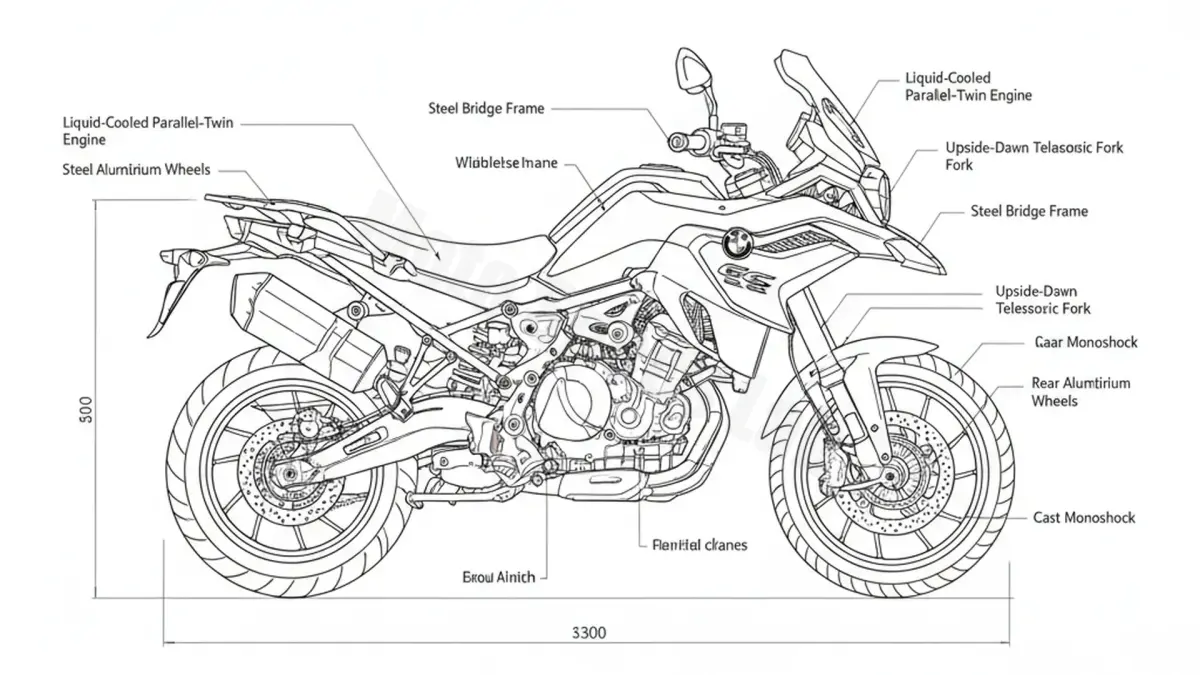
| Component | Specification |
|---|---|
| Engine Displacement | 853 CCM (Liquid-cooled Parallel Twin) |
| Oil Type / Capacity | SAE 5W-40, API SL / JASO MA2 (3.0 L) |
| Tire Dimensions | Front: 110/80 R19 | Rear: 150/70 R17 |
| Spark Plug | NGK LMAR8J-9E (0.9 mm gap) |
| Battery | YTX14-BS |
| Production Years | 2018 – Present |
At MotoSpecsLab, we often highlight the ‘hidden’ engineering choices that define a machine. A unique historical fact regarding the BMW F 750 GS (0B08) is that despite its ‘750’ designation, it shares the exact 853cc displacement with its larger sibling, the F 850 GS. BMW engineers achieved this differentiation not through bore or stroke reduction, but through sophisticated ECU mapping and camshaft timing, resulting in a 270-degree firing order that provides a smoother, more manageable power delivery ideal for touring and light adventure.
Technical Engineering Overview
The 0B08 platform represents BMW’s shift toward Euro 4 and Euro 5 compliance without sacrificing the characteristic ‘thump’ of a twin-cylinder. The 853cc power plant utilizes dual counter-balance shafts to mitigate the vibrations inherent in parallel-twin designs. This specific model is optimized for lower seat height and accessibility, making it the precision tool of choice for riders seeking GS capability with urban agility.
Maintenance Essentials: Fluids and Ignition
For the longevity of the wet clutch and the high-compression engine, the choice of lubricant is non-negotiable. The F 750 GS requires 3.0 liters of SAE 5W-40 synthetic oil. It must meet API SL and JASO MA2 standards to ensure the integrated gearbox and clutch operate without slippage or thermal degradation.
Ignition is handled by NGK LMAR8J-9E plugs. It is critical for technicians to verify the 0.9 mm gap before installation, as precise spark timing is essential for the Euro 5 fuel-mapping efficiency. Electrical stability is maintained by a high-capacity YTX14-BS battery, necessary to power the bike’s extensive TFT display and electronic rider aids.
Chassis Dynamics and Tire Management
The F 750 GS utilizes a cast aluminum wheel setup, distinguishing it from the spoked F 850 GS. To maintain the intended geometry and safety margins, tire pressures must be strictly monitored:
- Front (110/80 R19): 2.2 bar (32 psi)
- Rear (150/70 R17): 2.5 bar (36 psi) for solo operation; 2.9 bar (42 psi) when carrying a pillion or luggage.
MotoSpecsLab Editorial Verdict
The BMW F 750 GS (0B08) is a masterclass in ‘right-sizing.’ By utilizing the 850cc block but tuning for torque rather than peak horsepower, BMW has created a motorcycle that is mechanically over-engineered for its class. Following the prescribed maintenance intervals and fluid specifications is paramount to preserving the sophisticated electronics and engine tolerances of this German-engineered adventure tourer.