| Specification | Data Value |
|---|---|
| Production Years | 1998–2009 |
| Engine Oil | SAE 20W50 (2.6 L – 2.8 L) |
| Front Tire | 80/90-21 54H |
| Rear Tire | 130/90-B16 73H / 150/80-B16 71H |
| Tire Pressure (F/R) | 30 psi / 36-40 psi |
| Spark Plug | HD 6R12 |
| Battery | YTX20L-BS / YTX14L-BS |
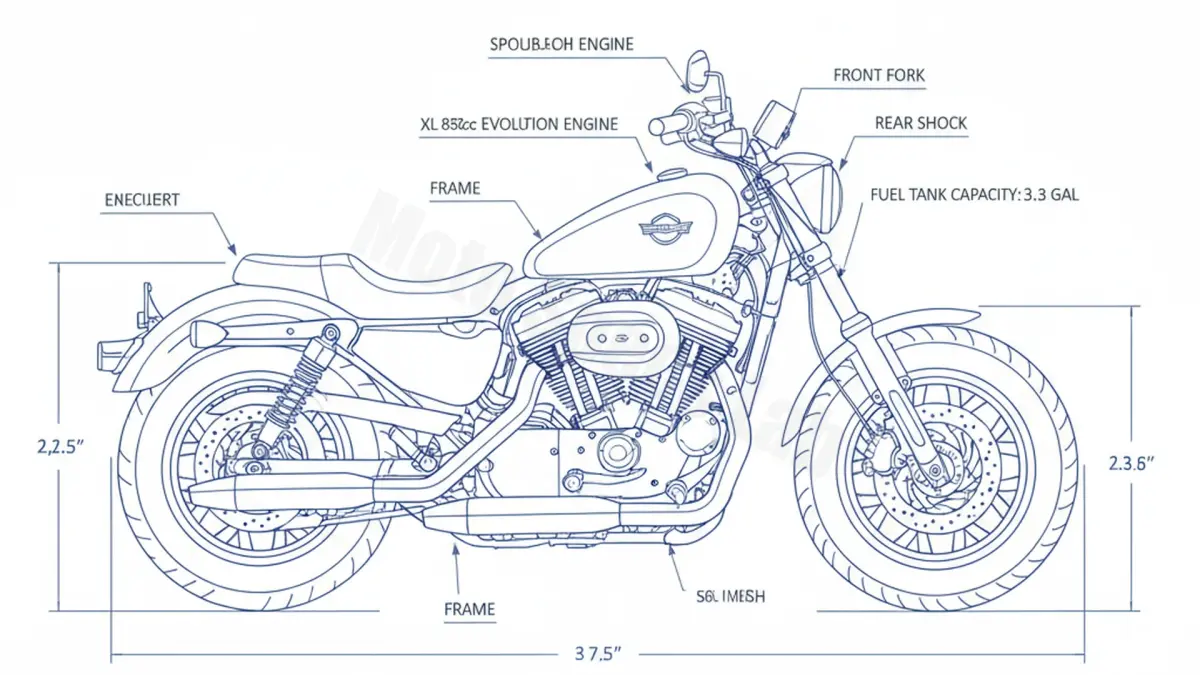
A unique engineering highlight of the XL883C ‘Custom 53’ (as it was designated in European markets to celebrate the 1953 lineage of the Sportster’s ancestors) is the specific combination of a 21-inch laced front wheel and forward controls. This configuration was a deliberate departure from the standard XL883, moving the Sportster platform away from its flat-track roots toward a factory-custom ‘chopper’ aesthetic without sacrificing the structural integrity of the Evolution engine’s mounting.
Engineering Overview
The XL883C spans two distinct eras of Sportster engineering: the rigid-mount Evolution era (pre-2004) and the rubber-mount era (2004-2009). While the 883cc V-Twin remains the heart of the machine, the 2004 update significantly altered the frame geometry and engine casing designs to accommodate the vibration-dampening system. This guide covers the essential technical requirements for both iterations of this iconic cruiser.
Fluid & Filtration Requirements
For optimal thermal stability in the air-cooled Evolution V-Twin, SAE 20W50 is the mandatory viscosity. The oil system typically requires 2.6 to 2.8 liters. It is critical for technicians to check levels while the engine is at operating temperature, as the dry-sump system can provide false low readings when the bike has been sitting for extended periods (a phenomenon known as ‘sumping’).
Ignition & Electrical System
The XL883C utilizes HD 6R12 spark plugs. Maintaining a clean gap is essential for the wasted-spark ignition system used on these models. Regarding the battery, earlier models typically utilize the YTX20L-BS, whereas the redesigned battery tray in later rubber-mount models often requires the YTX14L-BS. Always verify the specific tray dimensions before replacement.
Chassis & Contact Patch
The ‘Custom’ handling profile is defined by its 21-inch front wheel. This requires a 80/90-21 54H tire, which must be maintained at 2.07 bar (30 psi) to prevent ‘hunting’ on road grooves. The rear 16-inch tire evolved over the production run, moving from a 130mm to a 150mm width in later years. For heavy touring or two-up riding, the rear pressure must be increased to 2.76 bar (40 psi) to prevent sidewall overheating.
Maintenance Schedule Summary
- Every 5,000 Miles: Change engine oil and filter; inspect primary chain tension.
- Every 10,000 Miles: Replace spark plugs and inspect brake pads/rotors.
- Every 2 Years: Replace brake fluid (DOT 4 or DOT 5 depending on the specific year/model requirements—check master cylinder cap).