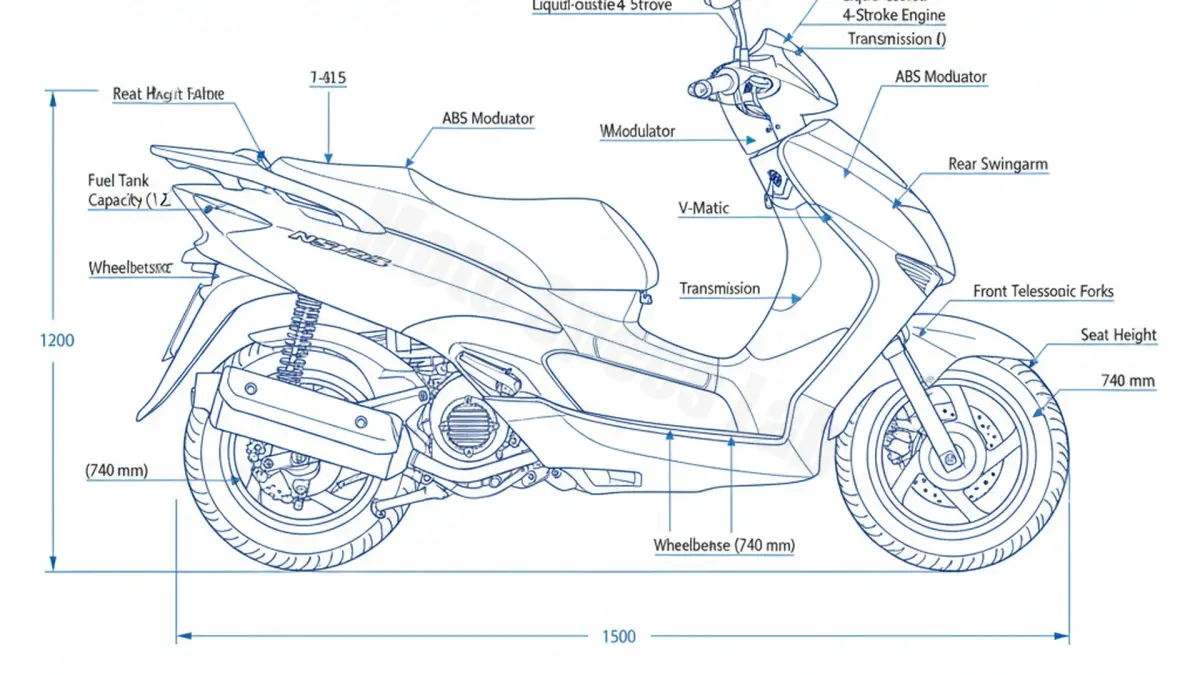
| Component | Specification |
|---|---|
| Production Years | 2001 – 2004 |
| Engine Oil | SAE 10W-30 (JASO MB) – 1.1 Liters |
| Spark Plug | NGK DPR7EA-9 |
| Battery | YTZ12S (12V Maintenance Free) |
| Front Tire | 110/90-13 M/C 55P (1.75 bar / 25 psi) |
| Rear Tire | 130/70-12 62L (2.0 – 2.5 bar) |
Engineering Highlight: The S-Matic Revolution
The Honda NSS 250 Jazz (marketed as the Forza in Japan) holds a significant place in scooter history as one of the earliest adopters of the S-Matic electronically controlled CVT. Unlike traditional centrifugal pulleys, the S-Matic system utilized an electronic actuator to adjust the drive ratio. This allowed riders to toggle between standard automatic modes and a simulated 6-speed manual shift mode, providing engine braking and torque control previously unheard of in the 250cc maxi-scooter class.
Technical Maintenance Overview
To maintain the high-efficiency performance of the NSS 250 JAZZ ES-ABS, adherence to specific fluid and electrical standards is paramount. The 249cc liquid-cooled 4-stroke engine is designed for low friction, requiring SAE 10W-30 oil with a JASO MB certification. Note that JASO MB is critical here; using JASO MA (designed for wet clutches) may result in suboptimal fuel efficiency and increased internal drag in this dry-clutch configuration.
Ignition and Electrical System
The ignition system relies on a single NGK DPR7EA-9 spark plug. Given the enclosed nature of the scooter’s bodywork, heat dissipation is a factor; ensure the gap is set correctly to prevent fouling during urban stop-and-go traffic. Power is managed by a YTZ12S battery, which provides the high cold-cranking amps necessary to engage the starter motor and the ABS modulator simultaneously during startup diagnostics.
Chassis, Tires, and Safety
The “ES-ABS” designation signifies the inclusion of Honda’s Combined Braking System (CBS) paired with an Anti-lock Braking System. This setup requires meticulous inspection of the brake fluid levels and sensor rings. For optimal handling, the staggered wheel setup (13-inch front, 12-inch rear) must be kept at precise pressures:
- Front (110/90-13): 1.75 bar (25 psi) for steering precision.
- Rear (130/70-12): 2.0 bar (29 psi) for solo use, increasing to 2.5 bar (36 psi) when carrying a pillion or heavy luggage.
MotoSpecsLab Verdict
The Honda NSS 250 Jazz remains a masterclass in early 2000s Japanese engineering. Its combination of the S-Matic transmission and ABS safety features makes it a sophisticated machine that rewards owners who follow a strict maintenance regimen. By utilizing the correct JASO MB oil and maintaining tire pressures, owners can ensure this classic maxi-scooter continues to deliver its signature smooth, futuristic ride.