| Attribute | Specification |
|---|---|
| Production Years | 1972–1982 |
| Engine Oil | SAE 10W-30 (0.7 L) |
| Tire Size (F/R) | 21 x 7.00 – 10 / 21 x 7.00 – 10 |
| Tire Pressure | F: 0.5 bar (7.1 psi) / R: 0.7 bar (10.0 psi) |
| Battery Type | 6N4-2A (6 Volt) |
| Spark Plug | NGK B7HS |
The Suzuki RV 125, colloquially known as the ‘VanVan’ (a Japanese onomatopoeia for ‘keep going’ or ‘bang-bang’), holds a unique place in engineering history as one of the first mass-produced motorcycles to utilize ultra-wide, low-pressure balloon tires designed specifically for sand and soft-terrain buoyancy. Unlike contemporary dual-sports that prioritized ground clearance, the RV 125 was engineered for a low center of gravity and maximum surface contact, making it a pioneer in the ‘fun-bike’ category.
Engineering Overview
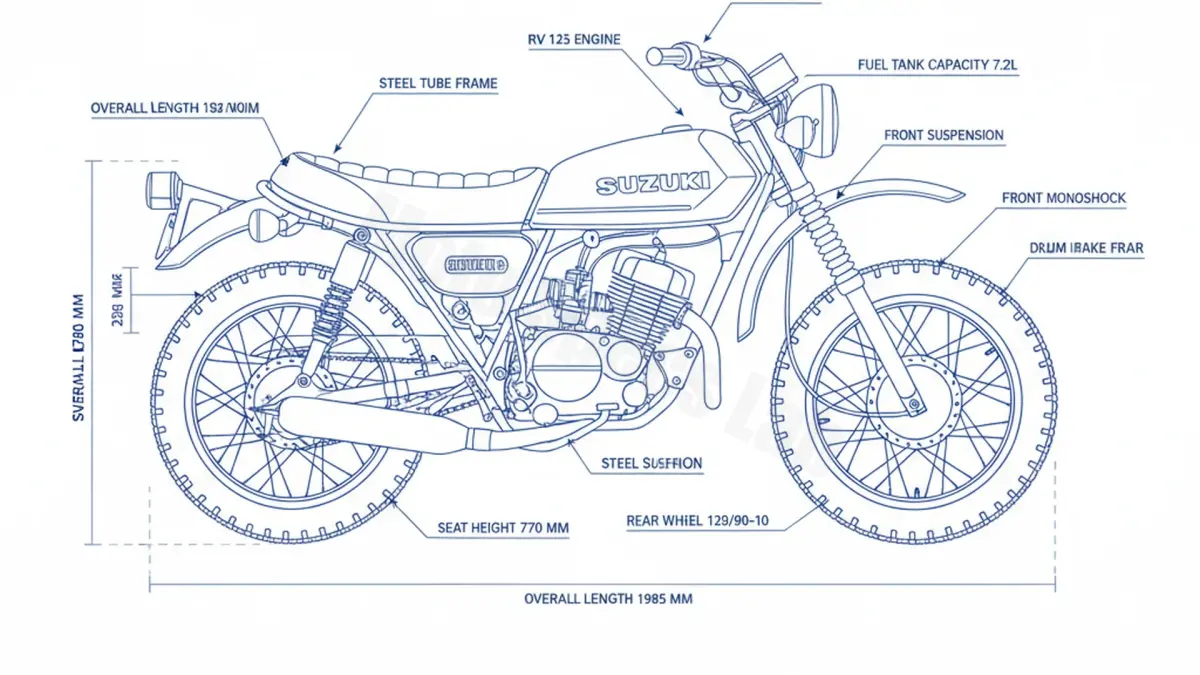
Produced between 1972 and 1982, the RV 125 is powered by a robust 123cc air-cooled, two-stroke single-cylinder engine. A key technical highlight is the CCI (Cylinder Crankshaft Injection) lubrication system, which eliminated the need for pre-mixing fuel and oil—a significant convenience for the era. The bike’s frame is a semi-double cradle design, built to withstand the torsional stresses of off-road riding while accommodating the oversized 10-inch wheels.
Maintenance Guide
Lubrication System
For the gearbox and primary drive, the RV 125 requires 0.7 Liters of SAE 10W-30 oil. Given the age of these machines, MotoSpecsLab recommends high-zinc mineral oils to protect the vintage gear teeth. Change the oil every 2,000 miles or annually to prevent moisture buildup in the crankcase.
Tire Management
The 21 x 7.00 – 10 balloon tires are the soul of the RV 125. Maintaining the correct pressure is critical for both handling and tire longevity. Unlike modern street bikes, the RV 125 operates at extremely low pressures: 0.5 bar (7.1 psi) in the front and 0.7 bar (10.0 psi) in the rear. Over-inflating these tires will result in a harsh ride and significantly reduced traction on loose surfaces.
Electrical & Ignition
The 6-volt electrical system is powered by a 6N4-2A battery. Owners should regularly check the electrolyte levels, as these small 6V units are prone to evaporation. For ignition, the NGK B7HS spark plug is the standard specification. Ensure the gap is set to 0.6–0.7mm for optimal combustion of the two-stroke mixture.
Performance & Handling
On the road, the RV 125 is characterized by its ‘floaty’ sensation, a direct result of the high-profile tires. While it won’t win speed trials, its ability to crawl through soft sand where larger bikes sink is legendary. The five-speed transmission is geared short to maximize the torque from the small-displacement engine, making it an excellent urban commuter or beach explorer.
Frequently Asked Questions
Can I use synthetic oil in my RV 125?
While modern synthetics offer superior protection, many enthusiasts prefer high-quality mineral oils for vintage wet clutches to prevent slipping. If using synthetic, ensure it is JASO MA rated.
Why is my battery not charging?
The 6V charging systems on these models are notoriously weak. Check the rectifier and ensure all ground connections to the frame are free of rust and paint, as resistance is the primary enemy of 6V circuits.