| Specification | Value |
|---|---|
| Production Years | 1978-1979 |
| Engine Type | SOHC 4-stroke Single, 2-valve |
| Oil Capacity | 1.3 L (SAE 10W-40 JASO MA2) |
| Spark Plug | NGK DR8ES-L |
| Tire Size (Front) | 3.00-21 4PR |
| Tire Size (Rear) | 4.00-18 4PR |
| Battery | 6N4B-2A (6V System) |
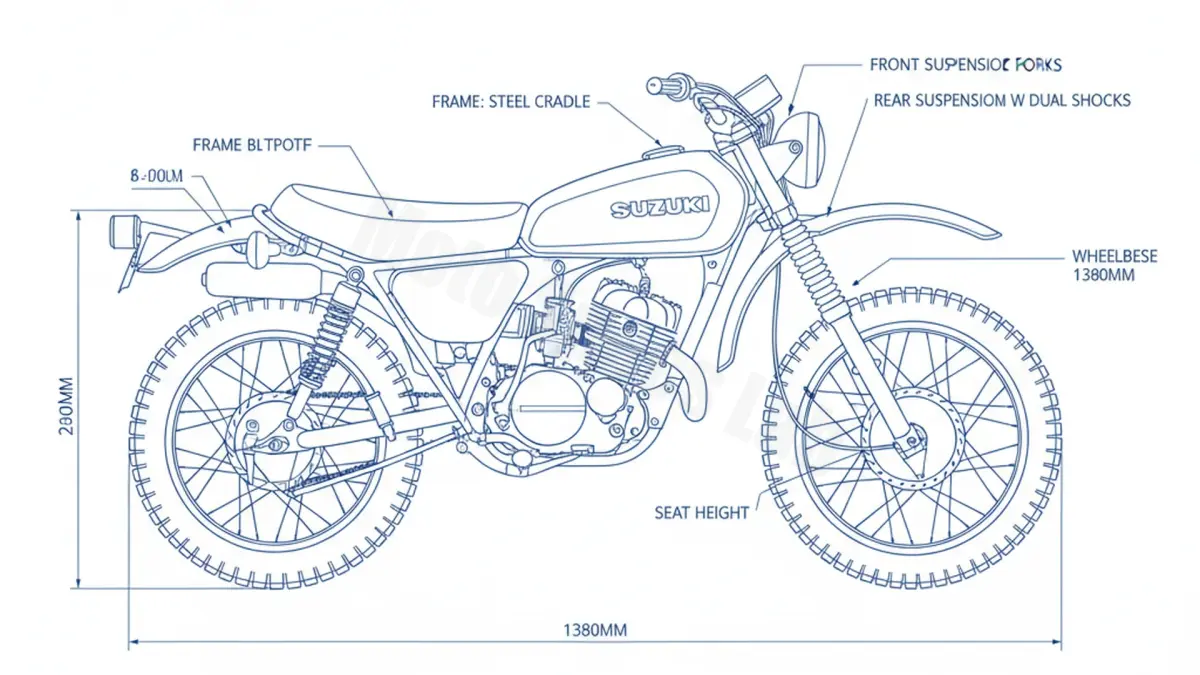
At MotoSpecsLab, we recognize the Suzuki SP 370 as a pivotal milestone in dual-sport history. While Suzuki was synonymous with two-strokes in the mid-70s, the SP 370 (and its off-road sibling, the DR370) represented the brand’s first foray into the four-stroke single-cylinder market. A unique engineering highlight of the SP 370 was its semi-dry sump lubrication system, which utilized the frame’s downtube as an oil cooler—a design choice that maximized thermal efficiency while keeping the engine profile narrow for off-road maneuvers.
Engineering Analysis: The Birth of the Thumper Legacy
The SP 370 was designed to compete directly with the Yamaha XT500, but with a focus on lightness and agility. The 369cc power plant utilized a simple yet robust SOHC configuration. Unlike modern liquid-cooled machines, the SP 370 relied on deep finning and the aforementioned oil-in-frame cooling to manage heat. The 6-volt electrical system, powered by the 6N4B-2A battery, was a standard of the era, though it necessitates careful maintenance of ground connections to ensure lighting reliability.
Maintenance Specifications & Essentials
For the vintage restorer or the active rider, adhering to precise technical tolerances is critical for the longevity of this air-cooled engine.
1. Lubrication System
The engine requires 1.3 Liters of SAE 10W-40. Given the integrated wet clutch, it is imperative to use oil with a JASO MA2 rating to prevent clutch slippage. Due to the lack of a modern oil filter (relying instead on a mesh strainer), oil changes should be performed every 1,500 to 2,000 miles to prevent sludge buildup.
2. Ignition & Electrical
The ignition timing on these units is sensitive to spark plug condition. The NGK DR8ES-L is the factory-specified plug. Proper gapping is essential to ensure the 6V ignition coil can provide a consistent spark under high-compression loads.
3. Chassis & Tires
The SP 370 maintains its classic ‘Enduro’ stance with a 21-inch front and 18-inch rear wheel setup. Maintaining correct pressures is vital for both rim protection and pavement stability:
- Front: 1.25 bar (18 psi)
- Rear (Solo): 1.50 bar (21 psi)
- Rear (Dual/Loaded): 1.75 bar (25 psi)
MotoSpecsLab Editorial Verdict
The Suzuki SP 370 is more than a vintage motorcycle; it is a mechanical artifact that paved the way for the legendary DR-Z series. Its power-to-weight ratio was impressive for 1978, and its torquey nature makes it a joy for B-road exploration. However, owners must be diligent with the 6V electrical system and the semi-dry sump oil levels. If maintained correctly, the SP 370 remains one of the most charismatic ‘thumpers’ of the late 20th century.
Frequently Asked Questions (FAQ)
Q: Can I use 10W-50 oil in the SP 370?
A: While 10W-40 is the standard, a 10W-50 JASO MA2 oil can be used in extremely hot climates to provide better shear stability, though 10W-40 remains the recommendation for all-around use.
Q: Is the SP 370 a 12V or 6V system?
A: The original factory specification is a 6-volt system, utilizing a 6N4B-2A battery. Many owners convert these to 12V for better lighting, but original restorations should stick to the 6V setup.