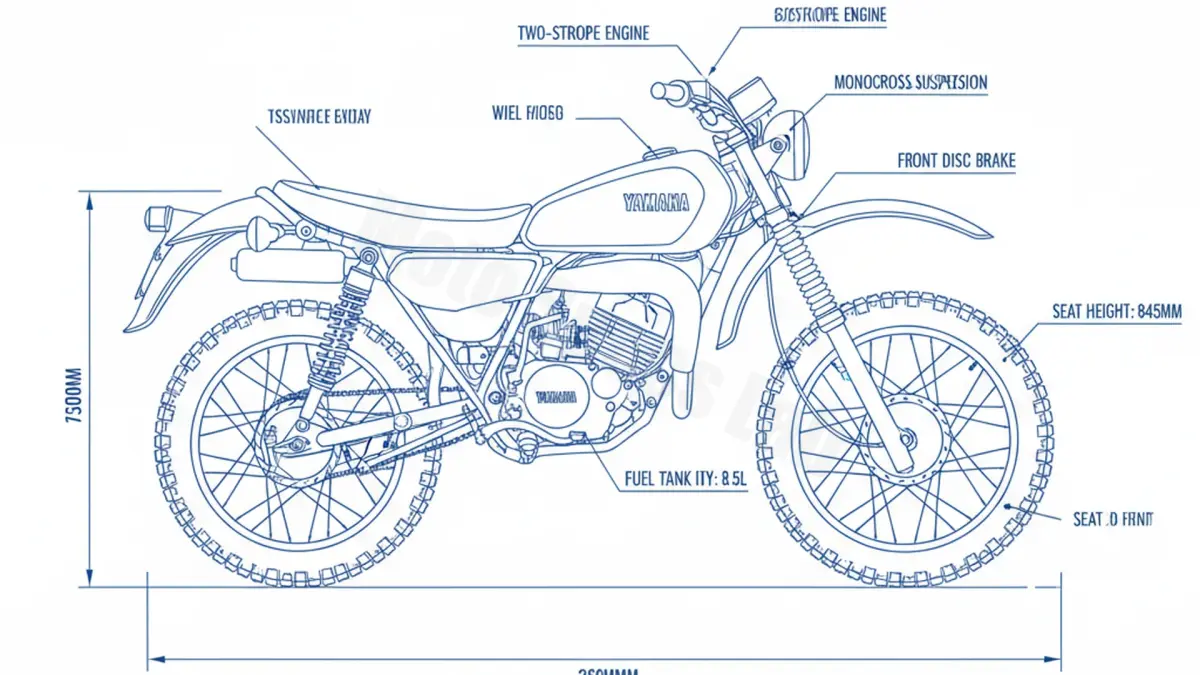
While many 80cc motorcycles of the early 1980s were merely scaled-down versions of larger bikes, the Yamaha DT 80 MX (5J1) was a masterpiece of specialized engineering. It was one of the first light enduros to successfully implement the ‘Cantilever’ Monocross rear suspension system, a direct trickle-down technology from Yamaha’s world-championship-winning YZ motocrossers, providing superior damping and travel compared to the twin-shock competitors of its era.
| Component | Specification |
|---|---|
| Production Years | 1981 – 1984 |
| Engine Oil | SAE 10W-30 (Type SE or higher) (0.75 L) |
| Spark Plug | NGK B8ES (Gap: 0.6 – 0.7 mm) |
| Tire Size (Front) | 2.50 – 21 4PR |
| Tire Size (Rear) | 3.00 – 18 4PR |
| Battery Type | 6N4-2A-4 (6 Volt) |
| Tire Pressure (F/R) | 1.3 bar / 1.5 bar |
Technical Overview: The 5J1 Legacy
The 5J1 variant of the DT 80 MX represents the pinnacle of Yamaha’s air-cooled 2-stroke development for the entry-level market. Powered by a 79cc single-cylinder engine, the bike was designed to meet strict European licensing regulations while offering genuine off-road capability. The torque-induction reed valve system ensured a broader powerband, making it surprisingly tractable on forest trails despite its modest displacement.
From an engineering standpoint, the chassis was the star. The high-tensile steel frame was lightweight yet rigid, and the 21-inch front wheel allowed for significant obstacle clearance, a feature often missing in the “junior” class.
Maintenance Guide & Service Intervals
1. Lubrication System
The transmission requires 0.75 Liters of SAE 10W-30 oil. For optimal clutch performance and gear protection, ensure the oil meets at least the SE service classification. Given the age of these units, MotoSpecsLab recommends changing the oil every 3,000 km or annually to prevent moisture buildup in the crankcase.
2. Ignition & Electrical
The 5J1 utilizes a 6-volt electrical system powered by a 6N4-2A-4 battery. Maintaining the correct spark plug is critical for reliable starting; the NGK B8ES is the standard. Ensure the gap is precisely set to 0.6 – 0.7 mm to prevent misfires under high RPM load.
3. Chassis & Tires
Proper tire pressure is essential for the DT 80 MX’s handling characteristics. For mixed-use riding, maintain 1.3 bar (19 psi) in the front 2.50-21 tire and 1.5 bar (22 psi) in the rear 3.00-18 tire. Using the correct 4PR (Ply Rating) tires is vital to maintain the original sidewall stiffness intended by Yamaha engineers.
Expert Verdict
The Yamaha DT 80 MX (5J1) remains a sought-after classic for collectors and vintage enduro enthusiasts. Its mechanical simplicity, combined with the innovative Monocross suspension, makes it a robust platform for restoration. By adhering to the precise fluid and ignition specifications outlined above, owners can ensure this 1980s icon continues to perform as it did on the day it left the factory.