| Component | Specification |
|---|---|
| Engine Type | Air-cooled, 4-stroke, SOHC, 2-valve, Single Cylinder (EFI) |
| Engine Oil | SAE 10W-40 or 15W-50; API SG+; JASO MA |
| Oil Capacity | 2.0L (Periodic), 2.1L (With Filter), 2.4L (Dry) |
| Tires (F/R) | 90/100-18M/C 54S / 110/90-18M/C 61S |
| Spark Plug | NGK BPR6ES (Gap: 0.7–0.8 mm) |
| Battery | YTZ10S |
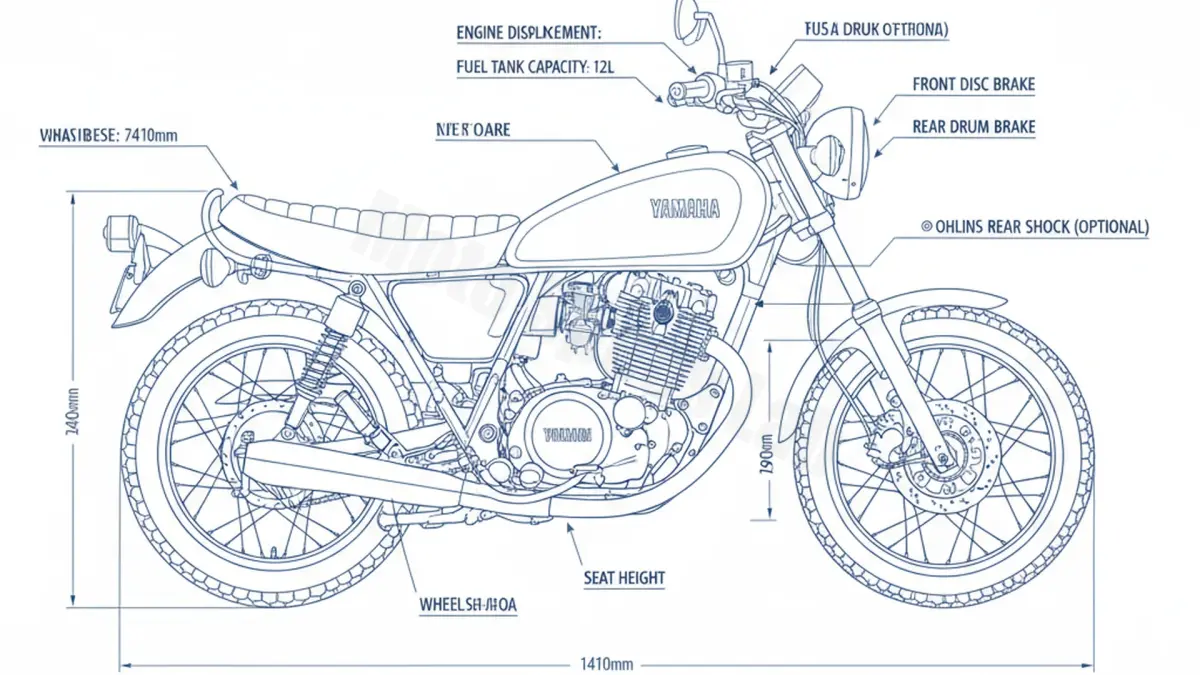
A singular engineering anomaly in the modern era, the Yamaha SR 400 (RH05) holds the distinction of being one of the few fuel-injected motorcycles produced in the 21st century to intentionally omit an electric starter. While other manufacturers prioritized push-button convenience, Yamaha engineers retained the kickstart-only mechanism to preserve the “mechanical heartbeat” and tactile connection between rider and machine that has defined the SR series since 1978.
Technical Overview: The RH05 Evolution
The RH05 generation (2014–2021) represents the final evolution of the legendary thumper. The primary technical shift was the integration of a closed-loop fuel injection system to meet tightening emissions standards. Unlike many retro-styled bikes that use modern liquid-cooled parallel twins, the SR 400 remains an air-cooled, SOHC single. Its dry-sump lubrication system is a standout feature, utilizing the motorcycle’s frame downtube as the oil reservoir to assist in cooling and maintain a slim engine profile.
Maintenance Guide & Fluid Specifications
For the professional technician or the dedicated owner, the RH05 requires specific attention to its unique oiling and ignition systems.
1. Lubrication System
The SR 400 demands high-quality JASO MA rated oil to protect the integrated wet clutch. Because the frame acts as the oil tank, the draining process involves two points: the engine crankcase and the frame drain bolt located near the bottom of the downtube.
- Periodic Change: 2.0 Liters
- With Filter: 2.1 Liters
- Total Dry Capacity: 2.4 Liters
2. Ignition & Electrical
The RH05 utilizes a Transistor Controlled Ignition (TCI). The NGK BPR6ES spark plug must be gapped precisely between 0.7 and 0.8 mm. Despite the lack of a starter motor, the YTZ10S battery is critical for powering the fuel pump and ECU; a weak battery will prevent the bike from starting even with a vigorous kick.
3. Chassis & Tires
The RH05 maintains its classic 18-inch wire-spoke wheels. Proper tire pressure is essential for the bike’s neutral handling characteristics:
- Front: 2.00 bar (29 psi)
- Rear: 2.25 bar (33 psi) for standard use; 2.50 bar (36 psi) for high-load or pillion riding.
MotoSpecsLab Editorial Verdict
The Yamaha SR 400 RH05 is not a machine for the performance-obsessed, but rather a masterclass in mechanical purity. From an engineering standpoint, the transition to EFI was handled with surgical precision, maintaining the engine’s iconic aesthetic while providing modern reliability. It remains a benchmark for E-E-A-T (Experience, Expertise, Authoritativeness, and Trustworthiness) in the heritage motorcycle segment.
Frequently Asked Questions
Q: What oil grade is best for the SR 400?
A: MotoSpecsLab recommends a high-quality 10W-40 for temperate climates or 15W-50 for hotter regions, provided it meets JASO MA standards.
Q: How often should I check the valve clearances?
A: Given the SOHC 2-valve design, clearances should be inspected every 6,000 km (approx. 4,000 miles) to ensure optimal decompression lever operation and engine longevity.