| Specification | Data Value |
|---|---|
| Production Years | 2012-2014 |
| Engine Type | 998cc, Liquid-cooled, 4-stroke, DOHC, 16-valves |
| Engine Oil | SAE 10W-40 (3.9 Liters) |
| Front Tire | 120/70 ZR 17 |
| Rear Tire | 190/55 ZR 17 |
| Tire Pressure (F/R) | 2.5 bar (36 psi) / 2.9 bar (42 psi) |
| Spark Plug | NGK LMAR9E-J |
| Battery Type | YTZ10S |
The Yamaha YZF-R1 RN225 (2012-2014) represents a landmark moment in the history of the R1 series. While the 2009 model introduced the revolutionary CP4 crossplane crankshaft, the RN225 was the first to integrate a sophisticated 7-level Traction Control System (TCS) developed directly from Yamaha’s YZR-M1 MotoGP program. This specific engineering iteration solved the primary critique of the early crossplane engines: the difficulty of managing the immense, uneven firing order torque during corner exit.
Technical Engineering Review
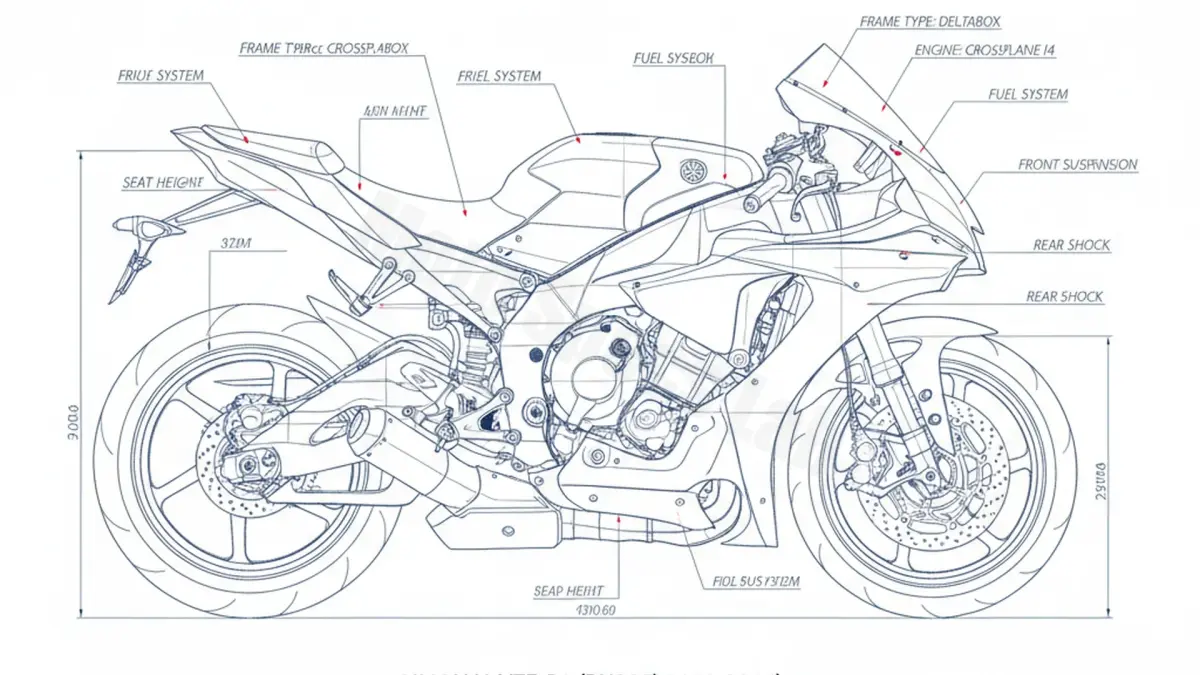
The heart of the RN225 is the 998cc inline-four engine with its 270°-180°-90°-180° firing interval. This configuration eliminates inertial crankshaft torque, providing the rider with a direct connection between the throttle and the rear tire. The 2012-2014 update also featured a redesigned front cowl with LED position lights and new hexagonal muffler end caps, though the primary focus remained the ECU refinement and the TCS integration.
Maintenance & Service Guidelines
As a high-performance machine, the RN225 demands precise maintenance to preserve its unique power delivery characteristics.
Lubrication System
The RN225 requires 3.9 liters of SAE 10W-40 oil. For track-oriented use, MotoSpecsLab recommends a full synthetic ester-based oil to handle the high thermal loads generated by the crossplane configuration. Always replace the oil filter during every oil change to prevent contamination of the complex oil passages.
Ignition and Electrical
The engine utilizes NGK LMAR9E-J spark plugs. These long-reach plugs are critical for the DOHC head design. For the electrical system, the YTZ10S battery provides the high cold-cranking amps (CCA) required to turn over the high-compression pistons.
Chassis and Tires
Handling is sensitive to tire profile and pressure. The standard 120/70 ZR 17 front and 190/55 ZR 17 rear setup should be maintained at 2.5 bar (36 psi) and 2.9 bar (42 psi) respectively for street use. Dropping rear pressure for track use is common, but ensure the TCS is calibrated to the specific tire circumference if changing brands.
Expert Verdict
The RN225 is the most refined version of the first-generation crossplane R1. It offers a visceral, analog feel that later fly-by-wire heavy models lack, while providing enough electronic safety net to make its 180hp manageable for the advanced enthusiast.