| Component | Specification |
|---|---|
| Engine Oil | SAE 10W-40, API SG+, JASO MA (2.1 L) |
| Tires (F/R) | 110/70R17 M/C 54H / 140/70R17 M/C 66H |
| Tire Pressure | F: 29 psi / R: 33 psi |
| Spark Plug | NGK LMAR8L-9 (0.8–0.9 mm gap) |
| Battery | GTZ8V |
Engineering Heritage: The MotoGP Connection
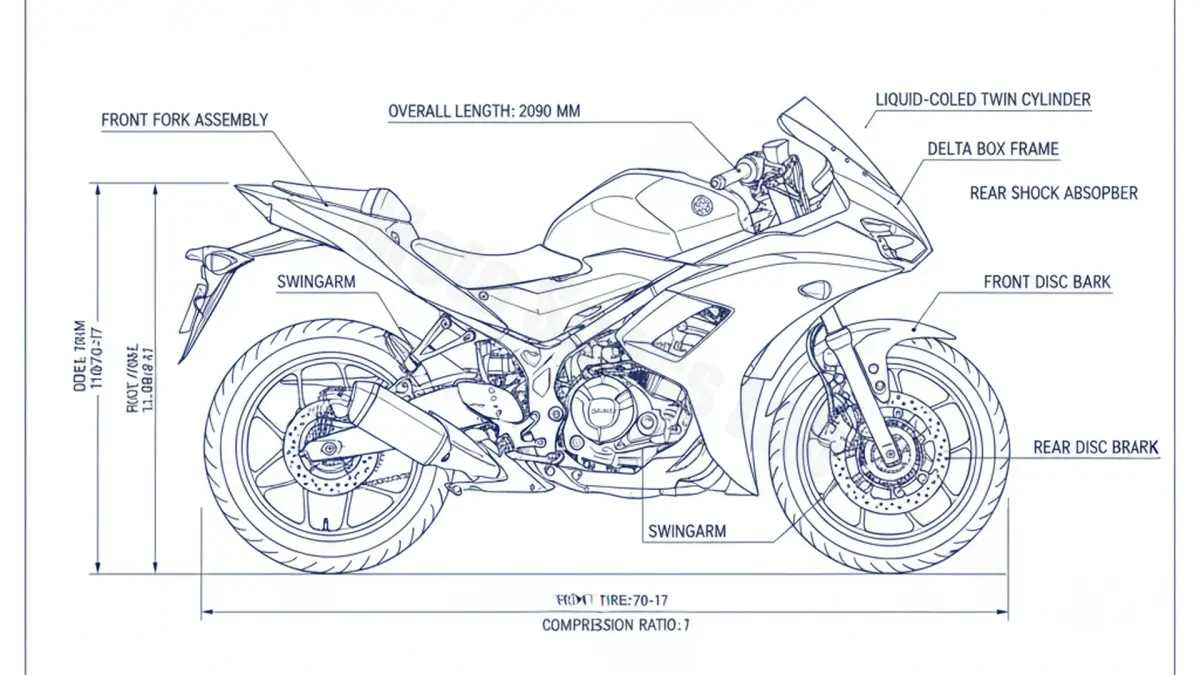
The Yamaha R3 (RH251 generation) represents a pivotal shift in the entry-level supersport category. A unique engineering highlight of this iteration is the implementation of 37mm KYB inverted front forks. Unlike the conventional forks of its predecessor, this setup was specifically tuned to mirror the front-end rigidity and feedback characteristics of Yamaha’s YZR-M1 MotoGP machine, significantly reducing unsprung weight and improving high-speed stability.
Technical Performance Analysis
At the heart of the RH251 is the 321cc inline-twin engine, utilizing offset cylinders and forged aluminum pistons. This design minimizes friction and enhances heat dissipation, allowing for a high-revving ceiling that remains reliable under track conditions. The 2019+ redesign also improved aerodynamics by 7%, increasing top speed through refined fairing geometry inspired by the R1.
Maintenance Specifications & Service Data
For the professional technician or the dedicated enthusiast, adhering to the following specifications is critical for maintaining the RH251’s performance envelope:
- Lubrication: Use a high-quality synthetic 10W-40 oil. The system requires 2.1 liters when the filter is replaced. Ensure JASO MA compliance to protect the wet clutch system.
- Ignition: The NGK LMAR8L-9 plug must be gapped precisely to 0.8–0.9 mm. This ensures optimal combustion efficiency and prevents fouling during low-speed urban riding.
- Chassis: Tire pressures are sensitive on this model. For optimal turn-in, maintain 29 psi at the front and 33 psi at the rear.
Frequently Asked Questions
What battery does the Yamaha R3 RH251 use?
The model uses the GTZ8V battery, which provides the necessary cold-cranking amps for the high-compression twin engine.
How often should I check the spark plug gap?
It is recommended to inspect the NGK LMAR8L-9 plugs every 7,500 miles (12,000 km) to ensure the gap remains within the 0.8–0.9 mm tolerance.
Authoritative Note: Always refer to the official Yamaha service manual for torque specifications and safety protocols before performing mechanical work.